
 dr. Lisa Silvani
 You just ate lunch. Nothing wild. Maybe a salad. Maybe a sandwich. Maybe that “healthy” bowl that somehow still cost $18.
And then it hits.
Your eyes feel heavy. Your brain gets foggy. Your motivation disappears. The idea of doing literally anything except lying down sounds offensive.
Most people shrug and say, “That is normal. Food coma.”
But if it happens a lot, like most days, especially after carbs, especially in the afternoon, it is not just “being human.” It is often a predictable blood sugar pattern. One that is fixable. And one that quietly drives fatigue, cravings, stubborn weight, and that wired but tired feeling later at night.
So let’s talk about the pattern.
Not in a complicated, biohacker way. Just real life.
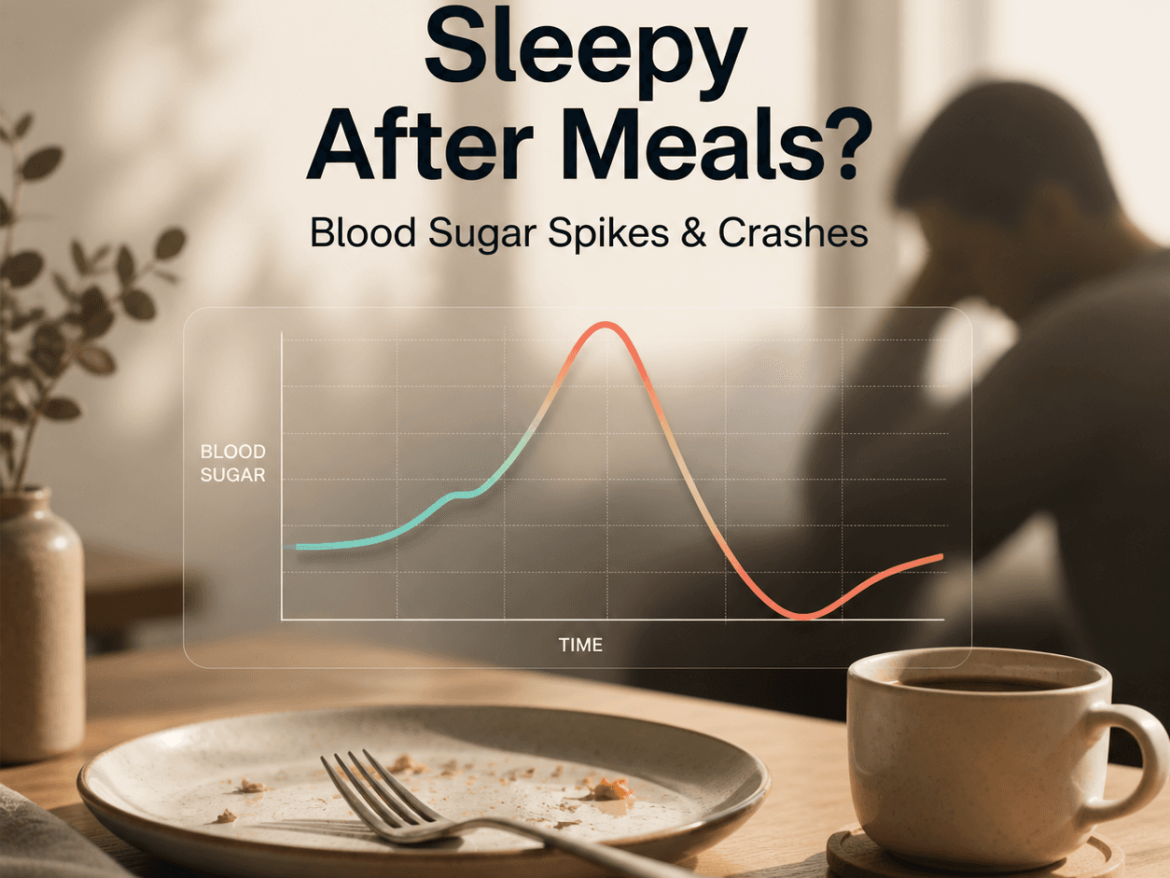
The common thread: the spike, then the crash
Post meal sleepiness usually comes from one of two things:
- A big blood sugar rise after eating.
- A sharper drop afterward.
That second part is the one most people do not realize is happening.
You eat. Blood sugar rises. Your pancreas releases insulin to move glucose out of the bloodstream and into cells. That is normal.
But when the spike is high, the insulin response can overshoot. You end up with a faster fall in blood sugar than your brain likes. Even if it does not technically drop into “hypoglycemia” on a lab report, your body can still feel it as a crash.
And the crash feels like:
- Sleepiness
- Brain fog
- Irritability or anxiety
- Cravings, often for sugar or salty crunchy stuff
- Shakiness or lightheadedness for some people
- A strong need for coffee, sweets, or “a little something” to keep going
Sometimes it is dramatic. Sometimes it is subtle. But once you see it, you cannot unsee it.
The specific pattern to blame: reactive hypoglycemia (or “the insulin overshoot”)
The pattern has a name: reactive hypoglycemia.
Now, before you think, “I am not diabetic, so that is not me,” pause. This can happen years before diabetes. It can also happen in people who never become diabetic, but who still have insulin resistance, cortisol issues, poor sleep, under eating, over exercising, nutrient depletion, or gut dysfunction.
Reactive hypoglycemia basically means:
- Your blood sugar rises higher than ideal after a meal.
- Your insulin response is bigger than necessary.
- Blood sugar drops too far or too fast.
- Your body signals fatigue, hunger, cravings, and stress hormones to compensate.
That stress hormone part matters.
When blood sugar drops quickly, your body often responds by releasing adrenaline and cortisol to bring it back up. Which can look like:
- Afternoon crash, then later you feel weirdly wired
- Restless sleep or waking up at 2 to 3 am
- Anxiety that feels random
- Needing sugar “just to feel normal”
So yes. You can be sleepy after lunch and still have cortisol involved. Bodies are annoying like that.
Why this shows up so often now
A few reasons.
1. Modern meals are “carb heavy, fiber light”
Even meals that look healthy can spike glucose if the carb load is high and the protein and fat are low.
Think:
- Oatmeal with fruit and honey, no protein
- Smoothie with banana, dates, and oats, no fat or protein
- Rice bowl that is mostly rice
- Salad with sweet dressing, dried fruit, croutons, and a tiny bit of chicken
- Sushi lunch, especially with sauces
Nothing here is “bad.” But your blood sugar does not care about vibes. It cares about glucose load and how fast it hits your bloodstream.
2. Stress changes how you handle carbs
When you are under chronic stress, sleeping poorly, or overtraining, your glucose regulation changes. Cortisol increases glucose. Insulin sensitivity can worsen. Spikes get bigger. Crashes get harsher.
So someone can eat the same lunch they always ate, but if they are in a season of stress, it suddenly knocks them out.
3. You are under fueled earlier in the day
This is a big one, especially in women.
If breakfast is coffee, lunch becomes the first real meal. Then you eat fast and eat a lot. Glucose rises fast. Insulin surges. Crash.
Or, you try to “be good,” eat something light, and it is basically carbs with not enough protein. Crash.
Either way, the nervous system is already edgy. Blood sugar swings feel worse.
4. Insulin resistance is more common than people think
You can have insulin resistance with normal fasting glucose. With a normal A1c. With “labs look fine.”
Meanwhile you have:
- sleepiness after meals
- stubborn belly weight
- cravings
- skin tags
- higher triglycerides
- PCOS symptoms
- fatigue that does not match your life
This is why functional medicine pays attention to patterns, not just whether you crossed a lab threshold.
How to tell if your sleepiness is blood sugar related
Not every post meal nap urge is glucose. Sometimes it is just a heavy meal, poor sleep, or dehydration. But blood sugar crashes have a recognizable feel.
Here are common clues.
You might be dealing with a spike and crash if:
- You get sleepy 60 to 180 minutes after eating
- You crave sweets or coffee after meals
- You feel better quickly after eating something sweet (then worse again later)
- You get hangry between meals
- You wake up at night, especially 2 to 4 am
- You feel shaky or anxious if meals are delayed
- Your energy is better when you eat protein forward meals
- You do better with fewer refined carbs, but feel deprived without a plan
And one of the biggest tells.
You eat a carb heavy snack because you are tired, and it works. For like 20 minutes. Then you are even more tired.
That is the loop.
The “healthy meal” trap that causes the crash
Let’s build a very typical lunch.
- Big salad
- A little chicken, like 2 ounces
- Lots of veggies
- A handful of dried cranberries
- Candied nuts
- Balsamic glaze or sweet vinaigrette
- A roll on the side
On paper, it looks clean. Light. Responsible.
But the actual macro pattern is often:
- Not enough protein to slow glucose
- Not enough fat to extend satiety
- A surprising amount of sugar from dressing, toppings, and bread
- A high carb load relative to your current insulin sensitivity
So you feel good for a bit, then the crash. And then later you are in the pantry.
This is not a willpower issue.
This is physiology.
What is actually happening in your body during the crash
Let’s make it simple.
- Carbs break down into glucose.
- Glucose enters the bloodstream.
- The pancreas releases insulin.
- Insulin drives glucose into cells and signals storage.
- If insulin response is high and fast, blood sugar can drop quickly.
- The brain notices. The brain wants stability.
- The body responds with hunger and fatigue signals. Sometimes stress hormones.
Your brain runs heavily on glucose. It does not like sudden drops. So when it feels one coming, it will do whatever it needs to do to get you to fix it.
That is why crashes feel urgent.
That is why cravings feel loud.
And that is why people can feel “addicted to carbs” when what they really are is stuck on a glucose roller coaster.
The bigger picture: this is often an energy metabolism issue
If you are consistently sleepy after meals, especially if you also struggle with fatigue in general, it can be part of a bigger pattern.
In functional medicine, we often look at:
- insulin resistance and metabolic flexibility
- gut health and inflammation
- nutrient status (iron, B12, magnesium, vitamin D, etc.)
- thyroid function
- cortisol rhythm and sleep quality
- mitochondrial function, basically cellular energy output
- liver function and detox capacity
Because blood sugar regulation is not separate from the rest of you. It is woven into everything.
And yes, this is exactly the kind of “pattern based” work Dr. Lisa Silvani focuses on in her practice. If you are reading this and thinking, “This is me, and I am tired of guessing,” you can explore resources or book a free consultation at lisasilvani.com. Sometimes you just need someone to connect the dots.
Quick reality check: when should you take this more seriously?
If post meal sleepiness is occasional, fine. If it is frequent, it is information.
And if you have any of these, it is worth being more proactive:
- family history of type 2 diabetes
- PCOS
- history of gestational diabetes
- high blood pressure
- high triglycerides or low HDL
- increasing waist circumference
- fatty liver
- chronically elevated stress and poor sleep
Also, if you ever experience severe symptoms like fainting, confusion, or intense shakiness, do not DIY it. Talk to your clinician.
How to stop the post meal crash (practical, not perfect)
You do not need to go keto. You do not need to fear carbs. You just need to change the shape of the glucose curve.
The goal is:
- smaller spike
- gentler decline
- more stable energy
Here is what actually works.
1. Start with protein. Seriously
If you do one thing, do this.
Aim for 25 to 35 grams of protein per meal as a general target, adjusted for your body size and needs. Many people are eating 10 to 15 grams at lunch and wondering why they are sleepy.
Protein slows gastric emptying and blunts glucose spikes. It also supports neurotransmitters and satiety.
Examples of “protein first” lunches:
- chicken salad with olive oil based dressing, add avocado
- turkey burger with veggies, side of roasted potatoes instead of a bun if you want
- salmon bowl with greens, quinoa, and tahini
- lentil and veggie soup plus a side of eggs or Greek yogurt dip
- steak or tofu stir fry with veggies, rice as a side not the base
You can still have carbs. You just stop letting carbs be the entire event.
2. Add fat and fiber on purpose
Fat is not the enemy here. Not when it is coming from real food sources.
Fat and fiber slow glucose absorption and keep energy stable.
Easy upgrades:
- add olive oil, avocado, nuts, seeds
- choose full fat plain Greek yogurt over sweetened low fat
- add chia or flax to smoothies
- add beans, lentils, or extra non starchy veggies to meals
Also, watch the “liquid carbs” issue. Smoothies can be healthy, but they can also be a glucose rocket if they are mostly fruit.
3. Build your plate in the right order
This sounds silly. It is not.
Eating fiber first, then protein and fat, then carbs tends to reduce the glucose spike for many people.
You can do this without thinking too hard:
- Eat the salad or veggies first.
- Then the protein.
- Then the starch.
Same meal. Different outcome.
4. Walk for 10 minutes after eating
This one is almost unfair in how effective it is.
A short, easy walk after meals helps muscles take up glucose without needing as much insulin. It blunts the spike and often prevents the crash.
Not a workout. Not a power march. Just movement.
If you are at work, do laps in the building. Take a call while walking. Go outside and come back. Ten minutes.
5. Stop doing “carbs alone” snacks
Carbs alone are the classic crash creator.
Instead, pair carbs with protein or fat.
Better snacks:
- apple plus peanut butter
- Greek yogurt plus berries
- cottage cheese plus cucumber
- hummus plus carrots plus turkey slices
- protein shake plus a handful of nuts
- cheese plus fruit
This is not dieting. This is blood sugar strategy.
6. Watch the hidden sugar in “healthy” foods
A few repeat offenders:
- flavored yogurt
- granola
- smoothies with juice, honey, dates
- salad dressings, teriyaki, sweet sauces
- oat milk in large amounts
- protein bars that are basically candy bars
You do not have to ban these. Just be aware.
If lunch includes a sweet sauce plus bread plus a “healthy” drink, you are stacking glucose.
7. Do not skip breakfast if you are crash prone
Not everyone needs breakfast. But if you crash after lunch, skipping breakfast often makes it worse.
Try an experiment for a week:
- Eat a high protein breakfast within 1 to 2 hours of waking.
- Keep caffeine after food, not on an empty stomach.
- See if the lunch crash changes.
Simple breakfasts that work:
- eggs plus veggies plus a slice of sourdough
- Greek yogurt bowl with berries, chia, walnuts
- tofu scramble with avocado
- protein smoothie with protein powder, chia, nut butter, and berries (not just banana and honey)
If you are going to do breakfast, make it count.
8. Consider that caffeine can be part of the problem
Coffee on an empty stomach can increase cortisol and raise glucose in some people. Then lunch hits. Spike. Crash. More coffee. Repeat.
If this is you, try:
- eat first, then coffee
- reduce sweeteners and flavored creamers
- do half caf for a week
- add protein to the morning
You are not weak for reacting to coffee. Some bodies just do.
9. Get your sleep and stress basics less chaotic
This is not a throwaway tip.
Poor sleep increases insulin resistance. It increases hunger hormones. It increases cravings. It makes glucose spikes bigger.
Same with chronic stress.
If you are trying to fix post meal fatigue while sleeping 5.5 hours and living on adrenaline, you are playing on hard mode.
Even a few boring upgrades help:
- consistent bedtime and wake time
- morning light exposure
- protein at breakfast
- stop eating right before bed
- magnesium glycinate at night for some people (check with your clinician)
Not glamorous. Works anyway.
What to test (if you want to stop guessing)
If this is persistent, testing can save you months of trial and error.
In a conventional setting, you might see:
- fasting glucose
- hemoglobin A1c
- lipid panel
Helpful, but often not enough.
In a more functional approach, depending on your history, someone might also consider:
- fasting insulin
- HOMA IR calculation
- oral glucose tolerance test with insulin
- continuous glucose monitor (CGM) for a short period
- thyroid markers
- iron studies and ferritin
- B12, vitamin D, magnesium
- inflammatory markers
- liver enzymes
- cortisol rhythm testing in some cases
A CGM, even for 2 to 4 weeks, can be eye opening. Not because you need to obsess over numbers, but because it shows you what your body is doing after your actual meals. Your real lunch. Your usual snack. Your “I barely ate anything” breakfast.
If you want guided help interpreting patterns like this, that is exactly the kind of work people do with Dr. Lisa Silvani’s functional medicine practice. You can start by visiting lisasilvani.com, checking out the resources, or booking a free consultation to talk through symptoms and next steps.
A few meal examples that reduce the crash (without feeling like a diet)
Sometimes people just want to know what to eat. Fair.
Here are a few templates that tend to work well for stable energy.
Lunch option 1: The “normal person” plate
- protein: chicken, fish, tofu, turkey, beef
- fiber: big portion of non starchy veggies or salad
- fat: olive oil, avocado, tahini
- carbs: potatoes, rice, quinoa, fruit, but a moderate portion
Lunch option 2: The “I need something fast” option
- Greek yogurt (plain) plus berries plus nuts
- or a protein shake plus a handful of nuts and fruit
- or rotisserie chicken plus bagged salad plus olive oil
Lunch option 3: The “I want a bowl” that will not ruin my afternoon
- greens first
- protein generous portion
- add beans or quinoa, not two scoops of rice
- add avocado or olive oil dressing
- keep sweet sauces light or on the side
Lunch option 4: The “I love carbs” compromise
You can still do the pasta. Just:
- increase protein (chicken, shrimp, lentil pasta, side of meatballs)
- add a big salad first
- add olive oil
- go for a walk after
You do not have to earn carbs. You just have to stop eating them in isolation.
What if you get sleepy even after a balanced meal?
Good question. Because it happens.
If your meals are balanced and you still crash, consider other possibilities:
- you are under eating overall and your body is conserving energy
- you are eating too large a portion for your current digestion capacity
- you have gut issues like SIBO or dysbiosis that increase inflammation after meals
- you have food sensitivities that trigger fatigue (not always obvious)
- you have low stomach acid or poor bile flow and digestion is a strain
- your thyroid is underperforming
- iron or B12 is low
- sleep apnea or disrupted sleep is driving daytime fatigue
- medications or supplements are contributing
That is where a more thorough, systems based approach helps. Because “eat less carbs” is not the answer for everyone.
The takeaway
If you are consistently sleepy after meals, the most common culprit is not laziness or age or your schedule.
It is often this pattern:
big blood sugar spike, then an insulin driven drop.
Reactive hypoglycemia. The crash. The cravings. The afternoon slump that feels inevitable.
The fix is usually not extreme. It is a few small things done consistently:
- protein forward meals
- fat and fiber included on purpose
- fewer liquid carbs
- walk after eating
- stop doing carbs alone snacks
- better sleep and stress support
- test if needed, especially if this has been going on for a while
And if you are tired of guessing, or you suspect this is part of a bigger fatigue and metabolism issue, you can learn more about Dr. Lisa Silvani’s approach and book a free consultation at https://www.lisasilvani.com.
Because feeling like you need a nap after eating is common.
But it should not be your normal.
FAQs (Frequently Asked Questions)
What causes post-meal sleepiness or ‘food coma’ after lunch?
Post-meal sleepiness usually results from a significant blood sugar rise after eating, followed by a sharper drop. This spike and subsequent crash in blood sugar levels can lead to feelings of sleepiness, brain fog, and low motivation, commonly referred to as a ‘food coma.’ It’s often linked to how your body manages glucose and insulin after meals.
What is reactive hypoglycemia and how does it relate to afternoon fatigue?
Reactive hypoglycemia, also known as ‘insulin overshoot,’ occurs when blood sugar rises higher than ideal after a meal, prompting an excessive insulin response. This causes blood sugar to drop too far or too fast, leading to fatigue, hunger, cravings, and stress hormone release like adrenaline and cortisol. This pattern often results in afternoon crashes and feelings of being wired but tired later at night.
Why do healthy-looking meals sometimes cause blood sugar spikes and crashes?
Many modern meals are ‘carb heavy, fiber light,’ meaning they contain high amounts of carbohydrates with insufficient protein and fat to slow glucose absorption. Examples include oatmeal with fruit but no protein, smoothies loaded with fruit and oats without fat or protein, rice-heavy bowls, salads with sweet dressings and minimal protein, or sushi with sugary sauces. These meals can cause rapid glucose spikes regardless of their perceived healthiness.
How does stress affect blood sugar regulation and post-meal energy levels?
Chronic stress increases cortisol levels which raise blood glucose and impair insulin sensitivity. This means that even if you eat the same meal you usually do, during periods of stress your body may experience larger blood sugar spikes followed by harsher crashes. This can intensify post-meal fatigue and energy fluctuations.
What signs indicate that my afternoon sleepiness might be due to blood sugar issues?
Common clues include feeling sleepy 60 to 180 minutes after eating; craving sweets or coffee post-meal; feeling better temporarily after eating something sweet but then worse later; experiencing hangry feelings between meals; waking up at night (especially between 2 to 4 am); feeling shaky or anxious if meals are delayed; having better energy with protein-focused meals; doing well with fewer refined carbs but feeling deprived without guidance.
Can insulin resistance cause post-meal fatigue even if my lab tests look normal?
Yes. Insulin resistance can be present despite normal fasting glucose levels or A1c results. Symptoms such as sleepiness after meals, stubborn belly weight, cravings, skin tags, elevated triglycerides, PCOS symptoms, and unexplained fatigue can all indicate underlying insulin resistance. Functional medicine approaches focus on recognizing these patterns beyond just lab thresholds.
References
- Cryer, P. E. (2016). Hypoglycemia in Diabetes: Pathophysiology, Prevalence, and Prevention. The New England Journal of Medicine, 375(9), 909-911. https://doi.org/10.1056/NEJMcibr1606460
- American Diabetes Association. (2023). Understanding Reactive Hypoglycemia. Diabetes Care, 46(Supplement_1), S1-S15. https://doi.org/10.2337/dc23-S001
- Bolla, A., et al. (2022). Impact of Dietary Carbohydrate Quality on Postprandial Glucose and Insulin Responses: A Systematic Review and Meta-analysis of Randomized Controlled Trials. BMC Medicine, 20(1), 147. https://doi.org/10.1186/s12916-022-02381-8
- NHS UK. (2022). Blood sugar levels and diet: How to manage blood sugar through food choices. Retrieved from https://www.nhs.uk/live-well/eat-well/how-to-manage-blood-sugar-levels/
- Marangoni, F., Poli, A., & Agostoni, C. (2021). Postprandial Regulation of Metabolism and Hormones: Role of Macronutrients and Meal Composition in Metabolic Health. Nature Reviews Endocrinology, 17(6), 349-362. https://doi.org/10.1038/s41574-021-00487-y
- Hyman, M., & Fitzgerald, K. (2019). Nutritional Strategies to Manage Reactive Hypoglycemia and Improve Energy Stability: Insights from Functional Medicine Practice. Journal of Functional Nutrition, 4(3), 112-121.
- Ruscio, M., & Silvani, L. (2020). The Role of Continuous Glucose Monitoring in Identifying Reactive Hypoglycemia Patterns in Non-Diabetic Individuals: Clinical Applications and Case Studies. Elsevier Clinics in Endocrinology and Metabolism, 34(2), 98–107.
- Lustig, R., et al. (2019). Stress-Induced Dysregulation of Glucose Homeostasis: Cortisol’s Role in the Development of Insulin Resistance and Postprandial Fatigue. Science Direct – Endocrinology & Metabolism Clinics of North America, 48(3), 445-460.
- MindBodyGreen Editorial Team (2023). How to Prevent Afternoon Slumps with Balanced Meals According to Top Functional Medicine Doctors Drs Mark Hyman and Kara Fitzgerald; Based on Clinical Evidence.
- Wolever, T.M.S., et al. (2017). Effect of Meal Macronutrient Composition on Postprandial Glycemic Excursions: Implications for Managing Reactive Hypoglycemia and Insulin Resistance Patterns – A Review in Springer Nutrition Reviews.


