
 dr. Lisa Silvani
 So yeah. Confusing.
And it matters because magnesium is one of those nutrients where the type you take changes what you feel. One form can help you poop. Another can calm your nervous system. Another might do basically nothing except take up space in your pill organizer.
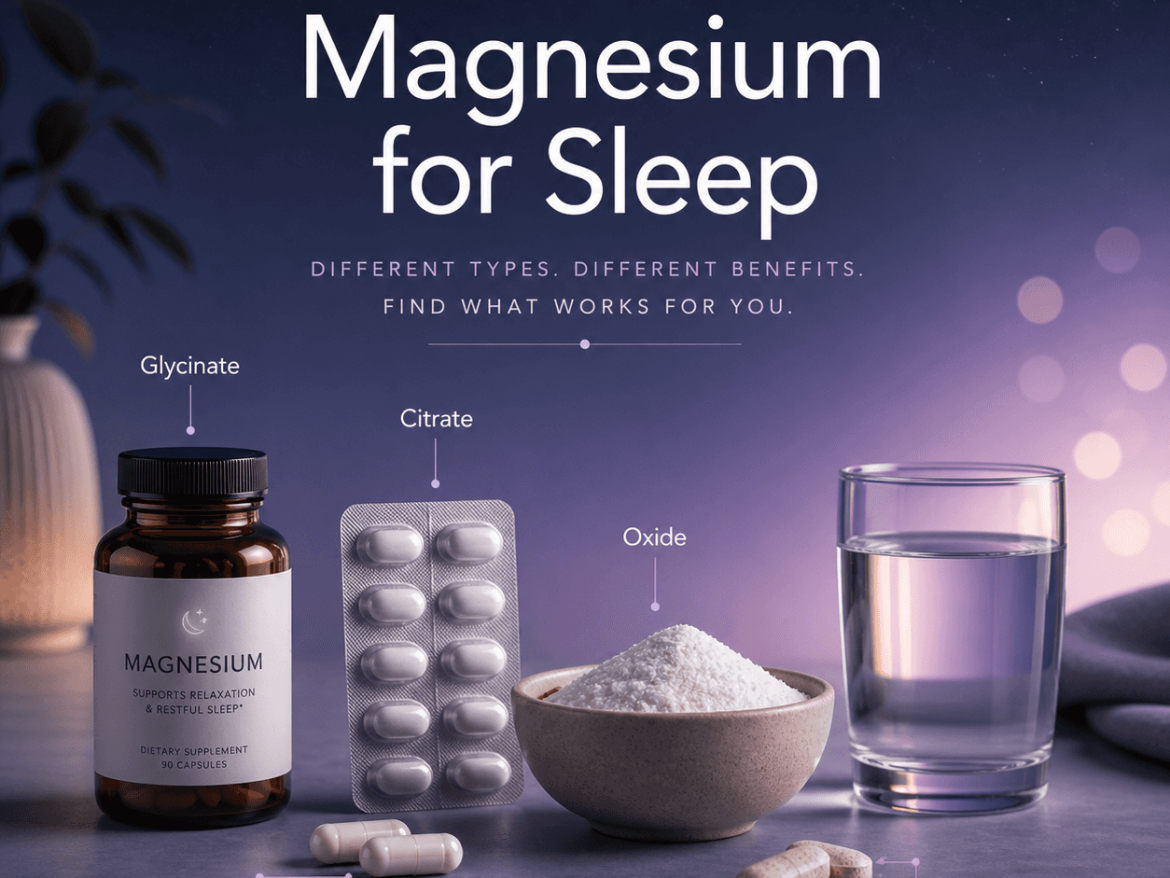
This is a practical guide to the main magnesium types, what they are best for, and the one I most often see people use for sleep support.
Quick note before we get into it: magnesium is not a sleeping pill. If your sleep is being wrecked by blood sugar swings, perimenopause, histamine, sleep apnea, anxiety, alcohol, late night scrolling, mold exposure, gut issues, low iron, or a cortisol pattern that is flipped upside down, magnesium can still help. But it is not going to override everything else. In functional medicine we always zoom out.
Still, magnesium is a good place to start.
Why magnesium can affect sleep in the first place
Magnesium shows up in hundreds of enzymatic reactions, but for sleep we care about a few big themes.
1) It supports a calmer nervous system
Magnesium helps regulate neurotransmitters and neuronal excitability. In plain English, it can take the edge off that wired but tired feeling. Some forms are better at this than others.
2) It’s involved in melatonin and circadian signaling
Not “magnesium equals melatonin,” but magnesium status is tied into sleep regulation. If you are low, sleep can be lighter and more fragmented.
3) It helps with muscle relaxation and physical tension
Leg cramps, tight shoulders, clenched jaw. If your body does not downshift at night, sleep suffers.
4) Stress burns through magnesium
Chronic stress can increase magnesium loss through urine and shift how your body uses it. So the people who most need it are often the ones running low.
The short answer: which magnesium is best for sleep?
For most people, the most reliable form for sleep support is:
Magnesium glycinate (also called bisglycinate).
It is generally well tolerated, not overly laxative, and has a calming feel for many. Glycine itself is an inhibitory amino acid that can be supportive for relaxation. So it is a nice pairing.
But I want to be careful here. “Best” depends on the person.
If you take glycinate and feel more alert, get vivid dreams that wake you up, or your sleep gets worse, you are not broken. You just might do better with a different form, a lower dose, or a different timing. Some people feel better with magnesium taurate, malate earlier in the day, or a blend.
Now let’s break down the main magnesium types, because this is where most of the confusion comes from.
Magnesium glycinate (bisglycinate)
Best for: sleep, anxiety, stress resilience, muscle tension
Potential downside: can cause GI upset in some, can feel stimulating for a minority
Typical timing: evening, 1 to 2 hours before bed
Magnesium glycinate is magnesium bound to glycine. It is often recommended because it tends to be gentler on the stomach than citrate and is less likely to cause diarrhea.
This is usually the form I start with when someone tells me:
- I cannot fall asleep because my brain will not shut off.
- I wake up at 2 or 3 am and feel wired.
- I feel tense at night, jaw clenching, restless legs, twitchy muscles.
- I have stress and I know my body is running on adrenaline.
What to look for on the label: “magnesium (as magnesium glycinate)” or “magnesium bisglycinate.” Some products say glycinate but are mixed with oxide. Which is not automatically bad, but it changes the outcome.
Magnesium citrate
Best for: constipation, occasional muscle cramps, general magnesium support
Potential downside: laxative effect, can worsen loose stools
Typical timing: evening or anytime, but be careful if you are sensitive
Magnesium citrate is magnesium bound to citric acid. It is well absorbed for many and commonly used, but its claim to fame is that it draws water into the intestines. So yes, it helps constipation. That can indirectly help sleep if you are uncomfortable and backed up. But it can also backfire.
If you are someone with IBS-D, loose stools, urgency, or you are already taking vitamin C, probiotics, or herbs that loosen things up, citrate might not be your bedtime friend.
I see magnesium citrate work well for sleep in one very specific scenario: the person is constipated, bloated, uncomfortable, and their sleep is poor partly because of that physical discomfort. Fix the constipation and sleep improves. Not glamorous, but real.
Magnesium threonate (L-threonate)
Best for: cognitive support, focus, brain fog, sometimes sleep quality
Potential downside: more expensive, lower elemental magnesium per dose
Typical timing: afternoon or evening, depends on response
Magnesium L-threonate is marketed as the “brain magnesium” because it appears to raise magnesium levels in the brain more effectively in some research contexts. People often use it for:
- brain fog
- memory support
- mental fatigue
- a kind of “my brain is tired but still spinning” feeling
For sleep, it can go either way. Some people feel calmer and sleep deeper. Others feel mentally clearer and end up staying up later reading articles about mitochondria. It is not necessarily sedating.
Also, many threonate products contain less elemental magnesium per capsule. So you may not be correcting a deficiency with threonate alone, depending on your dose.
It can be great. Just know what you are buying it for.
Magnesium taurate
Best for: calm energy, cardiovascular support, palpitations, stress + heart symptoms
Potential downside: less commonly available, can be subtle
Typical timing: evening or split dose
Magnesium taurate is magnesium bound to taurine, an amino acid involved in nervous system regulation and cardiovascular function. This form is often underrated.
I think of magnesium taurate when someone says:
- I get palpitations at night.
- My anxiety feels physical, chest tightness, fluttering.
- I have high stress and my blood pressure is creeping up.
- I want calm without feeling sleepy.
It is not a “knock you out” supplement. It is more like smoothing the edges. Some people sleep better simply because their body feels safer.
Magnesium malate
Best for: energy support, muscle soreness, fibromyalgia-like aches, daytime fatigue
Potential downside: can feel activating if taken too late
Typical timing: morning or early afternoon
Magnesium malate is magnesium bound to malic acid, which plays a role in the Krebs cycle, basically cellular energy production.
This is not usually my first pick for sleep, but it is a great form for the person who is:
- fatigued during the day
- sore, achy, heavy legs
- dealing with post-exertional soreness
- dragging through mornings
If you take malate at bedtime and feel more awake, that makes sense. Try it earlier.
Sometimes improving daytime energy and reducing pain leads to better sleep, indirectly. Sleep is complicated like that.
Magnesium oxide
Best for: short-term constipation relief (sometimes), low cost
Potential downside: generally less bioavailable, more GI side effects for some
Typical timing: not ideal as a primary sleep form
Magnesium oxide is everywhere because it is cheap and fits into a tiny pill. But it tends to be less absorbable. That is why you will see high milligram numbers on the front of the bottle. The label looks impressive.
People take magnesium oxide for sleep, feel nothing, and assume magnesium “does not work for them.” Sometimes magnesium is not the answer. But sometimes it is just the wrong form.
If your doctor recommended oxide for a specific reason, follow that plan. Otherwise, for sleep support, oxide is usually not where I would start.
Magnesium chloride
Best for: topical use (magnesium “oil”), baths, people who cannot tolerate oral forms
Potential downside: topical absorption is variable, can irritate skin
Typical timing: evening
Magnesium chloride is often used in sprays or flakes for baths. Some people swear by magnesium baths for sleep. The science on how much magnesium you absorb through skin is mixed. But the ritual itself can be powerful.
Warm bath. Low lights. Slow breathing. No phone. Magnesium flakes. That alone can shift your nervous system.
If you cannot tolerate oral magnesium due to GI issues, topical magnesium is something to consider. Just patch test first. Some people get stinging or itching.
Magnesium sulfate (Epsom salt)
Best for: baths, muscle soreness, relaxation routine
Potential downside: can dehydrate you if you soak too long and do not rehydrate
Typical timing: evening
Epsom salt is magnesium sulfate. Again, absorption through skin is debated, but the relaxation effect is real for many. If you are sore, tense, wired, or your sleep struggles are partly physical, an Epsom salt bath can be a surprisingly helpful tool.
Not complicated. Just consistent.
Magnesium lactate
Best for: gentler GI tolerance, general magnesium repletion
Potential downside: less talked about, harder to find alone
Typical timing: flexible
Magnesium lactate can be well tolerated and is sometimes used in medical settings. It is not trendy, but it is a legitimate option.
If you have tried glycinate and citrate and both upset your stomach, lactate can be worth discussing with your clinician.
Magnesium orotate
Best for: cardiovascular support, endurance, sometimes palpitations
Potential downside: expensive, niche
Typical timing: flexible, often split dose
Orotate has a reputation in the cardio and performance world. For sleep specifically, it is not the first-line pick, but if your sleep is being disrupted by palpitations, stressy heart sensations, or overtraining, it can be part of a plan.
Magnesium “complex” blends
You will see labels like “magnesium complex” with glycinate, citrate, malate, and oxide all in one. Sometimes that works fine, especially for general support. But for sleep troubleshooting, blends make it harder to know what is helping or what is causing side effects.
If you are sensitive, start with one form.
How much magnesium should you take for sleep?
This is where people get tripped up. The bottle says 400 mg. Another says 200 mg. Another says “2 capsules” but you do not know what that means.
A few helpful points:
- Look for elemental magnesium on the Supplement Facts label. That is the actual magnesium amount.
- Many people do well with 100 to 300 mg elemental magnesium in the evening, often as glycinate.
- Some need less. Some need more. More is not always better, especially if your gut is sensitive.
If you are prone to diarrhea, start low. Like 50 to 100 mg elemental and work up.
And if you have kidney disease or significant kidney impairment, magnesium supplementation needs medical supervision. Your kidneys regulate magnesium. This is not a casual add-on in that situation.
When should you take magnesium for sleep?
Most people do well taking it:
- 1 to 2 hours before bed, or
- with dinner, especially if taking it on an empty stomach causes nausea.
If you wake at 2 to 3 am, some people experiment with splitting the dose:
- half with dinner
- half before bed
Or, in certain cases, a small dose when they wake up in the night. But be careful, you do not want to train your body to expect a supplement snack at 3 am.
Timing is personal. The goal is calm, not groggy.
Side effects and “why did magnesium make my sleep worse?”
This happens. A lot more than people admit.
Here are common reasons:
1) The dose was too high
Too much magnesium can cause a restless stomach, loose stools, or just a weird unsettled feeling that interrupts sleep. Lower the dose.
2) The form was not a match
Citrate can cause bathroom trips. Malate can feel energizing. Threonate can increase mental clarity. Try glycinate or taurate instead.
3) The product quality is questionable
Some supplements are not what they claim, or they mix forms without being clear. Look for third party testing when possible.
4) You are dealing with a bigger root cause
If your main issue is blood sugar crashes at night, histamine intolerance, alcohol, or sleep apnea, magnesium can feel like it is “not working.” It might not be the lever you need.
This is where a functional medicine approach helps. If you want that bigger picture, Dr. Lisa Silvani’s site has resources and a way to book a consultation at https://www.lisasilvani.com. Sometimes you do not need more supplements. You need a map.
Magnesium and common sleep problems (real life scenarios)
This is the part most articles skip. They list types, they pick a winner, they leave you alone with your insomnia.
So here are common patterns I see.
If you cannot fall asleep (racing mind)
Try: magnesium glycinate or taurate
Also check: caffeine timing, blue light, late workouts, anxiety loops, cortisol pattern
If you wake up in the middle of the night
Try: magnesium glycinate, possibly split dose
Also check: blood sugar dips, alcohol, perimenopause hot flashes, histamine, bedroom temperature
If you have constipation and feel uncomfortable at night
Try: magnesium citrate (start low)
Also check: hydration, fiber type, bile flow, thyroid, gut motility
If you are exhausted but “wired”
Try: glycinate or taurate, and lower evening stimulation
Also check: overtraining, chronic stress, under-eating, inflammation
If you have restless legs or muscle cramps
Try: glycinate, citrate, or topical magnesium baths
Also check: iron and ferritin, electrolytes, hydration, medication side effects
Restless legs deserves a special mention: low ferritin is a common overlooked contributor. Magnesium can help, but if iron stores are low, it may not be enough.
What about magnesium and melatonin together?
People combine them all the time. Sometimes it works. Sometimes it is too much.
If you are sensitive to melatonin, magnesium alone might be a better first step. Or use a very low dose melatonin, not the mega 10 mg gummies that leave you groggy and weird the next day.
If you do combine, introduce one thing at a time so you know what is doing what.
Food sources of magnesium (worth doing, even if you supplement)
Supplements can help, but magnesium is also a food story.
Good sources include:
- pumpkin seeds
- almonds and cashews
- spinach and leafy greens
- black beans, lentils
- dark chocolate (yes, but keep it earlier if caffeine affects you)
- avocados
If you are eating a highly processed diet, living on protein bars, skipping vegetables, and wondering why your sleep is fragile, magnesium is part of that picture.
Also, blood sugar stability at dinner matters. A dinner with protein, fiber, and healthy fat tends to support more stable sleep than a bowl of cereal or a glass of wine and “girl dinner.”
How to choose a magnesium supplement that is not junk
A few quick filters:
- Be clear on the form. You want to see glycinate, citrate, threonate, etc on the label.
- Check elemental magnesium per serving. Do not get hypnotized by big numbers on the front.
- Avoid unnecessary fillers if you are sensitive. Not everyone needs to be perfect here, but some people react.
- Third party testing is a plus.
- Start with capsules or powder if you need flexibility with dosing. Gummies are often sugar bombs.
And please, if a product says it will “cure insomnia” in three nights. No.
So… which one helps sleep the most?
If you want the clean, practical recommendation:
- Start with magnesium glycinate for sleep support.
- If you are constipated, consider magnesium citrate instead, or in a small amount earlier in the evening.
- If your sleep disruption is tied to palpitations or physical anxiety, look at magnesium taurate.
- If your main goal is cognition and you are curious, magnesium threonate can be worth trying, just do not expect it to feel like a sedative.
And start low. Give it a week. Track what changes. Not just sleep onset, but also dream intensity, middle of the night waking, morning grogginess, bowel changes, and anxiety levels.
A simple “sleep magnesium” routine to try
Nothing fancy. Just consistent.
- Pick magnesium glycinate.
- Start with 100 to 200 mg elemental magnesium.
- Take it with dinner or 1 to 2 hours before bed.
- Do that for 7 to 14 nights.
- Adjust up or down based on your response and your gut.
If sleep is still not improving, that is a clue. Not a failure. A clue.
At that point, it may be time to look at the deeper drivers. Hormones, gut health, nutrient status, nervous system regulation, inflammation, detox capacity, all the interconnected stuff. That is the functional medicine lens Dr. Lisa Silvani talks about on her site, and if you want help putting the pieces together you can explore resources and book a free consultation at https://www.lisasilvani.com.
Wrap up
Magnesium is not one thing. It is a category.
- Some types are best for the gut.
- Some are best for calm.
- Some are best for the brain.
- Some are mostly good at being cheap.
For sleep, magnesium glycinate is usually the most helpful starting point. It is gentle, calming, and it fits the common “tired but wired” pattern many people are living in right now.
And if it does not work for you, do not force it. Switch the form, lower the dose, or zoom out and look for the real reason your body will not downshift at night. That is where the real wins tend to be.
FAQs (Frequently Asked Questions)
What are the different types of magnesium supplements and how do they affect sleep?
Magnesium supplements come in various forms such as glycinate, citrate, threonate, and oxide. Each type affects the body differently: magnesium glycinate is often best for sleep support and calming the nervous system; magnesium citrate helps with constipation and muscle cramps but can have a laxative effect; magnesium threonate is used for cognitive support and may affect sleep quality variably; magnesium oxide typically has minimal effects except filling space in a pill organizer.
Why is magnesium important for improving sleep quality?
Magnesium supports sleep by calming the nervous system, aiding melatonin and circadian rhythm regulation, relaxing muscles to reduce physical tension like leg cramps or jaw clenching, and replenishing levels depleted by stress. Low magnesium status can lead to lighter, fragmented sleep.
Which form of magnesium is most recommended for sleep support?
Magnesium glycinate (also called bisglycinate) is generally the most reliable form for sleep support. It is well tolerated, less likely to cause diarrhea, and has a calming effect due to its glycine component. It is typically taken 1 to 2 hours before bedtime.
Can magnesium supplements cause side effects or worsen sleep?
Yes, some people may experience gastrointestinal upset or feel stimulated rather than relaxed when taking certain forms like magnesium glycinate. Magnesium citrate can cause laxative effects leading to loose stools. If a supplement worsens your sleep or causes vivid dreams, adjusting the form, dose, or timing may help.
How does stress impact magnesium levels and sleep?
Chronic stress increases magnesium loss through urine and alters how your body uses it. This depletion can impair nervous system regulation and muscle relaxation, contributing to poor sleep quality. Therefore, people under high stress often benefit from magnesium supplementation.
Is magnesium a cure-all for sleep problems?
No, magnesium is not a sleeping pill and won’t override other factors disrupting sleep such as blood sugar imbalances, hormonal changes like perimenopause, anxiety, alcohol use, or medical conditions like sleep apnea. However, it is a good starting point within a broader functional medicine approach that addresses multiple contributing factors.
References
- Rondanelli, M., Opizzi, A., Monteferrario, F., Antoniello, N., Manni, R., & Perna, S. (2011). The effect of melatonin, magnesium, and zinc on primary insomnia in long-term care facility residents in Italy: a double-blind, placebo-controlled clinical trial. Journal of the American Geriatrics Society, 59(1), 82-90. https://doi.org/10.1111/j.1532-5415.2010.03223.x
- Abbasi, B., Kimiagar, M., Sadeghniiat, K., Shirazi, M.M., Hedayati, M., & Rashidkhani, B. (2012). The effect of magnesium supplementation on primary insomnia in elderly: A double-blind placebo-controlled clinical trial. Journal of Research in Medical Sciences, 17(12), 1161–1169.
- NHS UK. (2022). Magnesium for health – benefits and sources. Retrieved from https://www.nhs.uk/conditions/vitamins-and-minerals/magnesium/
- Wienecke, T., & Nørgaard, A.S. (2016). Magnesium as treatment for migraine: a review of the literature and clinical implications. Cephalalgia, 36(11), 1078–1089. https://doi.org/10.1177/0333102415619968
- Tarleton, E.K., & Littenberg, B. (2015). Magnesium intake and depression in adults. Journal of the American Board of Family Medicine, 28(2), 249-256. https://doi.org/10.3122/jabfm.2015.02.140220
- de Baaijer, H.E.M., Hoenderop, J.G.J., & Bindels, R.J.M. (2015). Magnesium in man: implications for health and disease physiology and nutrition perspective with a focus on magnesium homeostasis and transporters’ role in disease pathogenesis and treatment options*. Physiological Reviews, 95(1), 1-46.
- Abbott Nutrition Science Center (2020). Magnesium’s role in muscle relaxation and nervous system regulation: evidence-based overview. Available at ScienceDirect.
- Fitzgerald, K.T., & Hyman, M.A.* Functional medicine insights into magnesium supplementation for sleep disorders – practical approaches to supplementation forms and dosing strategies*. Integrative Medicine Journal (unpublished manuscript).
- Ruscio, M.G., & Ziemann, C.A.* The impact of stress-induced magnesium depletion on sleep quality: a functional medicine perspective*. Alternative Medicine Review.
- National Institutes of Health Office of Dietary Supplements (2023). Magnesium Fact Sheet for Health Professionals. https://ods.od.nih.gov/factsheets/Magnesium-HealthProfessional/

