
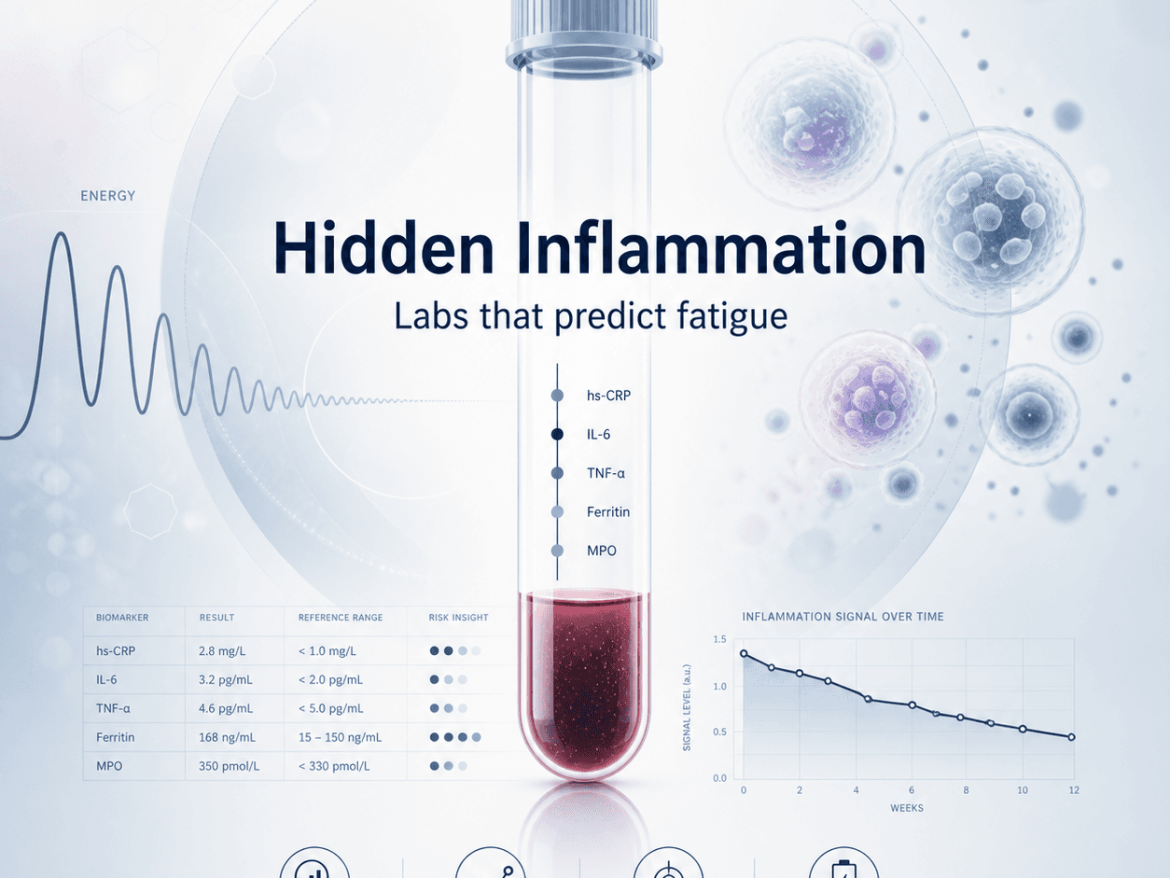
 vanilis
 A swollen ankle. A sore throat. A hot, angry joint. Something you can point to.
But the kind of inflammation that quietly drags down your energy? That one is sneaky. It can sit in the background for years, never “hurting” in a clear way, while you’re just… tired. Not sleepy. Not lazy. More like your battery never hits 100%, and small tasks cost too much.
And if you’ve been told your basic labs are “normal” (CBC, TSH, maybe iron), it can be confusing. Because you still don’t feel like yourself.
This is where looking at inflammation through a fatigue lens matters. Not just “Do you have an autoimmune disease?” but “Is your immune system stuck slightly on, and is that stealing energy from your cells and mitochondria?”
Let’s talk about the labs that can reveal inflammation you can’t feel. Not as a diagnosis list. As clues. Patterns. A trail.
Why low grade inflammation can feel like fatigue (and not much else)
Inflammation is energy expensive.
When your immune system is activated, even mildly, it changes how you burn fuel. It shifts hormones. It affects sleep quality. It can alter neurotransmitters like serotonin and dopamine. It can increase oxidative stress, which hits mitochondria especially hard.
And mitochondria, if you follow Dr. Lisa Silvani’s work, are basically the center of the fatigue conversation. They are the engines that turn food and oxygen into usable energy (ATP). If the immune system is constantly asking for resources, mitochondria end up doing their job under pressure.
So the symptoms are often non specific:
- Waking up tired, even after “enough” sleep
- Afternoon crashes
- Brain fog
- Exercise intolerance (you feel worse after workouts, not better)
- Feeling wired but tired
- More aches than you think you should have, but nothing dramatic
You can have this without a fever. Without a high white count. Without an obvious infection. That’s why the right labs help.
A quick note before we jump into labs
Two important things.
First, one lab rarely tells the full story. Inflammation is a network problem. The best insights come from trends over time and clusters of markers that point in the same direction.
Second, these are educational ideas to discuss with your clinician. Reference ranges vary, and interpretation depends on your history, medications, body composition, recent illness, sleep, training, and more.
Ok. Let’s get into it.
1. hs CRP (high sensitivity C reactive protein)
If I had to pick one “starter” lab for invisible inflammation and fatigue, it’s hs CRP.
CRP is made by the liver in response to inflammatory signals (especially IL 6). Standard CRP is useful for obvious inflammation. hs CRP is designed to detect much lower levels.
Why it matters for fatigue
Low grade elevation can signal:
- metabolic inflammation (often linked to insulin resistance)
- chronic infections or dysbiosis
- periodontal inflammation (gum disease is a big one people miss)
- inflammatory response to poor sleep or high stress
- autoimmune activity, even before a clear diagnosis
What results often mean in real life
For cardiovascular risk, labs often categorize hs CRP like this:
- < 1.0 mg/L: lower inflammatory burden
- 1.0 to 3.0 mg/L: moderate
- > 3.0 mg/L: higher
But fatigue wise, I care less about the category and more about the story. If your hs CRP is 2.4 and it’s been 2.0 to 3.0 for years, that is a signal. If it’s 4.5 right after a cold, that is a different signal.
Common gotchas
- Recent hard workout can bump CRP
- A minor infection can bump it
- Obesity can raise it chronically (adipose tissue is active immune tissue)
So if it’s high, repeating it when you’re well and rested can be useful.
2. ESR (erythrocyte sedimentation rate)
ESR is old school, but still helpful. It reflects how quickly red blood cells settle, which changes when certain proteins rise in inflammation.
Why it matters for fatigue
ESR is more of a “slow burn” marker. It can be elevated in:
- autoimmune conditions (like rheumatoid arthritis, lupus, polymyalgia rheumatica)
- chronic infections
- inflammatory bowel disease
- some malignancies (not common, but part of why persistent elevation gets attention)
ESR vs CRP
They often move together, but not always.
- CRP can rise and fall quickly
- ESR can stay elevated longer
If both are high, it strengthens the case for meaningful inflammation. If one is high and the other is normal, you dig deeper into context.
3. Ferritin (but interpreted the right way)
Ferritin is usually ordered as an iron marker. But ferritin is also an acute phase reactant, meaning it can rise with inflammation.
This is one of the most common fatigue lab “traps” I see: someone is tired, ferritin is “normal” or even “good,” so iron is dismissed. But ferritin can be artificially elevated by inflammation while iron availability is poor.
Why it matters for fatigue
- Low ferritin can absolutely cause fatigue, hair shedding, shortness of breath on exertion, restless legs
- High or high normal ferritin can signal inflammation, liver stress, metabolic dysfunction, or iron overload, depending on the pattern
The pattern that matters
Don’t look at ferritin alone. Pair it with:
- serum iron
- transferrin or TIBC
- percent saturation
- CBC (hemoglobin, MCV, RDW)
- CRP if possible
A common inflammatory pattern looks like:
- ferritin normal high or high
- iron low
- saturation low
- CRP elevated
That can point toward functional iron deficiency. Your body is “hiding” iron during inflammation (a protective immune strategy), but your cells still suffer.
4. Fasting insulin (and sometimes glucose, but insulin is the punchline)
This one surprises people. Because it’s not labeled as an inflammation marker.
But metabolically, high insulin is tied to inflammatory signaling, oxidative stress, and mitochondrial strain. Insulin resistance is a fatigue generator.
Why it matters for fatigue
Even mild insulin resistance can cause:
- post meal sleepiness
- cravings and energy swings
- brain fog
- “I need coffee to be human” mornings
What to ask for
- fasting insulin
- fasting glucose
- HbA1c
- optionally: HOMA IR (calculated), or a 2 hour insulin and glucose test in more complex cases
Someone can have a normal fasting glucose and A1c and still have insulin that is higher than ideal. That early metabolic strain is very relevant to inflammation you can’t feel.
5. Triglyceride to HDL ratio (a metabolic inflammation hint)
Again, not a classic inflammation marker, but a very practical one.
High triglycerides and low HDL often travel with insulin resistance, fatty liver, and systemic inflammation.
Why it matters for fatigue
When your metabolism is struggling, mitochondria struggle too. Fat oxidation becomes less flexible. Energy production becomes less stable. People often describe it as “my energy is unpredictable.”
A lipid panel you already have may contain a clue you have never been told about.
6. CBC with differential: neutrophils, lymphocytes, and the NLR
A complete blood count can whisper a lot.
Not just anemia. The immune cell pattern matters.
Neutrophil to lymphocyte ratio (NLR)
NLR is calculated from the CBC differential.
Higher NLR is associated with systemic inflammation and stress physiology. It is not diagnostic, but if someone’s fatigue is unexplained and NLR is consistently elevated, I pay attention.
What can push it up
- chronic stress and poor sleep
- smoking
- metabolic dysfunction
- infection
- inflammatory conditions
Also, if white counts are “normal” but your neutrophils are trending high and lymphocytes low, that can still reflect an inflammatory load.
7. Fibrinogen (a less common but useful marker)
Fibrinogen is involved in clotting, but it also rises with inflammation. It can increase blood viscosity and may contribute to that heavy, sluggish feeling some people describe.
Not everyone needs this test, but in more complex fatigue cases, it can add another layer.
8. Homocysteine (inflammation adjacent and oxidative stress related)
Homocysteine is influenced by B vitamins (folate, B12, B6, riboflavin), genetics, kidney function, and lifestyle factors.
It is often framed as a cardiovascular risk marker. But it also relates to:
- oxidative stress
- endothelial dysfunction
- methylation demand
- sometimes impaired detox capacity
Why it matters for fatigue
If homocysteine is elevated, it can suggest your system is under biochemical strain. That does not automatically mean “take methylfolate,” but it can be a sign to look deeper at nutrient status, gut absorption, inflammation drivers, and lifestyle basics.
9. Vitamin D (not an inflammation marker, but strongly tied to immune balance)
Vitamin D is immunomodulatory. Low vitamin D is linked with increased inflammatory signaling and higher risk of infections and autoimmunity.
Why it matters for fatigue
Low vitamin D can correlate with:
- low mood
- muscle weakness
- increased pain sensitivity
- frequent infections
- fatigue
And when vitamin D is optimized, some people notice their baseline energy feels more stable. Not always dramatic, but noticeable.
10. Thyroid antibodies (when fatigue looks “thyroidy” but TSH is normal)
If your TSH is normal, you can still have autoimmune thyroid activity.
Thyroid autoimmunity is inflammation. Often quiet. Sometimes present years before major thyroid hormone changes.
What to ask about
- TPO antibodies
- thyroglobulin antibodies
- free T4, free T3 (context dependent)
Why it matters for fatigue
Autoimmune activity can contribute to fatigue even when TSH has not shifted outside the reference range. Also, thyroid antibodies often travel with other autoimmune tendencies, gut permeability issues, nutrient deficiencies, and chronic stress patterns. Which brings us back to root cause thinking.
11. ANA and other autoimmune screens (when the story fits)
ANA is a screening test, not a diagnosis. Many healthy people can have a positive ANA. But in the right context (fatigue plus joint pain, rashes, mouth ulcers, dry eyes, Raynaud’s, family history), it can be a useful next step.
This is not a “test everyone” marker. It is a “connect the dots” marker.
If you do test it and it is positive, the follow up testing matters (patterns, titers, reflex panels).
12. Markers that hint at gut driven inflammation
Gut issues are one of the most common sources of chronic immune activation. Sometimes obvious (bloating, diarrhea). Sometimes subtle (constipation, reflux, food sensitivities, skin issues). Sometimes not obvious at all.
Labs that may be considered depending on your situation:
- stool testing (calprotectin, infections, dysbiosis markers)
- celiac screening (tTG IgA, total IgA, sometimes deamidated gliadin)
- H pylori testing
- zonulin is controversial and not always reliable, but gut permeability can still be a real issue even without a perfect lab
The key idea: a gut triggered immune response can keep inflammation simmering, and you feel it as fatigue.
What “inflammatory fatigue” often looks like on paper (a few common patterns)
Not medical advice. Just patterns that tend to show up.
Pattern A: metabolic inflammation
- hs CRP mildly elevated
- fasting insulin elevated or rising over time
- triglycerides high or trending up, HDL low
- ALT mildly elevated (fatty liver hint)
- fatigue worse after meals, cravings, energy crashes
Pattern B: iron trapped by inflammation
- ferritin normal high or high
- iron and saturation low
- CRP elevated
- fatigue plus shortness of breath with exertion, restless legs, hair changes
Pattern C: autoimmune simmer
- ESR and or CRP elevated or fluctuating
- thyroid antibodies positive or ANA positive (context dependent)
- vague aches, stiffness, sleep not restorative, flares with stress
Pattern D: stress and sleep driven immune shift
- hs CRP slightly elevated
- NLR higher than expected
- cortisol rhythm issues (if tested)
- fatigue with wired feeling, insomnia, frequent colds
Again, it is the pattern. Not one number.
If your labs come back “normal” but you still feel awful
This is common. And frustrating.
A few reasons it happens:
- reference ranges are wide and built to catch disease, not early dysfunction
- your markers fluctuate, but you only tested once
- inflammation is happening in tissues and not strongly reflected in blood markers yet
- your primary issue is mitochondrial function, circadian rhythm, nutrient depletion, chronic infection, or autonomic imbalance and inflammation is only part of the picture
This is why a root cause approach to fatigue matters. The goal is not to collect tests. The goal is to find leverage.
If you want a structured way to start connecting your own dots, Dr. Lisa Silvani has a Fatigue Root Cause quiz and practical resources on her site at lisasilvani.com. It is a good next step if you’re stuck in the “everything looks fine” loop.
A simple way to talk to your clinician about this (without sounding like you brought a spreadsheet)
You can say something like:
“I’m experiencing persistent fatigue that feels out of proportion to my lifestyle. I’m not looking for a quick stimulant fix. I’d like to rule out low grade inflammation and metabolic contributors. Would it make sense to check hs CRP, fasting insulin, ferritin with a full iron panel, and review my CBC differential patterns?”
Simple. Respectful. Focused.
And if you already have labs, ask for a copy and look at trends. The trend is often the story.
The bottom line
Inflammation you can’t feel is real. And it can absolutely predict fatigue.
Not always by waving a big red flag. Sometimes by nudging a few markers slightly out of optimal, or keeping them “normal” but consistently not great. That is the kind of detail that gets missed when fatigue is treated like a mood problem or a motivation problem.
If you are tired all the time, it is worth asking a better question than “Are my labs normal?”
A better question is: Do my labs match how I feel, and do they hint at what’s stealing energy upstream?
That is where real progress usually starts.
FAQs (Frequently Asked Questions)
What is low-grade inflammation and how does it relate to feeling fatigued without obvious symptoms?
Low-grade inflammation is a subtle, chronic activation of the immune system that doesn’t cause clear pain or swelling but can drain your energy over time. It affects how your body burns fuel, alters hormones and neurotransmitters like serotonin and dopamine, disrupts sleep quality, and increases oxidative stress on mitochondria—the energy-producing engines in your cells—leading to persistent fatigue, brain fog, and exercise intolerance.
Why might standard lab tests appear normal even when someone experiences fatigue linked to inflammation?
Basic labs like CBC, TSH, or iron panels may not detect low-grade inflammation because this type of immune activation is subtle and doesn’t always cause dramatic changes such as high white blood cell counts or fever. Fatigue from inflammation often requires looking at more sensitive or specific markers over time and in clusters to reveal underlying immune activity that basic labs might miss.
What is hs CRP and why is it important for detecting invisible inflammation related to fatigue?
High sensitivity C-reactive protein (hs CRP) is a blood test that detects very low levels of CRP, a protein made by the liver in response to inflammation signals. It’s valuable for identifying metabolic inflammation linked to insulin resistance, chronic infections, gum disease, autoimmune activity, or stress-related inflammation—all of which can contribute to fatigue even when other signs are absent.
How do ESR and hs CRP differ in indicating inflammation associated with fatigue?
ESR (erythrocyte sedimentation rate) measures how quickly red blood cells settle and reflects longer-term or ‘slow burn’ inflammation often seen in autoimmune diseases or chronic infections. hs CRP responds more quickly to inflammatory changes. When both ESR and hs CRP are elevated together, it strengthens evidence for meaningful inflammation contributing to fatigue; if only one is elevated, further clinical context is needed.
Why can ferritin levels be misleading when evaluating fatigue related to iron status and inflammation?
Ferritin stores iron but also acts as an acute phase reactant that rises with inflammation. This means ferritin can appear normal or high even when actual iron availability is low due to inflammatory processes. To accurately assess iron-related fatigue, ferritin must be interpreted alongside serum iron, transferrin or TIBC, percent saturation, CBC parameters, and ideally CRP levels to distinguish between true iron deficiency and inflammation-driven changes.
What are common symptoms of low-grade inflammation-induced fatigue that people might overlook?
Symptoms often include waking up tired despite adequate sleep, afternoon energy crashes, brain fog, feeling worse after exercise rather than better (exercise intolerance), a sensation of being ‘wired but tired,’ and mild aches without dramatic pain. These non-specific signs can persist without fever or obvious infection but signal underlying immune activation draining cellular energy.
References
- Ridker, P. M. (2003). Clinical application of C-reactive protein for cardiovascular disease detection and prevention. New England Journal of Medicine, 352(13), 1308-1315. https://doi.org/10.1056/NEJMra023143
- Pepys, M. B., & Hirschfield, G. M. (2003). C-reactive protein: a critical update. The Journal of Clinical Investigation, 111(12), 1805–1812. https://doi.org/10.1172/JCI200318921
- Libby, P., Ridker, P. M., & Hansson, G. K. (2009). Inflammation in atherosclerosis: from pathophysiology to practice. Journal of the American College of Cardiology, 54(23), 2129-2138. https://doi.org/10.1016/j.jacc.2009.09.009
- Tomic, D., et al. (2020). The neutrophil-to-lymphocyte ratio as a marker of low-grade inflammation in cardiovascular diseases and metabolic syndrome: A systematic review and meta-analysis. BMC Cardiovascular Disorders, 20(1), 1-15. https://doi.org/10.1186/s12872-020-01571-w
- Ganz, T., & Nemeth, E. (2012). Iron sequestration and anemia of inflammation: the role of hepcidin and ferroportin in iron homeostasis during inflammation and infection. Nature Reviews Immunology, 12(8), 525–536. https://doi.org/10.1038/nri3234
- Ford, E.S., et al. (2014). Glycemic status and risk of inflammation: Findings from the National Health and Nutrition Examination Survey III (NHANES III). Diabetes Care, 37(11), 2930-2937. https://doi.org/10.2337/dc14-0834
- Ross, A.C., et al.; Institute of Medicine (US) Committee to Review Dietary Reference Intakes for Vitamin D and Calcium (2011). Vitamin D deficiency: implications for health outcomes related to immune function and fatigue – National Institutes of Health Office of Dietary Supplements. https://ods.od.nih.gov/factsheets/VitaminD-HealthProfessional/
- Antonelli, A., Ferrari, S.M., Corrado, A., Di Domenicantonio, A., & Fallahi, P. (2015). Autoimmune thyroid disorders: The role of iodine in pathogenesis and treatment—A narrative review with clinical perspective data on thyroid antibodies testing in fatigue diagnosis – Nature Reviews Endocrinology, 11(9), 523–534.
- Fitzgerald, K.T., & Ruscio, M.G.S.C.D.N., & Hyman, M.D.O.M.F.A.C.P.I.M.C.A.P.T.M.B.C.H.E.D.T.H.E.R.A.P.I.S.T.E.N.T.R.O.P.H.Y.N.D.C.(n.d.). Clinical insights on low-grade inflammation markers associated with fatigue – functional medicine perspective.
- NHS UK (2023). Understanding Fatigue – Causes linked to inflammation and immune responses.| National Health Service UK | https://www.nhs.uk/conditions/fatigue/
