
 dr. Lisa Silvani
 More like… you wake up tired, you hit a wall mid afternoon, you’re dragging yourself through workouts you used to enjoy, and your brain feels weirdly foggy. So you do the responsible thing. You go to the doctor. You get labs.
And then you hear it.
“Everything looks normal.”
Which is… frustrating. And confusing. And honestly a little gaslighting, even when your doctor means well.
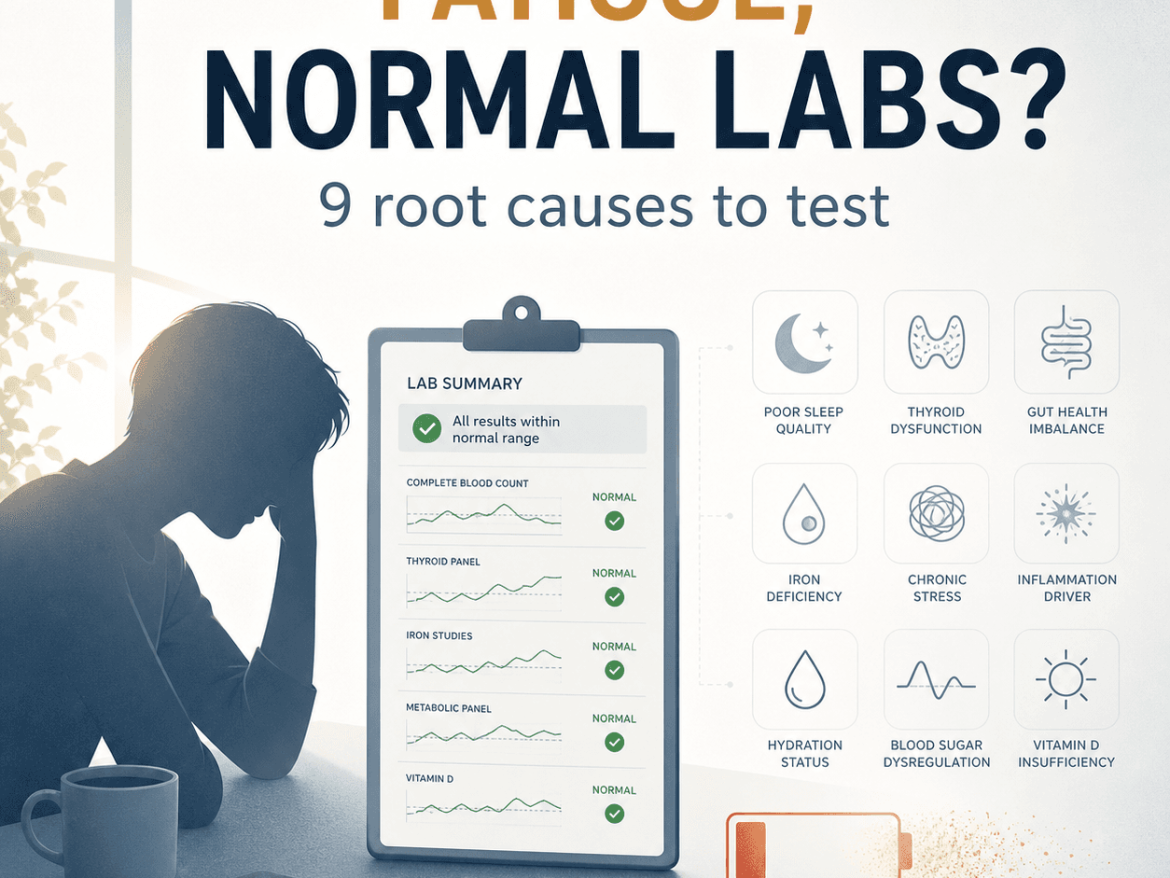
Here’s the deal. “Normal labs” usually means your results fall inside a broad reference range. It does not always mean:
- optimal for your body
- the right things were tested
- the timing was right
- the results were interpreted with symptoms in mind
- the issue isn’t happening upstream in a different system
In functional and integrative medicine, fatigue is rarely one single thing. It is often a web: blood sugar plus sleep plus iron status plus inflammation plus gut issues plus hormones, etc. The good news is there are patterns. And there are better tests.
So let’s walk through nine root causes that commonly show up when someone is exhausted but their basic labs look “fine”. I’ll share what to look for, what to test, and what often gets missed.
Quick note: this is educational and not personal medical advice. Fatigue can be a symptom of serious conditions, so it’s worth working with a qualified clinician, especially if this is new, severe, or worsening.
1) Thyroid issues hiding in plain sight (it is not just TSH)
A lot of people get one thyroid test: TSH. If it’s in range, the thyroid conversation ends.
But thyroid physiology is more nuanced than that.
You can have:
- subclinical hypothyroidism (TSH “borderline” but symptoms loud)
- poor conversion of T4 to T3 (you make hormone but don’t activate enough)
- elevated reverse T3 (your body downshifts under stress, illness, inflammation)
- autoimmune thyroid disease (Hashimoto’s) for years before TSH is clearly abnormal
How it feels: fatigue, brain fog, cold intolerance, constipation, dry skin, hair thinning, low mood, weight gain or stubborn weight, heavy periods.
What to test (beyond TSH):
- Free T4
- Free T3
- Thyroid peroxidase antibodies (TPOAb)
- Thyroglobulin antibodies (TgAb)
- Consider reverse T3 (context matters, best interpreted carefully)
What’s often missed: someone’s TSH is “normal” but creeping up over time. Or their antibodies are positive and they are told it does not matter until TSH changes. In reality, antibodies can be a clue to immune activation, nutrient issues (selenium, iron), gut permeability, and stress physiology.
2) Iron deficiency without anemia (the ferritin problem)
This one is so common it’s almost boring. Except it can completely flatten your energy.
You can have normal hemoglobin and hematocrit and still be iron deficient. The most common missed marker is ferritin, which reflects iron stores.
And ferritin can be “in range” but still too low for many people, especially menstruating women, endurance athletes, frequent blood donors, postpartum moms, and people with digestive issues.
How it feels: fatigue, shortness of breath with exertion, hair shedding, restless legs, palpitations, headaches, cold hands and feet, poor exercise recovery.
What to test:
- Ferritin
- Serum iron
- TIBC and transferrin saturation
- CBC (still useful, just not enough alone)
- If heavy periods: evaluate causes (fibroids, hormones, clotting issues)
- If low ferritin persists: assess absorption, inflammation, and GI blood loss risk
What’s often missed: ferritin interpreted like it’s only meaningful when it’s extremely low. Also, ferritin is an acute phase reactant, meaning inflammation can artificially raise it and hide deficiency. So iron status should be interpreted in context of CRP and overall picture.
3) Vitamin B12, folate, and “functional” deficiencies (not just overt deficiency)
You can have B12 in the low normal range and feel awful. Same with folate. Same with vitamin D. Same with magnesium.
And sometimes serum levels don’t reflect what’s happening in the tissues.
How it feels: fatigue, brain fog, tingling or numbness, mood changes, poor memory, sore tongue, weakness, lightheadedness.
What to test (more complete picture):
- Vitamin B12
- Folate (RBC folate can add context)
- Methylmalonic acid (MMA) for B12 functional status
- Homocysteine (can reflect B12, folate, B6 needs)
- Vitamin D (25 OH)
- Magnesium (RBC magnesium can be more informative than serum)
Common reasons levels drop:
- low animal protein intake (for B12)
- pernicious anemia (autoimmune)
- metformin, PPIs, certain anticonvulsants
- gut dysbiosis or malabsorption
- genetic methylation variations (not a diagnosis, but can be a clue)
What’s often missed: people told their B12 is “fine” at a low normal value while they have symptoms. Also, chronic stress and inflammation can increase nutrient demand.
4) Blood sugar swings and “normal” A1c
You do a fasting glucose and an A1c. They are normal. So you are told blood sugar is not the issue.
But fatigue can come from blood sugar variability, not just diabetes.
You can be on a rollercoaster: spike after meals, then crash, then crave caffeine or sugar, then crash again. A1c is an average. Averages hide extremes.
How it feels: afternoon crash, cravings, irritability when you don’t eat, anxiety or shakiness, waking at 2 to 4 am, brain fog after meals, fatigue after carbs, feeling better after protein.
What to test:
- Fasting insulin (often not included, but very helpful)
- CMP fasting glucose
- Hemoglobin A1c
- Oral glucose tolerance test (OGTT) in some cases
- Continuous glucose monitor (CGM) for a short period can be eye opening
What’s often missed: “normal” A1c with high fasting insulin. Or reactive hypoglycemia where glucose dips but no one measures at the right time. Also, sleep deprivation alone can worsen insulin sensitivity and create a loop: poor sleep causes blood sugar issues which cause more poor sleep.
5) Sleep that looks “fine” but is not restoring you
You might be getting 7 to 8 hours. You might even fall asleep easily.
But if sleep architecture is disrupted, you can wake up feeling like you ran a marathon.
Two big culprits: sleep apnea and fragmented sleep from stress physiology.
And yes, you can have sleep apnea without being older, male, or significantly overweight. It can show up with nasal congestion, jaw structure issues, pregnancy/postpartum, perimenopause, alcohol, or simply anatomy.
How it feels: waking unrefreshed, morning headaches, dry mouth, snoring, waking to urinate, daytime sleepiness, brain fog, anxiety, ADHD like symptoms.
What to consider testing or tracking:
- Home sleep study or in lab polysomnography if symptoms fit
- Overnight oximetry (screening only)
- Sleep timing, light exposure, caffeine, alcohol
- HRV and resting heart rate trends (wearables can help, not diagnostic)
What’s often missed: people assume “I’m not that tired, so it cannot be apnea.” But apnea often shows up as fatigue, mood changes, and brain fog, not just falling asleep at the wheel.
6) Chronic inflammation you can’t feel (until you do)
Low grade inflammation is like background noise. You may not notice it. But your mitochondria notice it. Your brain notices it. Your hormones notice it.
Inflammation can come from many sources: gum disease, gut issues, food sensitivities, autoimmune activity, chronic infections, toxin load, adipose tissue inflammation, poor sleep, overtraining.
How it feels: fatigue, body aches, brain fog, mood changes, poor exercise recovery, headaches, skin flares, digestive symptoms.
What to test (depending on history):
- hs CRP (high sensitivity C reactive protein)
- ESR
- Ferritin (again, inflammatory marker too)
- ANA and additional autoimmune labs if indicated
- Oral health evaluation (bleeding gums matter more than people think)
- Gut testing if GI symptoms or persistent unexplained inflammation
What’s often missed: inflammation gets framed as a vague concept. But it is measurable, trackable, and often reversible when you find the source.
7) Gut dysfunction and dysbiosis (energy drains start here)
If your gut isn’t absorbing nutrients, managing inflammation, and maintaining a strong barrier, fatigue is almost inevitable.
Gut issues can be loud, like bloating and diarrhea. Or quiet, like mild constipation and “I guess that’s normal for me.”
The gut can affect energy through:
- nutrient absorption (iron, B12, magnesium, fat soluble vitamins)
- immune activation (a huge portion of the immune system lives in the gut)
- endotoxin exposure (LPS) which can drive fatigue and brain fog
- neurotransmitter signaling (gut brain axis)
- histamine load (in certain people, histamine can feel like anxiety and insomnia)
How it feels: fatigue plus bloating, reflux, irregular stools, food reactions, acne/rosacea, eczema, frequent infections, mood swings.
What to test (based on symptoms):
- Celiac screening (tTG IgA plus total IgA, sometimes deamidated gliadin)
- H pylori testing (breath, stool, or endoscopy when warranted)
- Comprehensive stool analysis (dysbiosis, inflammation markers, digestion markers)
- SIBO breath test when symptoms fit
- Fecal calprotectin if inflammatory bowel disease is a concern
What’s often missed: people get told IBS and handed a fiber supplement, but no one asks why the gut is irritated in the first place. Also, chronic constipation can raise estrogen reabsorption and worsen hormone symptoms, which then worsen sleep, which worsens fatigue. It stacks.
8) Hormone imbalances and life stage shifts (especially cortisol and sex hormones)
Hormones are not just about reproduction. They are about energy allocation.
When your stress response system is overworked, you can feel wired and tired at the same time.
And sex hormone shifts in perimenopause and menopause can absolutely show up first as fatigue, sleep disruption, anxiety, and changes in body composition.
How it feels:
- Cortisol rhythm issues: second wind at night, trouble falling asleep, waking in the middle of the night, morning fatigue, reliance on caffeine
- Perimenopause: sleep disruption, heavier or irregular periods, mood changes, headaches, weight redistribution, fatigue
- Low testosterone (in women and men): low drive, low muscle recovery, fatigue, low mood
What to test (tailored to the person):
- Cortisol testing with rhythm (often salivary or urinary patterns, not just one serum cortisol)
- DHEA S
- Sex hormones: estradiol, progesterone, testosterone (free and total), SHBG
- For cycle tracking: timing matters, especially for progesterone
- Thyroid labs often overlap here too
What’s often missed: a single morning cortisol draw is not a cortisol “assessment.” It is a snapshot. Also, hormone labs must be interpreted with symptoms and timing, not just reference ranges.
9) Mitochondrial energy issues: nutrient deficits, infections, and overtraining
“Mitochondria” can sound trendy, but it is also very literal. Your cells make energy. That process has inputs. If inputs are missing or the system is under constant threat, you get fatigue.
Common drains include:
- nutrient depletion (B vitamins, iron, CoQ10, magnesium, carnitine)
- post viral syndromes (including long COVID like patterns)
- chronic infections (EBV reactivation patterns can be part of the picture in some)
- overtraining plus underfueling
- toxin exposures (mold, heavy metals, solvents) in select cases
How it feels: PEM type crashes after exertion (post exertional malaise), poor recovery, frequent illnesses, exercise intolerance, brain fog.
What to consider testing (case by case):
- CoQ10 (not always necessary, but can be assessed)
- Creatine kinase if muscle breakdown is suspected
- EBV panel interpretation carefully (can be tricky, not a simple yes/no)
- Inflammatory markers and immune markers
- Environmental exposure assessment if history suggests it
- Basic lifestyle audit: protein intake, total calories, training load, sleep, stress
What’s often missed: people pushing through fatigue with more exercise and less food because they think they are being healthy. Sometimes the body reads that as a threat and downshifts energy output even more.
If you have persistent fatigue, you deserve a workup that respects the symptom.
Sometimes the solution is simple. Low ferritin. Sleep apnea. Blood sugar crashes. B12 deficiency. Sometimes it is layered. And that is where a functional approach can help, because it looks at systems and patterns, not just isolated numbers.
If you want support digging into your own root causes, you can explore resources and book a consult through Dr. Lisa Silvani’s site at https://www.lisasilvani.com. There’s also a Metabolizm quiz and the Fatigue To Fit ebook, which are good starting points if you feel stuck and want a clearer direction.
What I’d do if this were me (simple next steps)
Not a substitute for medical care, but a practical sequence:
- Start with basics done well: CBC, CMP, TSH plus Free T4 and Free T3, ferritin and iron panel, B12, folate, vitamin D, hs CRP, fasting glucose and fasting insulin.
- If sleep is off, treat sleep like a diagnosis: screen for apnea, tighten sleep routines, address nasal congestion, review alcohol and caffeine timing.
- If digestion is not solid, do not ignore it: stool patterns, bloating, reflux, food reactions, and constipation all matter.
- Track patterns: when is fatigue worst, after which meals, in which week of cycle, after what kind of exercise, after what kind of stress.
- Work with someone who will interpret labs with symptoms. That part changes everything.
You are not lazy. You are not broken. You are getting signals.
The job is to figure out which system is asking for help.
FAQs (Frequently Asked Questions)
Why do I feel tired even though my lab results are normal?
Normal lab results often mean your tests fall within a broad reference range, but this doesn’t always reflect what’s optimal for your body. Fatigue can be caused by a combination of factors like blood sugar swings, thyroid issues, iron deficiency, inflammation, gut problems, and hormonal imbalances. Standard labs may not test the right markers or interpret results in the context of your symptoms.
What thyroid tests should I ask for if I’m experiencing fatigue but my TSH is normal?
Beyond TSH, it’s important to test Free T4, Free T3, Thyroid peroxidase antibodies (TPOAb), Thyroglobulin antibodies (TgAb), and possibly reverse T3. These tests help identify subclinical hypothyroidism, poor hormone conversion, autoimmune thyroid disease like Hashimoto’s, and other hidden thyroid issues that can cause fatigue despite a normal TSH.
Can I be iron deficient even if my hemoglobin is normal?
Yes. Iron deficiency without anemia is common and often missed because standard tests focus on hemoglobin and hematocrit. Ferritin levels reflect iron stores and can be low even when other markers are normal. Low ferritin can cause fatigue, hair shedding, restless legs, and poor exercise recovery. It’s important to assess ferritin alongside inflammation markers like CRP for accurate interpretation.
How do vitamin B12 and folate deficiencies contribute to fatigue even if levels seem normal?
Vitamin B12 and folate can be in the low-normal range yet insufficient for your body’s needs, leading to symptoms like fatigue, brain fog, tingling sensations, mood changes, and memory issues. Functional tests like methylmalonic acid (MMA) for B12 status and homocysteine levels provide deeper insight beyond serum values. Factors like low intake, malabsorption, medications, or genetic variations can affect these nutrients.
Why might my blood sugar tests appear normal but I still experience fatigue related to blood sugar?
Standard fasting glucose and A1c tests measure average blood sugar but don’t capture fluctuations throughout the day. You might experience blood sugar variability with spikes after meals followed by crashes that cause fatigue and cravings. This rollercoaster effect can drain energy despite ‘normal’ lab results.
What steps should I take if I have persistent fatigue but basic labs look fine?
Consider comprehensive testing including expanded thyroid panels (Free T3/T4 and antibodies), detailed iron studies (ferritin with inflammation markers), nutrient assessments (B12, folate, vitamin D, magnesium), and evaluation of blood sugar variability. Work with a qualified clinician experienced in functional or integrative medicine who interprets labs in the context of your symptoms to uncover root causes often missed by standard testing.
References
- McAninch EA, Bianco AC. The history and future of treatment of hypothyroidism. Ann Intern Med. 2016;164(1):50-56. doi:10.7326/M15-2125. NEJM
- Killip S, Bennett JM, Chambers MD. Iron deficiency anemia. Am Fam Physician. 2007;75(5):671-678. NHS UK
- O’Leary F, Samman S. Vitamin B12 in health and disease. Nutrients. 2010;2(3):299-316. doi:10.3390/nu2030299. BMC
- Bergenstal RM, Gal RL, Connor CG, et al. Blood glucose variability and diabetes complications: does it matter? Diabetes Care. 2019;42(2):236-241. doi:10.2337/dci18-0025. Science Direct
- Buysse DJ, Reynolds CF III, Monk TH, Berman SR, Kupfer DJ. The Pittsburgh Sleep Quality Index: a new instrument for psychiatric practice and research. Psychiatry Res. 1989;28(2):193-213.
- Furman D, Campisi J, Verdin E, et al. Chronic inflammation in the etiology of disease across the life span. Nat Med. 2019;25(12):1822-1832.
- Quigley EM, Gajula L, Johanson JF, et al.; American Gastroenterological Association Institute Technical Review on the Management of Irritable Bowel Syndrome and Chronic Idiopathic Constipation in Adults: Evidence-Based Recommendations from the American Gastroenterological Association Institute Clinical Practice Update Committee (CPUC). Gastroenterology 2019;156(1):206–218.
- Hollenberg AN, Weintraub BD (eds). Principles and Practice of Endocrinology and Metabolism (Third Edition). Lippincott Williams & Wilkins; 2004.
- Naviaux RK, Naviaux JC, Li K, et al.; Metabolic features of chronic fatigue syndrome Proc Natl Acad Sci USA 2016;113(37):E5472-E5480.
- Ruscio MD M., Sherr MD., et al., Functional Medicine Approach to Addressing Fatigue in Clinical Practice: A Review of Root Causes and Treatment Strategies Nutrients 2021;13(7):2348 https://doi.org/10.3390/nu13072348


