 dr. Lisa Silvani
 Bloating. Gas. IBS. Maybe constipation. Maybe diarrhea.
And sure, those are real. But they are not the whole story. Not even close.
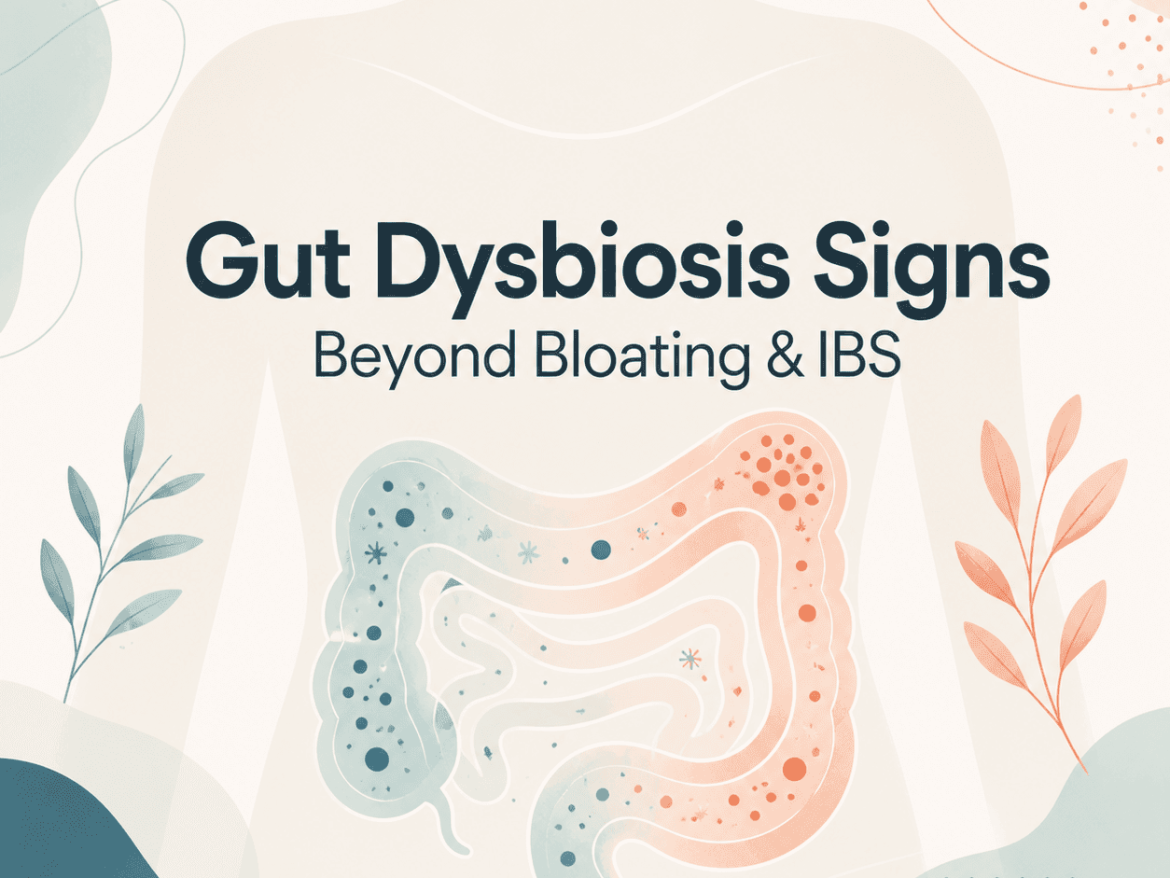
Gut dysbiosis basically means your gut ecosystem is out of balance. Too many “opportunistic” microbes, not enough beneficial ones, low diversity, weird overgrowth patterns, inflammation, impaired gut barrier. All that fun stuff. And because your gut talks to your immune system, your hormones, your brain, your skin, your metabolism, your detox pathways… dysbiosis can show up in places that feel totally unrelated to digestion.
So if your stomach is “fine” (or mostly fine) but your body still feels off, this is for you.
Below are gut dysbiosis signs that go way beyond bloating and IBS. Some are subtle. Some are surprising. A few might make you go, wait, that’s a gut thing?
Yeah. Sometimes it is.
First, what gut dysbiosis is (in normal language)
Your gut is basically an inner rainforest. Trillions of organisms, working around the clock. They help break down food, produce vitamins, train your immune system, maintain your gut lining, influence inflammation levels, and even make neurotransmitter precursors that impact mood.
When that ecosystem is balanced, you usually feel resilient. You digest decently. Your skin behaves. Your energy is more stable. You do not get sick every other week. You bounce back.
When it is not balanced, things can get… weird. And not always in a straight line.
Dysbiosis can be driven by things like:
- Antibiotics (even one course can shift the microbiome)
- Chronic stress and poor sleep
- Diet low in fiber and polyphenols, high in ultra processed foods
- Alcohol
- Chronic constipation (yes, it can be cause and effect)
- Infections or foodborne illness history
- Acid suppressing meds (in some cases)
- Oral health issues (mouth microbes seed the gut, it matters)
- Environmental exposures
- Hormone shifts (pregnancy, perimenopause, menopause)
- Low stomach acid, poor bile flow, pancreatic insufficiency
And sometimes it is not one thing. It is the pileup.
Ok. Now the signs.
1) Skin issues that do not respond the way they “should”
This one is common and annoying.
You change your skincare. You go fragrance free. You buy the gentle cleanser. You take the antihistamine. You do the steroid cream. You stop dairy for a week. And nothing really sticks.
Gut dysbiosis can be involved in:
- Acne (especially inflammatory acne)
- Eczema and chronic dryness
- Rosacea flares
- Itchy skin, hives, random rashes
- Psoriasis flare patterns (in some people)
Why it happens (simplified):
- Dysbiosis can shift immune signaling and promote systemic inflammation.
- It can impair the gut barrier, letting more inflammatory compounds through.
- Some microbes produce metabolites that influence skin inflammation.
- Histamine issues can be tied to certain gut patterns (not always, but sometimes).
If your skin is acting like a full time job and the obvious triggers do not explain it, the gut is worth considering.
2) Anxiety, low mood, or that “wired but tired” feeling
People love to say “it’s all in your head” when you have anxiety.
But your gut and brain are in constant conversation through the gut brain axis. Your microbes influence neurotransmitter pathways, stress response, inflammation, and even how you respond to cortisol swings.
Dysbiosis may show up as:
- Increased anxiety, especially “body anxiety” (racing heart, restlessness)
- Irritability, mood swings
- Low mood that feels heavy and unmotivated
- A sense of being easily overwhelmed
- Poor stress tolerance
- Feeling jittery after caffeine or even without caffeine
It is not that dysbiosis is the only cause of anxiety. Not at all. But if your nervous system feels like it lost its buffer, gut work can sometimes be one of the missing pieces.
3) Sleep that is light, restless, or unrefreshing
If you fall asleep fine but wake up at 2 or 3 am. Or you sleep eight hours and still feel like you got hit by a truck.
The gut can play a role.
Potential dysbiosis related patterns include:
- Trouble staying asleep
- Early waking
- Vivid dreams or restless sleep
- Morning grogginess that lasts too long
- Feeling “tired but wired” at night
A few reasons:
- Inflammation can disrupt sleep architecture.
- Blood sugar instability can wake you up, and dysbiosis can affect glucose regulation.
- Histamine can keep you alert.
- Stress hormones can get dysregulated when your system is inflamed.
Also, if reflux is silently waking you up, that can mimic insomnia too.
4) Frequent colds, sinus infections, or feeling “always run down”
About 70 percent of your immune system is associated with your gut. So when the microbiome is off, immune regulation can be off.
This can look like:
- Getting sick more often than you used to
- Taking longer to recover
- More frequent sinus issues
- More frequent sore throats
- Increased seasonal allergy intensity
- Feeling inflamed after travel or stress
A dysregulated gut can push the immune system toward overreacting (allergies, autoimmune flares) or underperforming (frequent infections). Sometimes both. Which is honestly confusing when you live it.
5) New or worsening food sensitivities
This is a big one.
If you used to eat everything and now you react to random foods, it is worth digging deeper. Because often the food is not the root cause. It is just the thing your system can no longer tolerate.
Dysbiosis can contribute to:
- Increased sensitivity to high histamine foods (aged cheese, wine, fermented foods)
- Increased sensitivity to FODMAPs (onions, garlic, certain fruits)
- Increased sensitivity to gluten (not always celiac, but symptoms)
- Feeling “inflamed” after meals, even healthy meals
- Brain fog after eating
Some people end up eliminating 20 foods and still feel bad. That is usually a sign you need a better plan than restriction.
6) Brain fog, poor focus, and that “cotton head” feeling
Brain fog is one of the most common “mystery symptoms” I see people mention, and they rarely connect it to gut health at first.
Dysbiosis can be associated with:
- Foggy thinking
- Slow word recall
- Poor concentration
- Feeling spacey after meals
- Low mental stamina
Possible mechanisms include inflammation, impaired detox pathways, microbial metabolites, nutrient absorption issues, and blood sugar swings. Not always dysbiosis, but the gut is a frequent contributor.
7) Bad breath, metallic taste, or a coated tongue
We usually blame dental hygiene. And yes, obviously, rule that out.
But the mouth is part of the GI tract. Oral dysbiosis and gut dysbiosis can travel together. So can reflux patterns.
Things to watch:
- Persistent bad breath despite good oral care
- Thick tongue coating
- Metallic taste
- Tonsil stones that keep returning
- Reflux, sour taste, or throat clearing
Sometimes the issue is upstream digestion too, like low stomach acid or slow motility, which then impacts microbial balance downstream.
8) Hormone symptoms that feel “off” and hard to pin down
The gut helps regulate hormones, partly through metabolism and elimination. There is also the estrobolome, the collection of microbes involved in estrogen metabolism.
Dysbiosis can sometimes show up as:
- PMS that is worsening over time
- Breast tenderness
- Heavy or clotty periods
- Cycle irregularity
- Acne around the cycle
- Perimenopause symptoms that feel extra intense
- Feeling worse around ovulation or right before your period
This does not mean every hormone symptom is dysbiosis. But if your detox pathways are sluggish, inflammation is high, and elimination is poor, hormone clearance can get messy.
Also. Constipation is a huge piece here. If you are not eliminating daily, hormones that should be excreted can get reabsorbed. Simple, but it matters.
9) Weight gain, stubborn weight, or metabolic weirdness
A lot of people assume gut issues should make you lose weight.
Not necessarily.
Some dysbiosis patterns are associated with:
- Increased cravings, especially sugar and refined carbs
- Feeling hungrier sooner after eating
- Difficulty losing weight despite “doing everything right”
- Belly weight that feels inflammatory and puffy
- Blood sugar swings
Your gut microbes can influence energy harvest from food, appetite signaling, insulin sensitivity, inflammation, and even how your body handles bile acids. Again, not the only factor. But it can be part of the puzzle.
10) Joint pain, body aches, or stiffness that migrates
This one surprises people.
If you have:
- Morning stiffness
- Random aches that come and go
- Joint pain without a clear injury
- Pain that flares with certain foods or stress
- “Inflammation” labs that are borderline, or normal but you feel inflamed
…gut dysbiosis and gut barrier issues are worth considering. The immune system is reactive. If the gut is sending constant low grade inflammatory signals, the body can express that in joints and muscles.
11) Histamine intolerance type symptoms
Not everyone with dysbiosis has histamine issues. And histamine intolerance is complicated. But there is overlap.
Possible signs include:
- Flushing after wine or fermented foods
- Itching, hives, unexplained rashes
- Nasal congestion after meals
- Headaches triggered by aged foods
- Feeling “amped” at night
- GI upset after leftovers (higher histamine)
Certain gut microbes can produce histamine, and dysbiosis plus a stressed gut lining can make histamine handling worse.
12) Headaches, especially after meals or with certain foods
Headaches are multi factor. Hormones, sleep, hydration, posture, stress, minerals, blood sugar. All valid.
But gut patterns can be involved when:
- Headaches happen after eating
- They correlate with constipation
- They flare with high histamine foods
- They improve when gut function improves
- They appear after antibiotics or illness history
Sometimes it is inflammation. Sometimes it is histamine. Sometimes it is blood sugar instability driven by dysregulated digestion. Sometimes it is all of the above.
13) Chronic fatigue that does not match your life
This is the big one on Dr. Lisa Silvani’s site for a reason. People are exhausted. And they cannot muscle their way out of it anymore.
Dysbiosis can contribute to fatigue through:
- Inflammation and immune activation
- Poor nutrient absorption (iron, B12, magnesium, etc.)
- Mitochondrial stress from chronic inflammatory signaling
- Sleep disruption
- Blood sugar dysregulation
- Increased токсin load from microbial byproducts (depending on the situation)
If your fatigue comes with other hints, skin issues, mood changes, brain fog, frequent infections, food sensitivities, it is worth zooming out and looking at gut health as a system.
If you want a structured way to think through fatigue drivers, Dr. Lisa has a free “Metabolizm” quiz on her website that can help you see patterns you might be missing. It is not a diagnosis. More like a good first flashlight.
14) Constipation that you normalize (or diarrhea you shrug off)
I know this is still “GI” but it is not always framed as a dysbiosis sign. People treat it like a personality trait.
If you are not having a comfortable, complete bowel movement most days, that matters. Especially if you are dealing with:
- Hard stools, straining, incomplete emptying
- Going every 2 to 3 days and calling it normal
- Alternating constipation and loose stools
- Loose stools that happen with urgency
- Undigested food in stool
Slow motility can promote overgrowth. Overgrowth can worsen motility. It is a loop.
15) Bloating is not the only “gut belly” sign. There is also distention and fluid retention
Some people do not feel gassy. They just look swollen.
- You wake up flatter, then by afternoon your abdomen is rounded.
- Your rings feel tight.
- Your face looks puffy.
- Your body feels inflamed after meals.
That can be food reactions, sodium, hormones, stress. But dysbiosis driven inflammation is also a common contributor.
Ok, so what do you do with this?
This is the part where people want a supplement list. And I get it. You want the fastest path.
But dysbiosis is not one thing. So the solution is not one thing either.
Still, there are a few smart first steps that are usually safe and genuinely helpful.
Step 1: Stop guessing and get more specific
If you have persistent symptoms, consider functional testing guided by a clinician who knows how to interpret it in context. Stool testing, sometimes breath testing (SIBO), sometimes inflammatory markers, nutrient markers, metabolic markers. The “best” test depends on the story.
The biggest mistake I see is people buying random gut protocols off the internet and blasting antimicrobials when they do not even know what they are treating.
Sometimes you need to remove an overgrowth. Sometimes you need motility support. Sometimes you need bile flow support. Sometimes you need more fiber and food diversity. Sometimes you need nervous system support first because your gut is basically in freeze mode.
Step 2: Get the basics back in place (boring but powerful)
A few fundamentals that matter more than they should:
- Eat slowly. Chew. Not perfect, just better.
- Prioritize protein and fiber at meals (gradually, if you are sensitive).
- Hydrate consistently, especially earlier in the day.
- Get morning light. Move your body. Even a walk.
- Aim for regular bowel movements. Do not ignore constipation.
- Sleep. Protect it like it is treatment. Because it kind of is.
Step 3: Build microbial diversity, gently
If you tolerate it, diversity is usually the long game.
- More plant variety over the week (not just salad every day)
- Polyphenol rich foods: berries, olive oil, herbs, spices, green tea
- Fermented foods can help some people, but they can flare others (histamine, SIBO, etc.). Do not force it.
- Prebiotic fibers can be helpful, but again, titrate slowly if you bloat.
Step 4: Watch the “gut offenders” that quietly keep dysbiosis alive
Not forever. But enough to create momentum:
- Ultra processed foods (emulsifiers, additives, low fiber)
- Excess alcohol
- Constant grazing, no meal spacing
- High sugar intake
- Chronic stress with zero downshift time
Step 5: If you need help, get eyes on your case
This is where working with someone can save you months.
If you are dealing with fatigue, mood and sleep issues, weight resistance, chronic skin flares, or a stack of weird symptoms that do not fit in one neat box, you can book a free consultation through Dr. Lisa Silvani’s website at https://www.lisasilvani.com. Her whole practice is built around connecting these dots in a systems based way, not just handing you a probiotic and wishing you luck.
Quick self check: do these dysbiosis signs cluster for you?
Here is a simple way to think about it.
If you have:
- Even mild digestion issues, plus
- One or more of: skin issues, anxiety, sleep disruption, brain fog, frequent infections, hormone symptoms, headaches, stubborn weight, joint pain
…then dysbiosis becomes a stronger suspect.
Not a guaranteed answer. But a strong lead.
Let’s wrap this up
Bloating and IBS get all the attention. But gut dysbiosis can show up as skin problems, anxiety, insomnia, fatigue, headaches, immune issues, hormone chaos, brain fog, joint pain, and weird food reactions that make you feel like your body is becoming “sensitive” to everything.
If that’s you, try not to spiral into endless elimination diets and supplement roulette.
Zoom out. Look for patterns. Get the basics back. And if you want support, use the resources on lisasilvani.com or book a consult and get a plan that’s actually built for your body, your symptoms, your history.
Because you should not have to live in a constant state of “something is off” and just call it normal.
FAQs (Frequently Asked Questions)
What is gut dysbiosis and how does it affect my overall health?
Gut dysbiosis means your gut ecosystem is out of balance, with too many opportunistic microbes and not enough beneficial ones. This imbalance can lead to inflammation, impaired gut barrier, and disrupted communication with your immune system, hormones, brain, skin, metabolism, and detox pathways, causing symptoms beyond just digestive issues.
Can gut dysbiosis cause skin problems that don’t improve with typical treatments?
Yes. Gut dysbiosis can contribute to skin issues like acne, eczema, rosacea flares, itchy skin, hives, and psoriasis by promoting systemic inflammation and altering immune signaling. If your skin problems persist despite skincare changes and avoiding common triggers, the gut may be involved.
How is gut dysbiosis linked to anxiety and mood disorders?
The gut-brain axis connects your microbes with neurotransmitter pathways and stress responses. Dysbiosis can increase anxiety (especially ‘body anxiety’), irritability, mood swings, low mood, poor stress tolerance, and feelings of being easily overwhelmed by affecting inflammation and cortisol regulation.
Why might gut dysbiosis cause sleep disturbances like restless or unrefreshing sleep?
Gut dysbiosis can disrupt sleep through inflammation affecting sleep architecture, blood sugar instability waking you up, elevated histamine levels keeping you alert, and stress hormone imbalances. Symptoms include trouble staying asleep, early waking, vivid dreams, morning grogginess, and feeling ‘tired but wired’ at night.
Is frequent illness or feeling always run down related to gut dysbiosis?
Yes. Since about 70% of your immune system is associated with your gut, an imbalanced microbiome can impair immune regulation. This may lead to getting sick more often, slower recovery times, frequent sinus infections or sore throats, intensified allergies, and increased inflammation after stress or travel.
Can gut dysbiosis cause new or worsening food sensitivities?
Absolutely. If you develop reactions to foods you previously tolerated well, it could be due to gut dysbiosis. The imbalance in your microbiome can affect how your body processes foods and lead to intolerances or sensitivities that weren’t present before.
References
- Thursby, E., & Juge, N. (2017). Introduction to the human gut microbiota. The Biochemical Journal, 474(11), 1823–1836. https://doi.org/10.1042/BCJ20160510
- Rinninella, E., Raoul, P., Cintoni, M., Franceschi, F., Miggiano, G. A. D., Gasbarrini, A., & Mele, M. C. (2019). What is the Healthy Gut Microbiota Composition? A Changing Ecosystem across Age, Environment, Diet, and Diseases. Microorganisms, 7(1), 14. https://doi.org/10.3390/microorganisms7010014
- O’Mahony, S. M., Clarke, G., Borre, Y., Dinan, T. G., & Cryan, J. F. (2015). Serotonin, tryptophan metabolism and the brain-gut-microbiome axis. Behavioural Brain Research, 277, 32–48. https://doi.org/10.1016/j.bbr.2014.07.027
- Quigley, E. M. M. (2017). Gut bacteria in health and disease. Gastroenterology & Hepatology, 13(5), 333–344.
- Vitetta, L., Vitetta, G., & Hall, S. (2018). The intestinal microbiome and the role of probiotics in cardiovascular disease prevention and management: a review of the literature on gut microbiota modulation and implications for heart health and disease risk reduction strategies in humans with hypertension or dyslipidemia or both conditions or at risk for cardiovascular disease: a systematic review of clinical trials published between 2000 and 2018 inclusive using PubMed and Scopus databases with emphasis on probiotic therapy targeting gut microbiota modulation for improved cardiovascular outcomes.. Frontiers in Cardiovascular Medicine, 5, 33.
- Rooke, T., Hsieh, S.-C., & McDermott, M.-S.-J.-M.-J.-B.-C.-N.-H.-E.-B.-L.. (2020). The relationship between human skin diseases and gut dysbiosis: Current evidence and future directions – A narrative review of recent literature from clinical studies and animal models.. British Journal of Dermatology, 182(6), 1479-1489.
- Bajaj JS et al., (2021). Gut microbial alterations are associated with anxiety and depression symptoms in cirrhosis patients independent of alcohol use disorder diagnosis: a pilot study from the USA.. American Journal of Psychiatry,178(3),262-270.
- The NHS UK (2021). Gut health: What affects it and how to improve it? Retrieved from https://www.nhs.uk/live-well/eat-well/gut-health-what-affects-it-and-how-to-improve-it/
- Fitzgerald K.T., Hyman M.A., Ruscio M.G.(2020). Clinical perspectives on treating gut dysbiosis-induced systemic inflammation in chronic disease.. Journal of Functional Medicine.
- Rinninella E et al., (2019). Food components and dietary habits shaping the human gut microbiota composition: what should be considered to improve diet impact? Gut Microbes.10(5):728-745.


