
 vanilis
 But when fatigue starts to run your life, when you are dragging yourself through the day, waking up unrefreshed, needing caffeine just to feel like a person, that is when it becomes medical. And it is also when most people finally go get “labs.”
They do the responsible thing. They book the appointment. They explain, again, that this is not just being busy. And then a fairly standard fatigue panel happens.
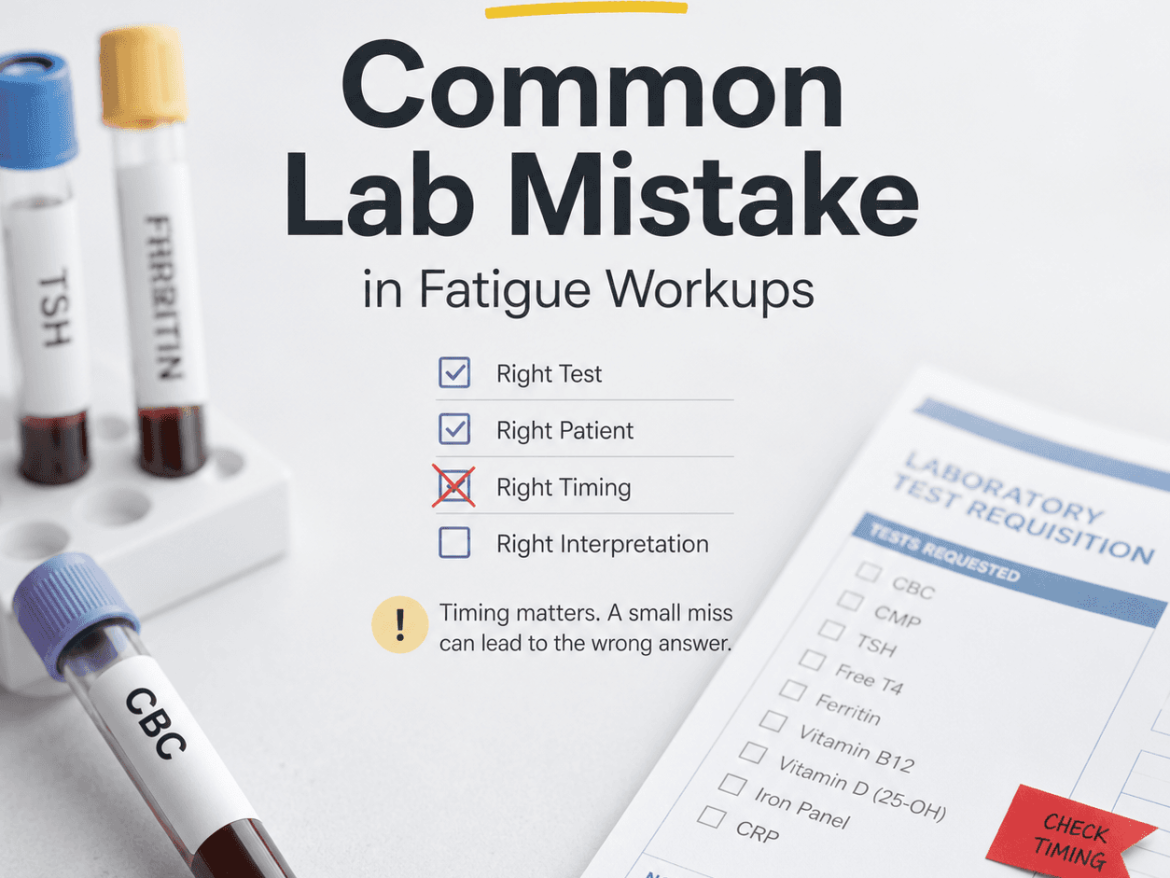
And here is where the most common lab mistake shows up.
Not because anyone is trying to do a bad job. It is usually the opposite. People are trying to be efficient. Practical. “Let’s check thyroid. Iron. B12. Vitamin D. CBC. CMP. Maybe cortisol.”
But the mistake is that we do the right labs in the wrong way. Or we order the wrong version of the right lab. Or we interpret normal ranges like they mean optimal health.
And then the patient gets told the worst sentence in fatigue medicine:
“Everything looks normal.”
The most common mistake: relying on TSH (and calling it a thyroid workup)
If I had to name one lab mistake that I see over and over in fatigue workups, it is this one.
A thyroid “check” that is basically just TSH.
Sometimes TSH plus a total T4. Sometimes. But usually it is TSH. And if it is in range, the thyroid is declared innocent and everyone moves on.
Except. For a lot of fatigue patients, the thyroid is not fine. Or it is not the whole story, but it is a very real piece of the story. And TSH alone often cannot show that.
A few reasons.
1) TSH is a pituitary signal, not a direct measure of thyroid hormone action
TSH is the brain’s text message to the thyroid. “Make more hormone” or “make less.”
It is not the actual hormone doing the work in your cells.
So you can have a normal TSH and still have:
- Low free T3
- Poor conversion of T4 to T3
- High reverse T3 (more on that soon)
- Thyroid hormone resistance at the tissue level (less common, but real)
- Autoimmune thyroid disease that is quietly brewing
If you are living with fatigue, brain fog, dry skin, constipation, hair thinning, feeling cold, weight gain or stubborn weight, low mood, and your thyroid workup was just TSH. That is not a full evaluation.
2) “Normal range” is not the same as “optimal for you”
Lab ranges are statistical. They are not personalized. And they are not always built from a population of vibrant, well sleeping, metabolically healthy people.
Many people feel rough with a TSH that is technically normal.
And here is the other issue. TSH is dynamic. Stress, sleep deprivation, calorie restriction, inflammation, certain medications, even time of day can shift it. So a single “normal” snapshot can miss the trend.
3) Hypothyroid symptoms overlap with other fatigue drivers, so you need thyroid clarity
Fatigue is almost never one thing. That is the whole point of functional medicine. We look for patterns, clusters, root causes.
But when thyroid status is unclear, the entire fatigue picture gets muddy. People end up chasing iron, then cortisol, then sleep, then supplements, then they blame themselves.
A thyroid panel that is too narrow can set someone back months or years.
What a more useful thyroid evaluation often includes
This is not medical advice for your specific case, but in general, if fatigue is a key symptom, a more informative thyroid picture often includes:
- TSH
- Free T4
- Free T3
- Thyroid peroxidase antibodies (TPOAb)
- Thyroglobulin antibodies (TgAb)
Sometimes also:
- Reverse T3 (context dependent, and interpretation matters)
- A review of iodine status, selenium intake, iron status, inflammation markers, and caloric adequacy
And then you interpret it alongside symptoms, temperature patterns, heart rate, menstrual patterns, GI function, and the bigger metabolic picture.
Not in isolation. Never in isolation.
The hidden follow up mistake: testing thyroid, but skipping thyroid antibodies
This one is quiet, but it matters.
You can be developing Hashimoto’s for years before TSH goes out of range. During that time, fatigue, brain fog, mood shifts, anxiety, and body aches can be present. And the person is told the labs are fine.
If antibodies are not tested, autoimmune thyroid disease can go undetected until later. Which is frustrating because earlier support can change the trajectory.
Also, antibodies give context. They tell you inflammation is part of the thyroid story. And inflammation changes how we think about gut health, nutrient needs, stress load, and environmental triggers.
The fatigue lab trap: “Let’s check iron” but ordering the wrong iron markers
This is the next most common problem I see.
Someone is tired. They get iron tested. It is normal.
But what was tested?
Often it is just serum iron. Or a CBC with hemoglobin. Or maybe ferritin alone.
Here is the thing. Iron status is not one number. It is a system.
A fatigue friendly iron evaluation usually includes:
- CBC (looking at hemoglobin, MCV, RDW)
- Ferritin (storage iron, but also an acute phase reactant)
- Serum iron
- TIBC and transferrin saturation
- Sometimes soluble transferrin receptor, depending on the scenario
- And context markers like CRP (because inflammation can falsely elevate ferritin)
You can have a “normal” hemoglobin and still have low ferritin that absolutely drags energy down, especially in menstruating women, postpartum women, endurance athletes, people with heavy periods, and people with low stomach acid or gut malabsorption.
And you can have ferritin that looks okay, but it is inflated because inflammation is up. Meanwhile, iron delivery to tissues is poor.
That is how people end up iron deficient in real life, but “normal” on paper.
B12 and folate. another common lab misstep
Many fatigue panels include B12. Great.
But what counts as normal? And which marker is used?
Serum B12 can look fine even when functional B12 status is not. Especially if someone is supplementing, or if binding proteins are altering the number.
Depending on the clinical picture, it can help to include:
- Methylmalonic acid (MMA) as a functional marker of B12 status
- Homocysteine (also influenced by folate, B6, riboflavin)
- Folate, ideally RBC folate in some contexts, though interpretation varies
Fatigue, tingling, numbness, poor concentration, mood changes, tongue soreness, and exercise intolerance can all overlap here. And if the lab approach is too shallow, it becomes another “looks normal” dead end.
Vitamin D. yes, but do not stop there
Vitamin D deficiency is common, and correcting it can help energy, mood, immune function, and pain.
But there is a pattern I see a lot. Vitamin D is low, it gets supplemented, and then the fatigue remains. Which makes the person feel crazy.
Vitamin D matters, but it is rarely the only driver.
Also, just taking high dose D without checking magnesium status, calcium balance, and the broader picture is not always ideal. Vitamin D metabolism and utilization depends on magnesium. If someone is depleted, they can feel worse.
So yes, test vitamin D. But do not treat it like the whole fatigue story.
The cortisol mistake: using a single morning cortisol and calling it adrenal fatigue
This one is messy online.
A single serum morning cortisol can be useful in certain situations, like ruling out major adrenal insufficiency when paired with clinical context.
But for the more common fatigue patterns, where stress, sleep disruption, blood sugar swings, inflammation, and burnout are all in the mix, a single cortisol value often tells you very little. It is a snapshot. Cortisol is a rhythm.
Sometimes a more useful approach includes:
- Looking at sleep timing and quality first (seriously, this is huge)
- Assessing blood sugar regulation and protein intake
- Considering a diurnal cortisol pattern via salivary or urinary metabolites, depending on the case and what you are trying to learn
- Pairing cortisol interpretation with symptoms, HRV, blood pressure trends, and stimulant use
Also, the label “adrenal fatigue” is often used when the real issue is something else. Like iron deficiency. Or sleep apnea. Or under eating. Or thyroid conversion problems. Or mold exposure. Or gut inflammation. Or perimenopause. Or depression. Or all of the above.
The big miss: ignoring blood sugar and insulin patterns
If you want another very common fatigue blind spot, it is glucose regulation.
Many people get a CMP and their fasting glucose is normal. Maybe their A1c is normal.
Then nobody talks about it again.
But fatigue can absolutely be driven by blood sugar swings, reactive hypoglycemia, insulin resistance, and poor metabolic flexibility.
Depending on the person, useful markers can include:
- Fasting insulin
- Fasting glucose
- Hemoglobin A1c
- Triglycerides and HDL (as metabolic clues)
- Sometimes an oral glucose tolerance test with insulin, or CGM data, if the story fits
You can have “normal” labs and still be on the edge metabolically. And you can feel it first as fatigue, cravings, anxiety spikes, afternoon crashes, and sleep disruption.
Functional and anti aging medicine tends to take this seriously because metabolic health is not just about diabetes. It is about energy production at the cellular level. Mitochondria care about fuel stability.
Inflammation. the quiet energy thief that often never gets checked
Low grade chronic inflammation makes people tired. Full stop.
And yet, a lot of basic fatigue workups never include even a simple CRP.
Markers that sometimes help illuminate the terrain:
- High sensitivity CRP (hs CRP)
- ESR (less specific, but can be helpful)
- Ferritin interpreted with CRP
- CBC patterns like elevated platelets, shifts in neutrophils and lymphocytes
- Liver enzymes, because fatty liver and inflammation often travel together
Inflammation can come from many sources. Gut dysbiosis. food sensitivities. chronic infections. periodontal disease. autoimmune conditions. poor sleep. excess visceral fat. toxins. mold.
But if you never look for it, you end up treating symptoms and missing the driver.
Why this matters so much in real life
Because fatigue patients are often already discouraged.
They are doing their best. They are trying to keep up. They are trying not to be dramatic about it. And then they get a lab printout that basically says they are fine.
So they either give up, or they start self treating in the dark. Random supplements. Extreme diets. Biohacking rabbit holes at 2 a.m. because they cannot sleep but they also cannot think.
A better lab strategy does not just give numbers. It gives direction.
It tells you where to look next. What to support first. Whether the issue is more likely nutrient depletion, thyroid signaling, inflammation, metabolic imbalance, hormone transition, gut issues, or something else.
And yes, sometimes it tells you that you need a different kind of workup entirely, like a sleep study, cardiology evaluation, or deeper autoimmune or infectious disease testing. That is not a failure. That is clarity.
So what should you do if your fatigue labs were “normal”
A few practical steps that are not overwhelming.
- Ask what was actually tested. Get the lab list, not the summary.
- Check whether thyroid testing included free T3 and antibodies. If it was only TSH, that is the exact mistake we are talking about.
- Review iron markers beyond hemoglobin. Look at ferritin, transferrin saturation, and inflammation context.
- Look at metabolic markers. Not just glucose. Insulin matters.
- Pair labs with your story. Symptoms, sleep, menstrual history, diet pattern, stress load, gut symptoms, meds, and timeline.
And if you want support from someone who does this kind of root cause fatigue work all the time, that is literally what we do inside Dr. Lisa Silvani’s virtual practice, Reviva Health and Wellbeing. You can explore options and book a starting point through the clinic site at https://www.lisasilvani.com, including a free discovery call if you are not sure where to begin.
A quick note, because gut health keeps showing up in fatigue
You shared content about Gut N Glow, and I actually love that angle because it is not just marketing fluff.
People underestimate how often fatigue is connected to the gut.
Not in a vague “everything is the gut” way. In a practical way:
- Inflammation from dysbiosis can tank energy.
- Malabsorption can drive low iron, low B vitamins, low magnesium.
- Constipation can reflect thyroid slowdown and also worsen toxin recirculation.
- Histamine issues can disrupt sleep.
- Food reactions can trigger immune activation.
So if your fatigue workup is only labs, with no gut lens, you can miss a big driver. Sometimes the labs are the clue, sometimes symptoms are the clue. Bloating, reflux, irregular stools, nausea, skin flares, anxiety after meals, these matter.
Wrapping it up
The most common lab mistake in fatigue workups is treating TSH as a complete thyroid evaluation. It is not.
And once that happens, a bunch of other common misses tend to follow. Shallow iron testing. Serum B12 without functional context. A single cortisol snapshot interpreted like a diagnosis. Glucose checked without insulin. Inflammation not checked at all.
Fatigue is not always complicated, but it is often layered.
The goal is not “more tests forever.” The goal is the right tests, in the right order, interpreted like a human being is attached to them.
If you are stuck in the normal labs loop and still feel awful, it may be time for a more root cause approach. You can learn more about working with Dr. Lisa Silvani at https://www.lisasilvani.com, and if it feels like a fit, book a discovery call and we can talk through what has been done, what was missed, and what to do next.
FAQs (Frequently Asked Questions)
Why is fatigue more than just feeling tired, and when should it be considered a medical concern?
Fatigue becomes a medical concern when it starts to run your life—when you drag yourself through the day, wake up unrefreshed, and need caffeine just to feel normal. At this point, it’s not just being busy or tired; it’s a symptom that requires proper evaluation and lab work to identify underlying causes.
What is the most common lab mistake made during fatigue evaluations related to thyroid testing?
The most common mistake is relying solely on TSH (thyroid-stimulating hormone) as a thyroid workup. Many fatigue patients have thyroid issues that TSH alone cannot reveal, such as low free T3, poor conversion of T4 to T3, high reverse T3, thyroid hormone resistance at the tissue level, or autoimmune thyroid disease. Therefore, a full thyroid panel is necessary for accurate assessment.
Why is interpreting ‘normal’ lab ranges potentially misleading in fatigue assessments?
Lab ‘normal ranges’ are statistical averages based on populations that may not represent optimal health for every individual. Factors like stress, sleep deprivation, inflammation, medications, and time of day can affect values like TSH. Thus, a single ‘normal’ test result might miss subtle dysfunctions causing fatigue.
What does a comprehensive thyroid evaluation for fatigue typically include beyond just TSH?
A more informative thyroid panel often includes TSH, Free T4, Free T3, Thyroid peroxidase antibodies (TPOAb), and Thyroglobulin antibodies (TgAb). Sometimes reverse T3 and assessments of iodine status, selenium intake, iron status, inflammation markers, and caloric adequacy are also important. These tests should be interpreted alongside symptoms and other health indicators rather than in isolation.
Why is testing for thyroid antibodies important in patients with fatigue?
Testing for thyroid antibodies like TPOAb and TgAb helps detect autoimmune thyroid diseases such as Hashimoto’s before changes appear in TSH levels. Early detection allows earlier intervention which can alter disease trajectory. Antibodies also indicate inflammation involvement affecting gut health, nutrient needs, stress load, and environmental triggers.
What are common mistakes made when evaluating iron status in patients with fatigue?
A frequent error is ordering incomplete iron tests—such as only serum iron or hemoglobin—without assessing the full iron system. A thorough iron evaluation includes CBC (hemoglobin, MCV, RDW), ferritin (storage iron plus inflammation marker), serum iron, total iron-binding capacity (TIBC), transferrin saturation, sometimes soluble transferrin receptor levels, and inflammatory markers like CRP. This comprehensive approach helps identify iron deficiencies that simple tests might miss.
References
- Biondi, B., & Cooper, D. S. (2018). The Clinical Significance of Subclinical Thyroid Dysfunction. The New England Journal of Medicine, 378(2), 113-121. https://doi.org/10.1056/NEJMcp1700257
- Pearce, S. H., Brabant, G., Duntas, L. H., Monzani, F., Peeters, R. P., Razvi, S., & Wemeau, J. L. (2013). 2013 ETA Guideline: Management of Subclinical Hypothyroidism. European Thyroid Journal, 2(4), 215-228. https://doi.org/10.1159/000356507
- Stott, D. J., Rodondi, N., Kearney, P. M., Ford, I., Westendorp, R. G., Mooijaart, S. P., … & Gussekloo, J. (2017). Thyroid Hormone Therapy for Older Adults with Subclinical Hypothyroidism. The New England Journal of Medicine, 376(26), 2534-2544. https://doi.org/10.1056/NEJMoa1603827
- McAninch, E. A., & Bianco, A. C. (2016). The history and future of treatment of hypothyroidism. Annals of Internal Medicine, 164(1), 50-56. https://doi.org/10.7326/M15-1993
- Hollowell, J.G., Staehling, N.W., Flanders, W.D., Hannon, W.H., Gunter, E.W., Spencer, C.A., & Braverman L.E.. (2002). Serum TSH, T(4), and thyroid antibodies in the United States population (1988 to 1994): National Health and Nutrition Examination Survey (NHANES III). The Journal of Clinical Endocrinology & Metabolism, 87(2), 489–499. https://doi.org/10.1210/jcem.87.2.8182
- Camaschella, C. (2019). Iron Deficiency: New Insights into Diagnosis and Treatment. Hematology American Society of Hematology Education Program, 2019(1), 8-16. https://doi.org/10.1182/hematology.2019000178
- Killip, S., Bennett, J.M., & Chambers, M.D.T.H.M.R.P.C.G.A.A.F.P.C.S.P.L.C.S.J.S.O.F.T.A.P.N.S.O.B.P.E.A.G.R.F.P.D.L.I.F.A.W.C.S.O.C.I.C.E.J.K.I.F.A.L.R.A.S.E.R.I.I.M.M.C.M.H.H.V.D.M.N.R.P.W.J.L.K.. (2007). Iron deficiency anemia: a practical guide for diagnosis and management in primary care settings*. American Family Physician, 75(5), 671–678.
- Holick MF (2007). Vitamin D deficiency: what a pain it is? The Journal of Clinical Endocrinology & Metabolism, 92(11), 3957–3960 https://doi.org/10.1210/jc-2007-2416
- Clauw DJ (2015). Diagnosing and treating chronic overlapping pain conditions: new insights into mechanisms and management*. Mayo Clinic Proceedings, 90(5), 680–692 https://doi.org/10.1016/j.mayocp.2015.
- Ruscio MD M.G.(2020) “Thyroid Antibodies and Fatigue: Understanding Autoimmune Influence on Energy Levels” MindBodyGreen [reviewed scientific sources] https://www.mindbodygreen.com/articles/dr-michael-ruscio-autoimmune-thyroiditis-fatigue

