 vanilis
 Not just tired. Like your body is made of wet sand. Coffee helps for a minute, then you crash. Your brain feels fuzzy, your mood is weird, your cravings are loud, your sleep is either too light or you cannot shut off.
And then you start asking the question that messes with your head.
Am I burned out… or is something actually off with my hormones?
Here’s the tricky part. Burnout and hormone imbalance can look almost identical from the outside. And if you guess wrong, you can spend months doing the wrong “fix”.
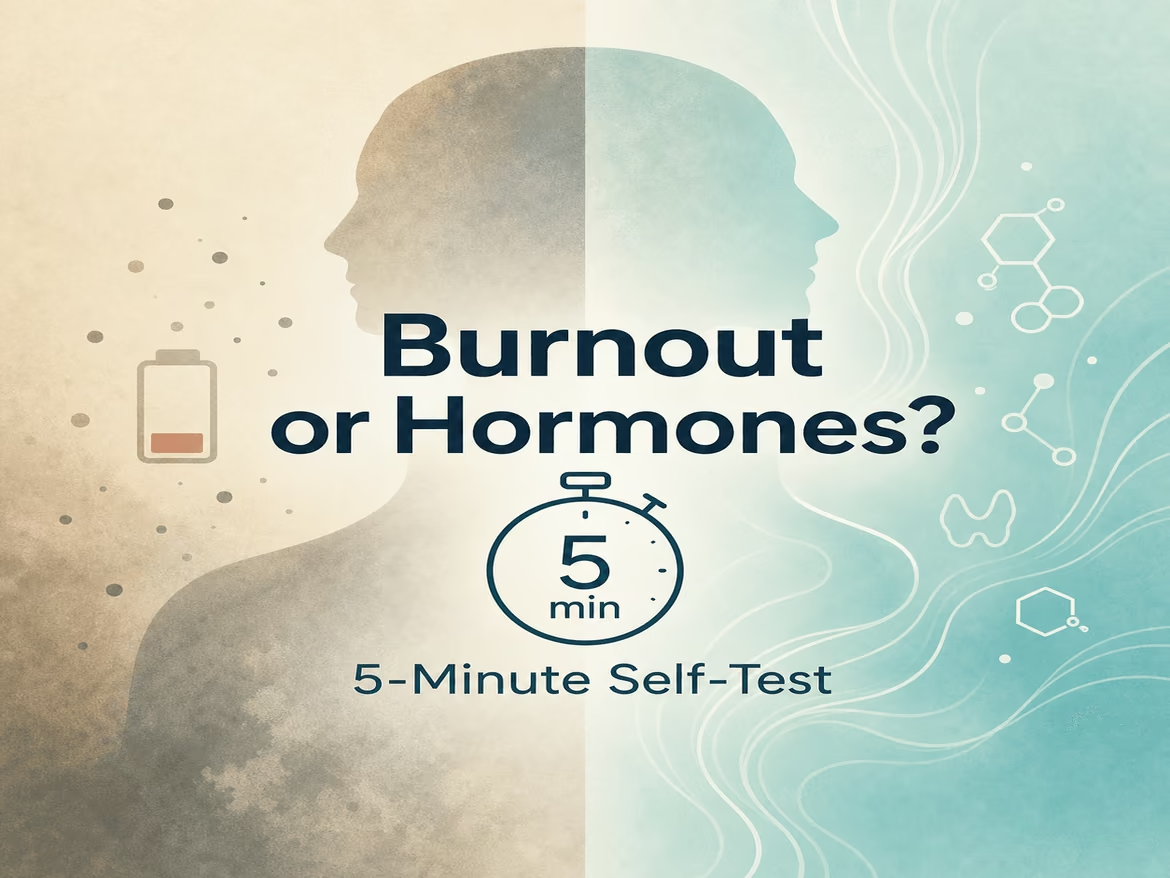
So this is a quick, practical, 5-minute self-test you can do right now. It is not a diagnosis. It is a sorting hat. It helps you figure out what bucket you are most likely in so your next step makes sense.
If you want the shortest summary: burnout is often driven by load plus stress plus depletion. Hormone issues are often driven by signaling problems. And the gut, sleep, blood sugar, and inflammation can sit underneath both.
Okay. Let’s do the test.
Before you start (30 seconds)
Grab a note app or paper. You are going to score yourself.
For each question, give yourself:
- 0 = no, not really
- 1 = sometimes / mild
- 2 = yes, often / strong
At the end, you will total three sections:
- Burnout pattern score
- Hormone pattern score
- “Both” pattern score (the overlap zone)
Be honest. This is not about what you “should” be doing. It is about what is happening.
The 5-minute self-test
Part A: Burnout pattern (nervous system overload)
Answer these 8 questions.
- Do you feel better after a real break, like a weekend off, a vacation, or even one full day with no demands?
- If rest actually helps, that leans towards burnout.
- Is your mind “on” even when your body is tired?
- Overthinking at night. Mentally scrolling through problems. Feeling wired and exhausted could indicate signs of overstimulation.
- Do small things feel weirdly hard lately?
- Replying to texts. Making simple decisions. Starting tasks you used to do easily.
- Do you feel more emotionally reactive than normal?
- Crying faster, snapping faster, feeling numb, feeling irritated for no good reason – these could be quiet signs of stress.
- Do you get a second wind at night?
- You drag all day, then around 9 pm you suddenly want to clean the kitchen or start a new plan.
- Do you rely on caffeine, sugar, or “push-through” mode to function?
- Not just enjoying coffee. Needing it.
- Do you feel a sense of dread about normal responsibilities?
- Not laziness. More like your system braces the second you think about your day.
- Do you notice more tension patterns?
- Jaw clenching, tight neck, shallow breathing, headaches, shoulder tension.
Now total your Part A score.
Part B: Hormone pattern (signaling imbalance)
Answer these 8 questions.
- Are your symptoms tied to your cycle? (If you have one)
- Worse right before your period, mid-cycle, or during. A repeating pattern is a big clue.
- Do you have new or worsening PMS symptoms?
- Mood swings, irritability, anxiety, breast tenderness, headaches, acne flares.
- Are your periods changing?
- Heavier, lighter, shorter, longer, more painful, spotting, late, early, or skipped.
- Do you struggle with temperature regulation?
- Hot at night, night sweats, cold hands and feet, feeling “off” with temperature.
- Is weight changing without a clear reason?
- Especially stubborn belly weight, or sudden gain, or loss without trying.
- Do you have hair or skin changes?
- Hair shedding, thinning brows, dry skin, acne, increased facial hair, brittle nails.
- Do you have libido changes?
- Lower desire, discomfort, dryness, or just feeling disconnected from desire.
- Do you feel tired in a way that does not match your life?
- Like you are doing “normal life” but your energy acts like you ran a marathon.
Now total your Part B score.
Part C: The overlap zone (often both)
Answer these 6 questions.
- Is your sleep unrefreshing even when you get enough hours?
- You sleep, but you do not recover.
- Do you crash after meals or get shaky if you go too long without eating?
- Blood sugar swings can mimic anxiety and fatigue.
- Do you have digestive symptoms most weeks?
- Bloating, constipation, diarrhea, reflux, nausea, “food baby”, gas, feeling heavy.
- Do you have anxiety that feels physical, not just mental?
- Heart racing, chest tightness, stomach drop, adrenaline spikes.
- Do you get frequent infections, allergies, or inflammation-type stuff?
- Sinus issues, skin flare-ups, joint aches, recurring colds, histamine reactions.
- Do you feel like you have to “earn” rest?
- This one is sneaky. But it keeps the whole loop running.
Now total your Part C score.
Your results (simple interpretation)
You now have three numbers: A, B, and C.
Use this guide.
If A is highest (burnout pattern dominates)
This points to nervous system overload, chronic stress physiology, and depletion.
It does not mean hormones are perfect. It means your system is acting like it is in survival mode, and that can suppress or scramble hormone output downstream.
Most helpful next steps tend to be:
- sleep rhythm first
- reducing stimulation and load (real boundaries, not “self-care” that becomes another task)
- protein and minerals early in the day
- gentle movement, not punishment workouts
- nervous system downshifts daily (breath work, walks, sunlight, quiet)
For managing adrenal fatigue and chronic stress, consider these strategies as part of your self-care routine.
If B is highest (hormone pattern dominates)
This points to sex hormone shifts, thyroid patterns, insulin resistance, or perimenopause type changes, depending on your age and symptoms.
Most helpful next steps tend to be:
- tracking symptoms with your cycle for 2 to 4 weeks
- checking basics like iron and thyroid markers (not just TSH if you can help it)
- stabilizing blood sugar
- reviewing birth control history, postpartum shifts, and perimenopause timing
- looking at gut and liver support, because hormone clearance matters too
It’s essential to focus on achieving a balanced hormone level during this phase.
If C is highest (overlap zone dominates)
This is the “it is not in your head” bucket.
This often means sleep, gut, blood sugar, inflammation, and stress response are tangled up. And yes, this is common in functional medicine clinics because it is how real life looks.
Your best first move is usually to work on the foundations that influence everything:
- consistent meals with protein, fiber, and healthy fats
- less alcohol and ultra-processed food for a few weeks
- gut support if you are bloated or irregular
- stress response training (not just stress reduction, actual retraining)
- sleep timing, morning light, evening dim light
Quick red flag note
If you have severe depression, thoughts of self-harm, sudden unexplained weight loss, fainting, chest pain, or extreme fatigue that is worsening quickly, do not self-test your way out of getting real medical help. Get evaluated.
The “one-minute gut check” that people skip
A lot of people read “burnout vs hormones” and they forget the gut is basically the background software.
If your digestion is off, your body is trying to build hormones, neurotransmitters, and immune balance on a shaky base. That can show up as:
- bloating and fatigue
- skin flares and mood swings
- cravings and energy dips
- worse PMS
- anxiety that feels physical
This is why so many integrative plans start with digestion and blood sugar. Not because it is trendy. Because it works.
If you want a simple starting point, Dr. Lisa Silvani has a free Metabolizm quiz on LisaSilvani.com that helps you spot patterns behind fatigue, weight changes, mood and sleep issues. It is quick and it gives you a cleaner next step than random guessing.
What to do next (based on your score)
Here are three small “do this first” plans. Nothing fancy. Just the moves that usually create signal fast.
If burnout is your top score: do this for 7 days
- Set a hard caffeine cutoff (example: no caffeine after 10 am).
- Eat breakfast with protein within 60 to 90 minutes of waking.
- 10 minutes of morning light outside. No sunglasses if you can.
- One daily downshift: 5 minutes of slow breathing, legs up the wall, or a calm walk.
- Stop high intensity workouts for one week if you are already exhausted. Switch to walks, mobility, light strength.
Notice what happens. Burnout patterns often improve quickly with rhythm.
If hormones are your top score: do this for 7 days
- Track symptoms daily in 30 seconds: energy, mood, cravings, sleep, cycle day.
- Build every meal around protein (aim for a real portion, not a token amount).
- Add fiber intentionally (berries, chia, flax, lentils, greens).
- Go to bed at the same time as much as possible. Hormones love consistency.
- Cut the “blood sugar chaos” foods for a week: sweet drinks, pastries alone, cereal alone, snacks that are mostly carbs.
If your symptoms are cyclical, tracking will show it.
If overlap is your top score: do this for 7 days
- Stabilize blood sugar first: protein with every meal, no naked carbs.
- Support digestion gently: chew, slow down, consider a short post-meal walk.
- Pick one gut trigger to reduce (for many people it is alcohol, for others it is ultra-processed snacks, for others it is constant grazing).
- Add one gut-supportive food daily (fermented foods if tolerated, or cooked veggies, or broth, keep it simple).
- Do a 15-minute nightly wind-down: dim lights, phone away, same routine.
This is the bucket where people often say, “I did not realize how much my digestion was messing with my energy.”
Why you can feel “burned out” from hormones, and “hormonal” from burnout
Just so it makes sense.
- Chronic stress can flatten your appetite cues, sleep quality, and blood sugar control. That alone can mimic thyroid and sex hormone symptoms.
- Hormone shifts (perimenopause, postpartum, coming off birth control, thyroid changes) can increase anxiety, insomnia, and fatigue. That can feel exactly like burnout.
- Gut dysfunction can increase inflammation and alter estrogen metabolism. That can worsen PMS, skin, and mood.
- Poor sleep makes everything louder. Cortisol, insulin, hunger hormones, mood. All of it.
So if your scores are close, you are not broken. You are just in the messy middle where body systems overlap.
A subtle but important question to ask yourself
When did this start?
Not vaguely. Really.
- After a stressful season at work?
- After an illness?
- After pregnancy or breastfeeding?
- After stopping or starting hormonal birth control?
- After a move, grief, breakup, or sustained caretaking?
- After a period of dieting or overtraining?
- After years of “I am fine” sleep?
- Or perhaps after experiencing poor sleep which can significantly affect your hormone levels?
The timeline often reveals the root cause faster than any supplement.
If you want help, here’s the cleanest next step
If your test points to “hormones”, “burnout”, or especially “both”, and you are tired of guessing, you can book a free consultation through https://www.lisasilvani.com.
Dr. Lisa Silvani’s whole thing is functional and integrative medicine for chronic symptoms like fatigue, weight issues, digestive problems, mood and sleep problems. The stuff that tends to live in the gray area.
Sometimes you do not need more willpower. You need the right map.
Quick wrap up
This 5-minute self-test is meant to get you unstuck.
- High burnout score means your nervous system likely needs rhythm, recovery, and load reduction.
- High hormone score means your symptoms may be tied to cycle, thyroid, insulin, or life stage shifts.
- High overlap score means foundations like gut, sleep (which can also affect your hormones), blood sugar, and inflammation are probably driving the whole picture.
And if you read this and thought, “Honestly, I think it is both.”
Yeah. That is very normal.
Start with one week of simple changes, track what moves the needle, and if you want a more personalized path, use the resources on LisaSilvani.com to get clarity fast.
FAQs (Frequently Asked Questions)
What are the common signs that differentiate burnout from hormone imbalance?
Burnout often involves feeling mentally and physically depleted due to load, stress, and depletion—such as feeling better after rest, mental overstimulation, emotional reactivity, and reliance on caffeine. Hormone imbalance symptoms are tied to signaling problems and may include cycle-related symptoms, changes in periods, temperature regulation issues, weight changes, skin or hair alterations, libido shifts, and unexplained fatigue.
How can I quickly assess whether my symptoms are due to burnout or hormone imbalance?
You can perform a 5-minute self-test by scoring yourself on three sections: Burnout pattern (nervous system overload), Hormone pattern (signaling imbalance), and the Overlap zone (common underlying factors). For each question in these sections, rate your experience as 0 (no), 1 (sometimes/mild), or 2 (often/strong). Total your scores to determine which pattern you most likely fit.
What kinds of symptoms fall into the ‘overlap zone’ between burnout and hormone issues?
Symptoms in the overlap zone include unrefreshing sleep despite adequate hours, blood sugar crashes after meals or long fasting periods, frequent digestive issues like bloating or reflux, physical anxiety symptoms (heart racing, chest tightness), frequent infections or inflammation flare-ups, and feeling like you have to ‘earn’ rest. These can indicate underlying gut health, sleep quality, blood sugar regulation, or inflammation problems affecting both burnout and hormonal health.
Why is it important to distinguish between burnout and hormone imbalance before seeking treatment?
Because burnout and hormone imbalances can look very similar externally but have different root causes—burnout stems from stress and depletion while hormone issues come from signaling problems—guessing wrong may lead to ineffective treatments and prolonged suffering. Identifying the correct pattern helps you take appropriate next steps for recovery.
Can lifestyle factors like sleep and diet influence both burnout and hormone imbalance?
Yes. Gut health, sleep quality, blood sugar balance, and inflammation are foundational factors that can contribute to both burnout and hormone imbalances. Addressing these areas through proper nutrition, restful sleep habits, stress management, and reducing inflammation can support recovery from either condition.
Is this self-test a definitive diagnosis tool for burnout or hormone imbalance?
No. The self-test is a practical sorting tool designed to help you identify which symptom pattern you most likely fit into—burnout, hormone imbalance, or overlap—to guide your next steps. It is not a medical diagnosis. For definitive diagnosis and personalized treatment plans, consulting with healthcare professionals is recommended.

