
 vanilis
 Less hunger. Better blood sugar. Brain fog lifts. People stop dozing off at 2 pm. Pants fit again. And for a lot of my patients, triglycerides drop fast and HDL rises, which is usually a great sign.
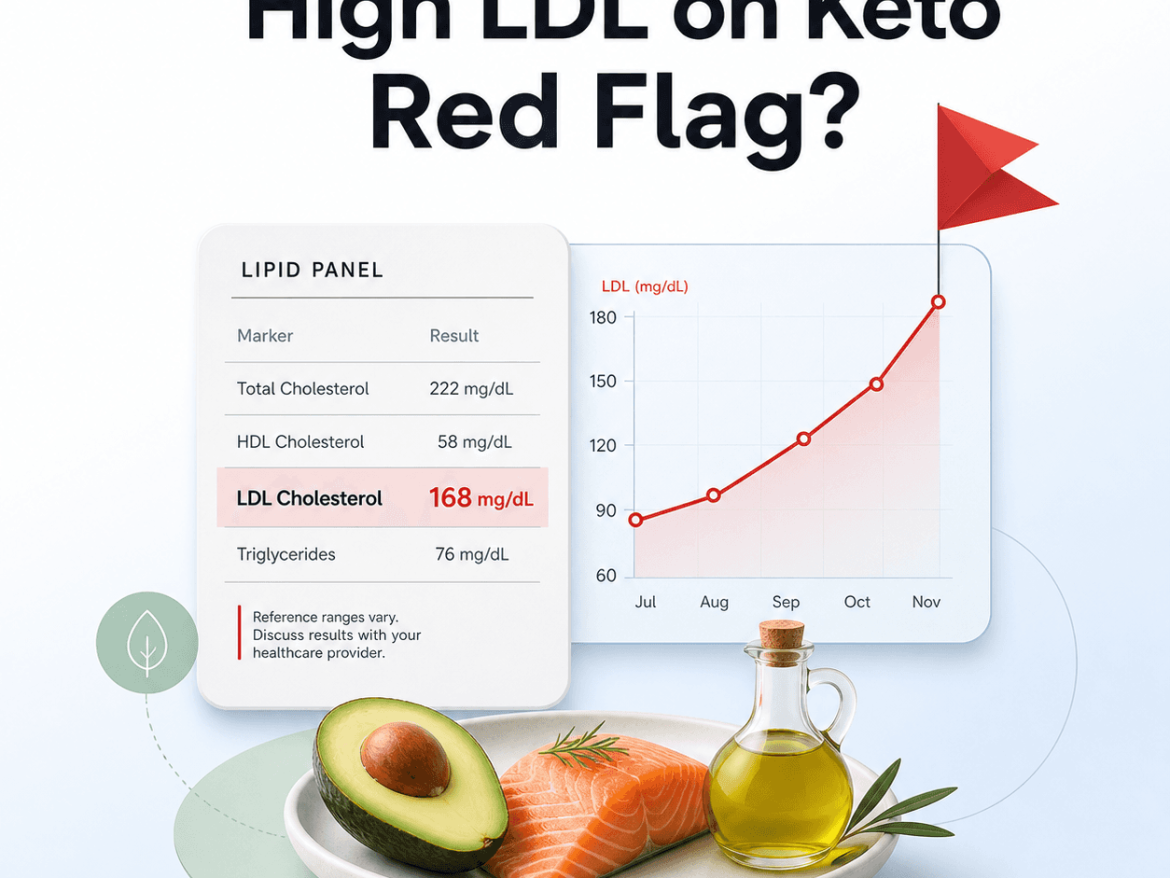
Then the labs come back and LDL is… through the roof.
And now you are stuck in the most annoying place. You feel better than you have in years, but your cholesterol report looks like it belongs to someone else. Your doctor is worried. Your keto friends tell you it is “totally fine” and LDL does not matter. Someone else tells you you are about to have a heart attack.
So what is true?
High LDL on keto can be benign in some people. It can also be a big, blinking red flag in others. The trick is knowing which situation you are in. Not guessing. Not following internet rules. Actually looking at risk.
Let’s talk about when high LDL on keto is probably not a crisis… and when it is a very real warning sign that you should not ignore.
First, LDL is not one thing (and that’s the problem)
Most standard labs report LDL C, which is the amount of cholesterol carried inside LDL particles.
But cardiovascular risk tracks more closely with how many LDL particles you have (LDL P) and how many total atherogenic particles you have (ApoB). More particles means more chances for particles to enter the artery wall. More chances for plaque to form. That is the basic logic.
So two people can have the same LDL C and very different risk.
Keto complicates this because LDL C can rise for multiple reasons:
- you are losing weight quickly and mobilizing fat stores
- you increased saturated fat a lot
- your thyroid function shifted
- your particle number went up, not just cholesterol content
- you are in a specific pattern sometimes called “Lean Mass Hyper Responder”
- you have an underlying genetic issue and keto revealed it
The “red flag” is not simply an LDL number. It is the pattern plus your personal risk context.
What a common keto cholesterol pattern looks like (often not the scary one)
A lot of people on keto see:
- Triglycerides drop
- HDL goes up
- LDL goes up a little or moderately
If triglycerides are low and HDL is high, insulin resistance is often improving. That is meaningful. Sometimes LDL rises temporarily during active weight loss and then settles.
So yes, there are scenarios where a modest LDL rise on keto, in an otherwise improving metabolic picture, is not automatically an emergency.
But.
There are also patterns that should make you pause, slow down, and assess properly.
When high LDL on keto is a red flag
Here are the situations where I stop reassuring people and start investigating.
1) Your ApoB is high (or you have not checked it)
If you take only one point from this article, take this.
If LDL C is high on keto, you want ApoB measured. Period. ApoB is a proxy for the number of atherogenic particles (LDL, VLDL remnants, Lp(a) particles). In most people, ApoB tracks risk better than LDL C.
A red flag looks like:
- LDL C is high and ApoB is also high
- or LDL C is high and you never checked ApoB, meaning you are flying blind
If your ApoB is elevated, it is harder to argue that the rise is meaningless.
2) Your LDL is extremely high, not just “a bit up”
There is a difference between:
- LDL going from 110 to 150 and
- LDL going from 110 to 230, 280, 320
When LDL is very high, especially sustained over months, you need to assume risk could be increasing unless proven otherwise. This is even more true if you have family history of early heart disease.
Could it still be part of a “lean mass hyper responder” pattern? Possibly. But “possibly” is not a risk management plan.
3) Your non HDL cholesterol is high
Non HDL is total cholesterol minus HDL. It captures all atherogenic cholesterol carrying particles, not only LDL.
If non HDL is high, it supports that your atherogenic burden may be high. It is not perfect, but it is a useful, simple marker when ApoB is not available.
4) Your Lp(a) is elevated
Lp(a) is genetically driven for most people. Diet does not usually fix it. If you have high Lp(a), you are dealing with an independent risk factor and you want to be more cautious about stacking more ApoB particles on top of that.
Many people on keto do not know their Lp(a) at all.
If LDL rises and you also have elevated Lp(a), that is a red flag. Not because keto “caused” Lp(a), but because your baseline risk is different.
5) You have poor thyroid function (overt or subclinical)
Hypothyroidism tends to raise LDL by reducing LDL receptor activity. Sometimes keto, calorie restriction, or rapid weight loss can unmask thyroid issues. Sometimes people already had it.
If your TSH is elevated, free T3 is low, free T4 is low normal, and your LDL is spiking, don’t just blame keto fat intake. Check thyroid antibodies too if appropriate.
This matters because if thyroid is part of the driver, simply tweaking macros may not fully correct the lipid picture.
6) You are eating a saturated fat heavy keto and your LDL responds strongly
Some people are “hyper responders” to saturated fat.
If your keto is built on:
- butter
- heavy cream
- cheese
- fatty red meat
- coconut oil
- “fat bombs”
…and your LDL skyrockets, it is not crazy to think the fat sources are contributing. Especially if ApoB is high.
You can stay low carb without being saturated fat dominant. Keto is a carb framework, not a butter mandate.
7) You have signs of inflammation, oxidative stress, or vascular risk stacking up
Cholesterol is not the only variable. If your LDL is high and you also have:
- high hs CRP
- high fasting insulin
- high blood pressure
- smoking or vaping
- poor sleep, sleep apnea
- high homocysteine
- metabolic syndrome markers
- chronic inflammatory conditions
…then high LDL is more likely to be part of a bigger risk picture.
It is the combination that gets people into trouble.
8) You have family history of early heart disease or possible familial hypercholesterolemia
If close relatives had heart attack, bypass, stroke at a young age, or “high cholesterol runs in the family,” you have to take very high LDL seriously.
Keto does not cause familial hypercholesterolemia, but it can amplify an already high baseline LDL. And if someone truly has FH, relying on diet alone is often not enough.
9) Your CAC score is rising (or you have never assessed plaque)
This is where things get real.
If you are middle aged or older, or you have strong risk factors, coronary artery calcium scoring can help you see if you are actually building plaque.
A high LDL with a CAC of zero is not a free pass forever, but it changes the conversation. A high LDL with a CAC score that is clearly positive, especially rising, is a bigger warning.
Talk to your clinician about whether CAC, CIMT (carotid ultrasound), or other assessments make sense for you.
The Lean Mass Hyper Responder pattern (where people get confused)
There is a pattern reported in some lean, active people on very low carb diets:
- LDL C very high
- HDL very high
- triglycerides very low
They feel great. They are often athletic. They often do not look like the “typical” high risk patient.
This is the group that fuels a lot of the “LDL doesn’t matter” confidence online.
But here is the honest truth.
We do not have long term, high quality outcome data proving that extremely high LDL and ApoB are harmless in this group. We just don’t. There are hypotheses, mechanistic arguments, and short term observations. That is not the same as proving safety over decades.
So if you fit this pattern, it does not mean panic. It means you should evaluate thoughtfully, measure ApoB, check Lp(a), consider imaging if appropriate, and decide your comfort level with sustained, very high particle burden.
What to do if your LDL is high on keto (a practical next step list)
If your labs show a big LDL jump, this is a sane sequence.
Step 1: Confirm the basics
- Were you fasting properly?
- Were you actively losing weight fast (which can temporarily alter lipids)?
- Have you repeated the test after weight stabilizes?
Sometimes a repeat after 8 to 12 weeks of stable weight changes the picture.
Step 2: Order the right markers
Ask your clinician about adding:
- ApoB
- LDL P (advanced lipid testing, optional but useful)
- Lp(a)
- hs CRP
- fasting insulin, HbA1c
- thyroid panel (TSH, free T4, free T3, possibly antibodies)
This turns a scary number into an interpretable pattern.
Step 3: Look honestly at your fat sources
If you are saturated fat heavy, consider a 3 to 6 week experiment:
- reduce butter, cream, coconut oil, fatty processed meats
- shift toward olive oil, avocado, nuts, seeds
- choose more fish, leaner meats, and protein balance
- add fiber from low carb plants (chia, flax, vegetables)
- consider psyllium if appropriate
You can stay keto or low carb while changing the fatty acid profile. Many people see LDL and ApoB come down without losing the benefits they loved.
Step 4: Consider whether “keto” is still the best tool for you
Some people do better with:
- a Mediterranean low carb approach
- a higher protein, moderate fat plan
- a less extreme carb restriction that still keeps glucose controlled
If keto helped you reverse insulin resistance but is pushing ApoB into a high risk range, you can adjust. It does not have to be all or nothing.
Step 5: If risk is high, don’t delay real risk reduction
If you have high ApoB, high Lp(a), family history, positive CAC, or other major risk factors, you may need more than diet tweaks.
That could include targeted supplements, addressing thyroid, treating inflammation, and yes sometimes medication. The goal is not to “win keto.” The goal is to reduce your actual risk of cardiovascular disease while supporting metabolic health and longevity.
Common myths that keep people stuck
“LDL is only a problem if triglycerides are high”
Low triglycerides are great. They do not automatically neutralize high ApoB.
“My HDL is high so I’m protected”
HDL is complicated. High HDL does not guarantee protection if ApoB and plaque burden are high.
“Doctors are just anti keto”
Some are. Some are not. But your arteries do not care about ideology.
“It’s just transient, it will always go down”
Sometimes it does. Sometimes it stays high. You only know by retesting and measuring the right markers.
A quick note on the gut, inflammation, and why it still matters here
This might feel like a detour, but it’s not.
A lot of people do keto to fix gut symptoms, bloating, skin issues, fatigue, brain fog. And they do feel better. But sometimes the “clean keto” version is still low fiber, low polyphenols, and repetitive. That can shift the gut microbiome in a direction that is not ideal long term.
And inflammation, endotoxemia, and poor gut barrier function can all feed into cardiovascular risk. Not in a simplistic way, but as part of the whole picture.
So if you are doing keto and your LDL is high, it is worth asking: are we improving metabolic health while accidentally ignoring gut resilience, micronutrients, sleep, stress, thyroid, and inflammation?
That broader functional view is exactly how we approach cases inside Reviva Health and Wellbeing.
When you should get personalized help (instead of DIY guessing)
If any of these apply, it’s time to get a proper plan:
- LDL is extremely high (especially over 190) and staying there
- ApoB is high
- Lp(a) is high
- strong family history of early cardiovascular disease
- thyroid markers are off
- you have symptoms you can’t explain (fatigue, hair loss, cold intolerance, constipation)
- you are confused because you feel better but labs look worse
This is where a functional and preventive lens helps, because you can look at root drivers and not just the LDL number in isolation.
If you want help interpreting your keto labs and figuring out whether your LDL rise is a true red flag, you can book a free discovery call or a consult through Dr. Lisa Silvani’s practice at Reviva Health and Wellbeing here: https://www.lisasilvani.com
Sometimes you do not need to quit keto. You just need to do it differently. And sometimes you need a different strategy entirely. Either way, you deserve clarity.
The takeaway
High LDL on keto is not automatically fine. It is also not automatically dangerous.
It becomes a red flag when it comes with high ApoB, very high sustained LDL, elevated Lp(a), thyroid issues, stacked risk factors, family history, or evidence of plaque.
Don’t argue with strangers on the internet about it. Measure what matters. Look at your full risk context. Adjust your approach based on data.
Your diet is supposed to support your long term health. Not just your short term energy.
FAQs (Frequently Asked Questions)
Why does LDL cholesterol often rise on a ketogenic diet?
LDL cholesterol can rise on keto for several reasons including rapid weight loss mobilizing fat stores, increased saturated fat intake, shifts in thyroid function, an increase in LDL particle number, or genetic factors revealed by the diet. This rise is not always a cause for immediate concern but depends on individual risk patterns.
What is the difference between LDL-C and ApoB, and why does it matter on keto?
LDL-C measures the amount of cholesterol inside LDL particles, while ApoB indicates the number of atherogenic particles like LDL and VLDL remnants. Cardiovascular risk correlates more closely with ApoB because more particles mean higher chances of plaque formation. On keto, elevated LDL-C without knowing ApoB can be misleading regarding heart disease risk.
When is high LDL on keto likely not an emergency?
High LDL on keto may not be alarming if it’s accompanied by low triglycerides and high HDL, indicating improved insulin resistance. Sometimes LDL rises temporarily during active weight loss and then stabilizes. A modest LDL increase in an otherwise improving metabolic profile often doesn’t require urgent intervention.
What are red flags indicating high LDL on keto could be dangerous?
Red flags include high ApoB levels (or lack of ApoB testing), extremely elevated LDL (e.g., over 230 mg/dL), high non-HDL cholesterol, elevated Lp(a) levels, poor thyroid function, consuming a saturated fat-heavy keto diet leading to strong LDL increases, and signs of inflammation or oxidative stress. These situations warrant thorough assessment and possibly medical intervention.
How does thyroid function affect cholesterol levels on a ketogenic diet?
Poor thyroid function, such as overt or subclinical hypothyroidism, can raise LDL by reducing LDL receptor activity. Keto or rapid weight loss may unmask thyroid issues. If TSH is elevated or free T3/T4 are low alongside rising LDL, thyroid dysfunction might be contributing to lipid abnormalities beyond dietary fat intake alone.
Can you follow keto without consuming excessive saturated fats to manage LDL levels?
Yes. Keto is primarily a carbohydrate-restricted framework and does not mandate heavy saturated fat consumption like butter, cream, fatty meats, or coconut oil. Some individuals are hyper-responders to saturated fat causing significant LDL increases. You can maintain ketosis with healthier fat sources to potentially mitigate large rises in LDL cholesterol.
References
- Krauss, R. M., et al. (2020). “AHA/ACC Guideline on the Management of Blood Cholesterol.” Circulation, 141(21), e1–e66. https://doi.org/10.1161/CIR.0000000000000743
- Sniderman, A. D., et al. (2019). “Apolipoprotein B particles and cardiovascular disease: a narrative review.” BMC Medicine, 17(1), 33. https://doi.org/10.1186/s12916-019-1269-4
- Ference, B. A., et al. (2017). “Low-density lipoproteins cause atherosclerotic cardiovascular disease.” European Heart Journal, 38(32), 2459–2472. https://doi.org/10.1093/eurheartj/ehx144
- Mora, S., & Ridker, P. M. (2006). “High-density lipoprotein cholesterol as a therapeutic target: a systematic review.” JAMA, 295(15), 1828–1835. https://doi.org/10.1001/jama.295.15.jrv60004
- Duntas, L., & Brenta, G. (2018). “The effect of thyroid disorders on lipid levels and metabolism.” Nature Reviews Endocrinology, 14(11), 742–755. https://doi.org/10.1038/s41574-018-0096-9
- Volek, J.S., et al. (2009). “Carbohydrate restriction has a more favorable impact on the metabolic syndrome than a low fat diet.” Lipids, 44(4), 297-309. https://doi.org/10.1007/s11745-009-3285-7
- Rosenson, R.S., et al. (2020). “Clinical use of inflammatory markers in cardiovascular disease: A review.” Journal of the American College of Cardiology, 75(20), 2582–2592. https://doi.org/10.1016/j.jacc.2020.03.057
- NHS UK (2022). “Cholesterol and your diet.” Available at: https://www.nhs.uk/live-well/eat-well/cholesterol-and-your-diet/
- Fitzgerald, K.L., & Ruscio, M.G.* Clinical insights on ketogenic diet impacts on lipid profiles and inflammation.* [Books and peer-reviewed articles by authors available through academic platforms]
- Hyman, M.D.* Functional medicine perspective on lipid metabolism and ketogenic diets.* [Peer-reviewed clinical reviews accessible via Science Direct or Elsevier]