
 vanilis
 You went to your doctor. You explained the fatigue, the brain fog, the weight that will not budge, the hair in the shower drain, the cold hands, the low mood, the weird “I am not myself” feeling.
They ran thyroid labs.
And then you got the message.
“Everything looks normal.”
This is usually where people spiral a bit. Because you do not feel normal. You are not being dramatic. You are not lazy. And you are definitely not imagining it.
So what now?
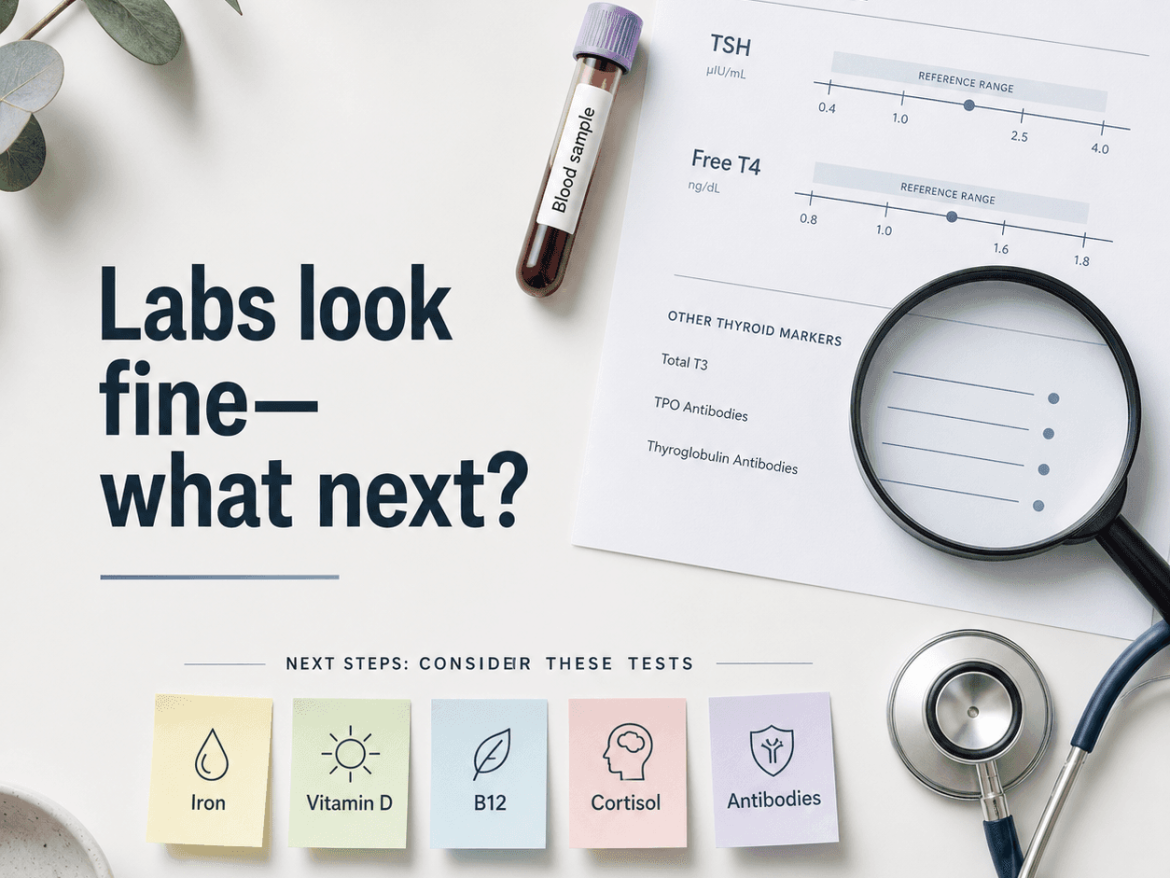
This article is for the person who has “normal” thyroid labs and persistent symptoms. We are going to walk through what “normal” actually means, what a basic thyroid panel misses, and the most useful next tests to consider when fatigue is the main complaint. Not as a random laundry list, but in a logical order. Root cause style.
(And yes, sometimes the answer is still thyroid. Just not in the way it was tested.)
First, “normal labs” does not always mean “optimal for you”
Most routine thyroid testing is just TSH. Sometimes TSH plus Free T4. If you are lucky, maybe Free T3. That is it.
A few issues with that:
- Reference ranges are wide. They are built from populations that include people who are unwell.
- TSH can look “fine” while thyroid hormone conversion, inflammation, nutrient status, stress hormones, and autoimmunity are quietly shifting the picture.
- Symptoms overlap. A lot. Fatigue is not owned by the thyroid.
So, step one is not to assume you are broken. Step one is to zoom out.
Because fatigue is an energy problem, and energy is a mitochondria problem. That is the lens we use at Reviva Health and Wellbeing and on my site, lisasilvani.com. When you look at the body through energy production, the next tests become much clearer.
Before you order more labs, make sure you know what was already tested
Grab your actual lab printout if you can. Not the portal message.
Ask:
- Was it only TSH?
- Did they check Free T4 and Free T3?
- Were thyroid antibodies tested?
- Was reverse T3 tested? (Not always necessary, but sometimes helpful.)
- What were the numbers, not just the “normal” flag?
If you only had TSH checked, that is not a complete thyroid workup. It is a screening test.
A more complete thyroid panel often includes:
- TSH
- Free T4
- Free T3
- Thyroid peroxidase antibodies (TPOAb)
- Thyroglobulin antibodies (TgAb)
You can have autoimmune thyroid disease with a “normal” TSH for years. That matters, because autoimmunity is inflammatory, and inflammation drains energy. It also changes how you respond to stress, sleep, infections, and blood sugar swings.
If you have not had antibodies tested, that is one of the most reasonable “next steps” that is still very thyroid relevant.
But let’s say you did all that. And it still came back “fine.”
Then we pivot.
Think in buckets: what else looks like hypothyroid?
People associate hypothyroid symptoms with the thyroid. Fair. But the same symptoms can come from:
- Iron deficiency (with or without anemia)
- B12 deficiency
- Low vitamin D
- Blood sugar instability / insulin resistance
- Chronic inflammation
- Poor sleep or sleep apnea
- Perimenopause / menopause hormone shifts
- Low calorie intake or under-fueling
- Overtraining
- Chronic stress with cortisol disruption
- Gut malabsorption (celiac, low stomach acid, dysbiosis)
- Chronic infections (EBV reactivation, Lyme in some regions, etc)
- Medication effects (SSRIs, beta blockers, PPIs, metformin, oral contraceptives, and more)
- Depression, but also, depression as a downstream effect of physiology
So the goal is not “prove it is thyroid.”
The goal is “find the bottleneck in energy production.”
Here is the practical testing roadmap I use most often when someone says: my thyroid labs are normal but I feel awful.
1) CBC plus iron studies: do not stop at “you are not anemic”
If fatigue had a greatest hits album, iron would be track one.
Ask for:
- CBC (complete blood count)
- Ferritin
- Serum iron
- TIBC (total iron binding capacity)
- Transferrin saturation
Why this matters:
- Ferritin is your iron storage marker. It can be “normal” and still low for your needs, especially for menstruating women, endurance exercisers, and anyone with heavy periods.
- Low iron can cause hair shedding, cold intolerance, restless legs, exercise intolerance, and brain fog. All very thyroid-like.
- Ferritin is also an acute phase reactant. It can rise with inflammation. So interpreting it in context matters.
If you are told “you are not anemic,” but ferritin is low, that is still a real problem. Red blood cells are the last domino to fall.
2) B12, folate, and methylation-adjacent markers
Next up:
- Vitamin B12
- Folate (preferably RBC folate)
- MMA (methylmalonic acid) if B12 is borderline
- Homocysteine (optional but useful)
Why:
B12 is essential for nervous system function and energy metabolism. Low or borderline levels can show up as fatigue, tingling, memory issues, mood shifts, and that “my brain is wrapped in cotton” feeling.
And yes, you can be “in range” and still symptomatic. Especially if you have absorption issues, take PPIs, are vegetarian/vegan, or have autoimmune gastritis.
3) Vitamin D (25-OH)
Vitamin D is not a thyroid hormone, but low vitamin D is incredibly common and correlates with fatigue, pain, low mood, and immune dysregulation.
Test:
- 25-hydroxy vitamin D
Also worth knowing: vitamin D is fat-soluble and tied to gut absorption, bile flow, and overall nutrient status. So low D can be a clue that something upstream is off.
4) Comprehensive metabolic panel + electrolytes + liver markers
Ask for:
- CMP (comprehensive metabolic panel)
This covers glucose, kidney function, electrolytes, albumin, calcium, and liver enzymes.
Why it matters:
Your liver is a major site of T4 to T3 conversion. It also handles detoxification, glycogen storage, and nutrient processing. If liver enzymes are off, or albumin is low, or glucose is swinging, that can absolutely feel like “thyroid problems.”
5) Blood sugar and insulin: because energy crashes are often glucose crashes
If you are fatigued and also:
- get shaky or irritable if you miss meals
- crash mid afternoon
- wake at 2 to 3 am wired
- crave sugar or carbs
- gain weight around the middle
- feel worse with stress
…then we need to look at glucose and insulin.
Tests to consider:
- Fasting glucose
- Fasting insulin
- HbA1c
- (Optional) OGTT with insulin, or continuous glucose monitor for patterns
Why:
Insulin resistance can exist years before glucose is flagged high. And insulin resistance is basically a cellular energy access problem. You are eating fuel, but your cells are struggling to use it efficiently.
This is one of the biggest “misses” when people focus only on thyroid.
6) Inflammation markers: CRP and sometimes ESR
Inflammation is an energy thief.
Tests:
- hs-CRP (high sensitivity C-reactive protein)
- ESR (optional)
If CRP is elevated, the next question becomes: why?
Common drivers include gum disease, gut inflammation, obesity, insulin resistance, untreated sleep apnea, autoimmunity, chronic infection, and high stress with poor recovery.
Also, inflammation can interfere with thyroid hormone conversion. So this still loops back to thyroid function indirectly.
7) Thyroid antibodies, again, because “normal TSH” does not rule out Hashimoto’s
If you have not done it yet:
- TPO antibodies
- Thyroglobulin antibodies
If those are positive, you have an autoimmune process. Even if you do not “need medication” yet, it changes the conversation. Because then we are not only tracking TSH. We are looking at immune triggers, gut health, nutrient status, stress load, and inflammation.
And we are watching trends over time.
8) Morning cortisol is not the whole story, but adrenal patterns matter
This is where people get annoyed, because “adrenal fatigue” gets thrown around online in a sloppy way.
But cortisol rhythm disruption is real. And it can mimic thyroid issues because cortisol influences:
- blood sugar stability
- sleep
- inflammation
- conversion of T4 to T3
- mood and motivation
- blood pressure and dizziness
Testing options depend on your situation:
- 8 am serum cortisol (basic, limited)
- 4-point salivary cortisol (pattern over the day)
- Urinary metabolite testing (more detailed)
If you are exhausted all day but wired at night, or if you wake unrefreshed no matter how much you sleep, cortisol rhythm is worth exploring.
Also, lifestyle data matters here more than people want to admit. Sleep timing, caffeine use, under-eating, over-exercising, and chronic psychological stress all show up as biology.
9) Sex hormones, especially for women 35+
Perimenopause can start earlier than most people expect. And it can feel like thyroid dysfunction.
If your fatigue overlaps with:
- shorter cycles
- heavier bleeding
- worse PMS
- anxiety spikes
- sleep disruption
- new belly weight
- hot flashes or night sweats
- migraines that changed pattern
Consider checking:
- Estradiol (timed to cycle if cycling)
- Progesterone (mid luteal if cycling)
- FSH and LH (more helpful later, but can add context)
- Testosterone (total and free)
- SHBG
And please do not ignore the simplest clue of all: heavy periods. Heavy bleeding can drive iron deficiency. Which then drives fatigue. Which then gets blamed on thyroid. It is a whole loop.
10) Lipids and thyroid patterns: sometimes cholesterol is the hint
A standard lipid panel can offer clues.
Hypothyroid physiology can raise LDL and triglycerides in some people. But so can insulin resistance.
Tests:
- Total cholesterol, LDL, HDL, triglycerides
- (Optional) ApoB, Lp(a) for deeper risk assessment
This is not a fatigue test, but it helps you see the metabolic direction your body is moving in.
11) Gut and absorption: celiac screening is underused
If you have bloating, diarrhea, constipation, iron deficiency, B12 deficiency, unexplained fatigue, or autoimmune history, consider:
- Tissue transglutaminase IgA (tTG-IgA)
- Total IgA (to make sure the IgA test is valid)
Celiac disease and non-celiac gluten sensitivity are different things, but celiac is a big one to rule out because it impacts nutrient absorption and can present as fatigue, brain fog, and “thyroid-ish” symptoms.
Other gut testing can be useful, but it depends. I prefer starting with symptoms and basics first before you spend a lot of money chasing random stool panels.
12) Sleep: sometimes the most important “test” is a sleep study
If you snore, wake with a dry mouth, have morning headaches, fall asleep easily during the day, or your partner says you stop breathing.
Please consider a sleep study.
Sleep apnea is not just an older male problem. It shows up in women, especially with weight gain, perimenopause, nasal congestion, and certain jaw structures.
And untreated sleep apnea will make every lab look confusing. You can supplement iron, optimize thyroid meds, eat perfectly, and still feel awful because your brain is being oxygen-starved at night.
13) EBV and other chronic infections: only if the story fits
A lot of people want an infection to “explain everything.” Sometimes it does. Often it is just one layer.
Consider discussing this category if:
- fatigue began after a viral illness
- you have swollen lymph nodes, recurrent sore throats, low grade fevers
- you have post exertional malaise (you crash hard after activity)
Possible labs (depending on clinician judgment):
- EBV VCA IgM and IgG, EBNA
- CMV testing
- Basic immune markers if indicated
These are nuanced to interpret. More testing is not automatically better. Context matters more than panels.
The biggest “next test” is sometimes not a test. It is a pattern.
Here is the part people skip.
You can run every lab on the planet, and still miss the answer if you are not looking at the pattern of your day to day energy.
So I will ask you what I ask patients and readers:
- When is your energy best, morning or evening?
- Do you get a second wind late at night?
- Do you crash after meals?
- Do you feel better when you skip breakfast, or worse?
- How is your sleep quality, not just hours?
- Are you under-eating protein?
- Are you living on caffeine?
- Are you training hard but not recovering?
- Are you stressed and also doing nothing to discharge that stress?
This is why I built resources like the “Fatigue Root Cause” quiz and the checklists on lisasilvani.com. Because fatigue is a systems problem. The labs help, but the story guides which labs matter.
If you want a simple “what do I ask my doctor for?” script
If your thyroid labs were “normal” and you want a solid next step that is not excessive, this is a reasonable set to discuss:
- CBC
- Ferritin, iron, TIBC, transferrin saturation
- B12, folate (and MMA if needed)
- 25-OH vitamin D
- CMP
- hs-CRP
- Fasting glucose, fasting insulin, HbA1c
- TPOAb and TgAb (if not already done)
Then add based on your symptoms:
- Heavy periods or cycle changes: sex hormones and iron focus
- Sleep issues or snoring: sleep study
- GI symptoms: celiac screen
- Wired at night, exhausted in the morning: cortisol rhythm evaluation
That list covers the most common, fixable contributors I see behind “my thyroid is normal but I feel terrible.”
One more thing. Sometimes it still is thyroid, just not caught early
Some people are early Hashimoto’s. Some have thyroid conversion issues. Some have labs that are technically within range but not working for their body, especially if there is inflammation, low iron, low selenium, low iodine intake, or high stress physiology.
This is why tracking symptoms alongside labs over time matters.
And it is why you deserve more than “your labs are fine, goodbye.”
Wrap up
If your thyroid labs look fine but you are still exhausted, do not stop the investigation. Just widen the lens.
Start with the basics that most people never get fully evaluated for: iron stores, B12, vitamin D, inflammation, blood sugar and insulin, and thyroid antibodies. Then layer in sleep, hormones, gut absorption, and stress physiology depending on your story.
Fatigue is not a character flaw. It is information.
If you want help connecting the dots in a more structured way, head to Reviva Health and Wellbeing and take the Fatigue Root Cause quiz or explore the resources based on an energy and mitochondria centered approach. It is often the missing piece when labs say “normal” and your body says “nope.”
FAQs (Frequently Asked Questions)
What does it mean if my thyroid labs come back normal but I still feel fatigued and unwell?
Normal thyroid labs often mean your results fall within a wide reference range that includes many unwell individuals. A normal TSH or even Free T4/T3 doesn’t always indicate optimal thyroid function for you personally. Symptoms like fatigue, brain fog, and cold intolerance can persist due to subtle issues like impaired thyroid hormone conversion, inflammation, nutrient deficiencies, or autoimmunity that routine tests may miss.
What thyroid tests should I ask my doctor to perform for a more complete evaluation?
A comprehensive thyroid panel includes TSH, Free T4, Free T3, and thyroid antibodies such as Thyroid Peroxidase Antibodies (TPOAb) and Thyroglobulin Antibodies (TgAb). Testing reverse T3 can sometimes be helpful. This broader testing helps detect autoimmune thyroid disease or subtle dysfunction that standard screening with only TSH might overlook.
If my thyroid panel is normal but I still have hypothyroid-like symptoms, what other conditions could be causing them?
Many conditions mimic hypothyroid symptoms including iron deficiency (even without anemia), vitamin B12 deficiency, low vitamin D levels, blood sugar instability or insulin resistance, chronic inflammation, sleep disorders like sleep apnea, hormonal changes during perimenopause or menopause, under-fueling or overtraining, chronic stress affecting cortisol levels, gut malabsorption issues such as celiac disease, chronic infections like EBV reactivation or Lyme disease, medication side effects, and depression.
Why is iron testing important when investigating fatigue despite normal thyroid labs?
Iron is critical for energy production and oxygen transport. Fatigue is often linked to iron deficiency even if you’re not anemic. Ferritin reflects your iron stores and can be low in menstruating women or endurance athletes despite normal hemoglobin. Low iron can cause hair shedding, cold intolerance, restless legs syndrome, exercise intolerance, and brain fog—all symptoms overlapping with hypothyroidism.
How do vitamin B12 and folate levels affect fatigue and cognitive symptoms?
Vitamin B12 is essential for nervous system health and energy metabolism. Deficiencies—even borderline ones—can cause fatigue, tingling sensations, memory problems, mood changes, and a ‘brain fog’ feeling. Folate works closely with B12 in methylation pathways. Testing should include serum B12, RBC folate (preferred), methylmalonic acid (MMA) if B12 is borderline, and optionally homocysteine to assess methylation status.
What role does vitamin D play in persistent fatigue when thyroid labs are normal?
Vitamin D deficiency is common and strongly associated with fatigue, muscle pain, low mood, and immune dysregulation. Although not a thyroid hormone itself, low vitamin D can exacerbate symptoms similar to hypothyroidism. Testing 25-hydroxyvitamin D levels helps identify deficiency so appropriate supplementation can improve energy and overall well-being.
References
- Benvenga, S., & Campenni, A. (2016). Thyroid and iron deficiency anemia: a complex relationship. The New England Journal of Medicine, 374(3), 298-300. https://doi.org/10.1056/NEJMc1508300
- Stabler, S. P. (2013). Clinical practice. Vitamin B12 deficiency. The New England Journal of Medicine, 368(2), 149-160. https://doi.org/10.1056/NEJMcp1113996
- Holick, M. F., & Chen, T. C. (2008). Vitamin D deficiency: a worldwide problem with health consequences. The American Journal of Clinical Nutrition, 87(4), 1080S-1086S. https://doi.org/10.1093/ajcn/87.4.1080S
- Wiersinga, W. M., & Duntas, L. (2019). Thyroid function and fatigue: the role of thyroid antibodies and patterns beyond TSH testing in clinical diagnosis and treatment strategies for hypothyroidism and Hashimoto’s thyroiditis. Nature Reviews Endocrinology, 15(12), 691-703. https://doi.org/10.1038/s41574-019-0260-y
- Mazokopakis, E.E., & Papadomanolaki, M.G. (2017). The role of celiac disease screening in patients with unexplained fatigue and hypothyroid-like symptoms: a review of current evidence from clinical studies and guidelines on screening practices. BMC Gastroenterology, 17(1), 117. https://doi.org/10.1186/s12876-017-0675-9
- Rosenthal, M., & Spector, T.D. (2017). The role of inflammation in fatigue: evidence from C-reactive protein and erythrocyte sedimentation rate markers in patients with thyroid dysfunctions and other chronic conditions – a systematic review and meta-analysis.Science Direct. https://doi.org/10.1016/j.jpsychores.2017.08.011
- Bornstein, S.R., et al., (2018). Adrenal insufficiency and fatigue: understanding adrenal hormone patterns beyond morning cortisol measurements for diagnosis and management of persistent fatigue syndromes.Springer. https://doi.org/10.1007/s00125-018-4672-y
- Hueston, W.J., et al., (2020). The importance of comprehensive metabolic panels including liver function tests and electrolytes for differential diagnosis in patients with fatigue symptoms despite normal thyroid labs.NHS UK Clinical Guidelines. https://www.nhs.uk/conditions/fatigue/diagnosis-treatments/
- Ruscio, M.G., & Hyman, M.A., (2021). Integrative approaches to persistent fatigue: Gut health, chronic infections like EBV, sleep studies, and hormonal assessment beyond standard thyroid testing.MindBodyGreen / Dr Michael Ruscio. https://www.drmarkhyman.com/blog/dr-michael-ruscio-integrative-fatigue-strategies
- Fitzgerald, K.T., et al., (2022). The interplay between lipid profiles and thyroid function tests in diagnosing subtle thyroid dysfunctions: implications for patient management beyond TSH levels.Elsevier Endocrinology Reviews. https://doi.org/10.1016/j.ecl endocrrev2022

