
 vanilis
 Some people still picture it as a powder for 22 year old guys chasing bigger biceps and louder gym grunts. And sure, it can help with that. But that is not the interesting part for most women over 35.
The interesting part is energy. Real energy. The kind that shows up as better workouts, yes, but also steadier brain power, less of that drained feeling after a long day, and more muscle staying on your frame as hormones shift.
If you have been following my work at Reviva Health and Wellbeing (Dr. Lisa Silvani), you already know I come back to the same theme again and again. Fatigue is not just in your head. A lot of it is cellular. Mitochondrial. Energy production, buffering, resilience. Creatine sits right in the middle of that conversation.
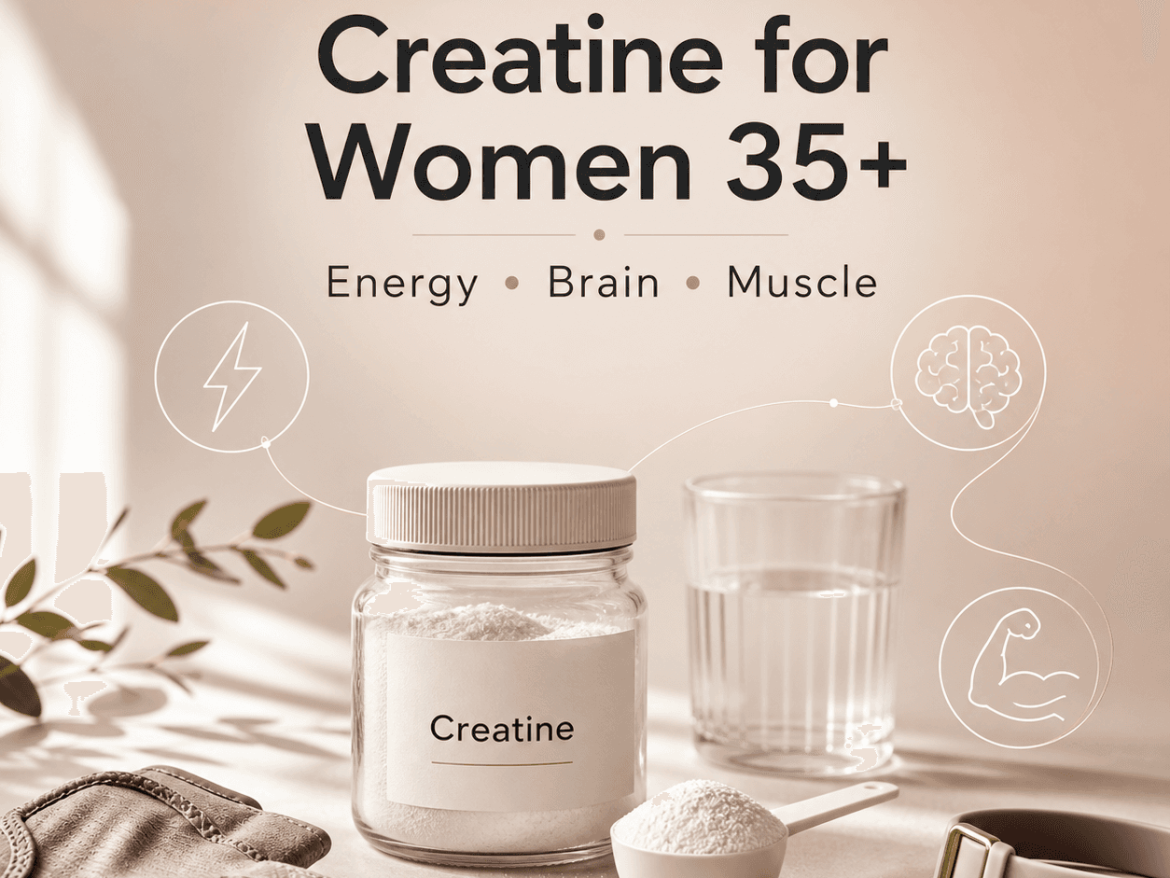
So let’s talk about creatine for women 35+. What it is, why it matters, how it helps energy, brain, and muscle, and how to use it in a simple, no drama way.
Creatine in plain English (what it actually does)
Creatine is a compound your body already makes (from amino acids, mostly in the liver and kidneys). You also get some from food, especially red meat and fish.
Inside the body, creatine is stored mostly in muscle, but also in the brain. It can be converted into phosphocreatine, which acts like a quick energy backup system. Not “caffeine energy”. More like, “we need ATP right now, and we need it fast” energy.
ATP is the basic energy currency of your cells. When demand spikes, like during lifting, sprinting, climbing stairs, even intense thinking, phosphocreatine helps recycle ATP rapidly.
That is the core idea.
And once you understand that, you can see why creatine is not just a gym supplement. It is an energy system supplement.
Why women 35+ should care (the short version)
After about 35, a few things start nudging in the wrong direction, often quietly.
- Muscle becomes easier to lose and harder to rebuild.
- Recovery can feel slower.
- Sleep gets more fragile for many women.
- Perimenopause may bring brain fog, mood shifts, and that odd “my battery doesn’t hold a charge” feeling.
- Stress load is often high. Work, caregiving, life logistics. The usual.
If you think of fatigue through an energy lens, the question becomes: how do we support the cells so they can meet demand without crashing?
Creatine is one of the rare supplements that is:
- well studied
- inexpensive
- generally safe for most people
- actually useful, not just “nice marketing”
Benefit 1: More strength and power (and that matters more than it sounds)
Creatine is one of the most consistently effective supplements for improving strength, power, and training capacity.
For women 35+, this matters because strength training is not optional if you want to keep:
- bone density
- metabolic health
- insulin sensitivity
- posture and joint stability
- long term independence (yes, really)
Creatine does not replace lifting. It supports it. It can help you squeeze out a few more reps, lift slightly heavier, or maintain output across sets. That little edge compounds over months.
And it can be especially helpful if you are doing resistance training but feel like you are pushing and pushing and progress is painfully slow.
Does creatine make you “bulky”?
No, not in the way people fear.
Creatine can increase intramuscular water (water inside the muscle cell), which can make muscles look a bit fuller. That is different from gaining fat, and different from suddenly becoming huge. Most women simply do not have the testosterone levels for that dramatic “bulk” effect.
If anything, the more common experience is: clothes fit better because you are stronger, firmer, and your body composition improves.
Benefit 2: Muscle preservation during perimenopause and beyond
One of the biggest body composition shifts for women in midlife is the gradual loss of lean mass, especially if protein intake is low and strength training is inconsistent.
This is not a vanity issue. Muscle is an organ of longevity. It helps regulate glucose, stabilizes joints, supports balance, and acts like a metabolic engine.
Creatine has been studied in older adults and appears to support lean mass gains when combined with resistance training. On its own, it is not magic. But paired with training, it can amplify the results.
If you are in the phase of life where you are thinking, “I just want to feel strong again”, creatine is one of the simplest tools you can add.
Benefit 3: Energy support (the fatigue angle people miss)
Let’s connect this to the Reviva theme. Fatigue, especially chronic fatigue, is often about energy production and energy buffering.
Creatine is not a mitochondrial supplement in the classic sense (it does not directly “build mitochondria” the way exercise does). But it supports cellular energy buffering via the phosphocreatine system.
So what might that look like in real life?
- You tolerate workouts better.
- You recover a bit faster.
- You feel less “wiped out” from short bursts of activity.
- You may notice your body feels more resilient.
This is subtle for some people and obvious for others.
If you are already doing the foundational things we talk about on LisaSilvani.com (sleep, protein, minerals, blood sugar stability, movement, stress regulation), creatine can be a useful add on. Not the foundation. The add on.
If you are not doing the foundations, creatine will not save you. It might help a little, but it will not fix the root cause.
(If you are unsure what is driving your fatigue, the Fatigue Root Cause quiz on https://lisasilvani.com/ is a good place to start. Not because quizzes are magical, but because structure helps. It helps you stop guessing.)
Benefit 4: Brain benefits (especially under stress and poor sleep)
This is where creatine gets really interesting for women 35+.
The brain is an energy hungry organ. Under normal conditions, it already uses a huge amount of ATP. Under stress, sleep deprivation, intense mental demand, that energy requirement can feel even higher.
Creatine is stored in the brain and plays a role in brain energy metabolism. Research suggests creatine may help with aspects of cognitive function, particularly in situations where the brain is under higher energy strain (think sleep deprivation, demanding tasks, maybe vegetarian diets where baseline creatine intake is lower).
Now, I want to be careful here. Creatine is not a cure for anxiety, depression, ADHD, or dementia. It is not a replacement for medical care.
But if you are a woman in midlife dealing with:
- brain fog
- mental fatigue
- poor sleep phases
- high cognitive load
…creatine is one of the few supplements with a plausible mechanism and human research behind it.
And again, it is not “stimulation”. It is more like energy buffering. A different vibe.
Benefit 5: Support for vegetarians and low meat diets (common in women)
Women are more likely than men to:
- eat less red meat
- choose low calorie diets
- follow vegetarian or mostly plant based patterns
Creatine intake from food is much lower in these patterns. Your body does make creatine, yes, but dietary intake still matters for saturating stores.
So if you rarely eat red meat or fish, you might respond more noticeably to creatine supplementation. Not always, but often.
What about weight gain and bloating?
This is the biggest hang up, and honestly it has kept a lot of women from trying something that could genuinely help them.
Here is what is true:
- Creatine can increase water inside muscle cells, especially early on.
- The scale might bump up by 1 to 4 pounds for some people.
- This is not fat gain.
- It is not the same as bloating in the gut.
If you are someone who is very scale sensitive, decide ahead of time how you will measure progress. Strength numbers. Waist measurement. Energy. How your jeans fit. Anything other than daily scale fluctuations.
Also, you do not have to do a loading phase. More on that in a second.
How to take creatine (simple protocol for women 35+)
The most studied, most practical form is:
Creatine monohydrate
Just plain monohydrate. No fancy blends needed.
Look for third party testing if possible (NSF Certified for Sport, Informed Choice, USP style testing). Not mandatory, but it is a nice quality filter.
Dose
Most women do well with:
- 3 to 5 grams daily
You can take it:
- with food or without
- morning or night
- in coffee, tea, water, smoothies, yogurt
Consistency matters more than timing.
Loading phase (optional, usually unnecessary)
You might see protocols like 20 grams per day for 5 to 7 days, then a maintenance dose.
Loading saturates muscle creatine faster, but it can increase stomach upset and water shifts. If you want the gentle approach, skip loading.
If you take 3 to 5 grams daily, you still saturate stores, it just takes longer (think weeks, not days).
How long until you notice benefits?
- Strength and training capacity: often within 2 to 4 weeks
- Body composition changes: usually 8 to 12 weeks, assuming training and protein are in place
- Brain and mental fatigue: variable. Some notice it sooner, some not at all
Side effects and safety (what to know, what to ignore)
Creatine is one of the most researched supplements in sports nutrition. For healthy individuals, long term use at standard doses is generally considered safe.
Common issues:
- mild stomach upset (usually dose related, try smaller doses, dissolve well, take with food)
- water retention in muscle (not harmful, but can be psychologically annoying)
- cramps are often blamed on creatine, but evidence does not strongly support creatine causing cramps. Hydration still matters, of course.
Kidneys and creatine
This is where the internet gets messy.
Creatine supplementation can increase creatinine on lab tests because creatinine is a breakdown product related to creatine metabolism. That does not automatically mean kidney damage. It can confuse interpretation.
If you have kidney disease, a history of kidney issues, or you are under medical supervision for renal function, do not self experiment. Talk with your clinician. This is not the place for DIY.
Also, if you are doing labs, tell your provider you are taking creatine so results are interpreted appropriately.
Pregnancy and breastfeeding
Creatine is being researched in these areas, but routine supplementation is not a casual recommendation. If you are pregnant or breastfeeding, discuss with your healthcare provider.
Creatine and menopause, hormones, and mood (a realistic take)
People sometimes ask if creatine “balances hormones”.
No. Creatine is not a hormone balancer.
But it may support things that matter deeply during perimenopause and menopause:
- maintaining muscle while estrogen shifts
- improving training output so you can actually build strength
- supporting brain energy in a life phase where sleep and stress often get worse
Mood wise, there is some research interest in creatine as an adjunct in certain situations, but this is not a self treat situation if you are struggling with depression or anxiety. Creatine can be one piece of a bigger plan. Not the plan.
How to combine creatine with the fundamentals (so it actually works)
If you take nothing else from this article, take this.
Creatine works best when the basics are handled, even roughly.
Here is the simple stack, not a supplement stack. A lifestyle stack.
- Strength training 2 to 4 days per week. Progressive, not random.
- Protein at most meals. Many women under eat it, especially at breakfast.
- Sleep support. If sleep is wrecked, everything is harder.
- Blood sugar stability. Big swings can feel like fatigue.
- Minerals and hydration. Under fueling and under mineralizing makes you feel terrible.
This is the exact kind of root cause approach I teach through Reviva Health and Wellbeing. You do not want to keep adding “helpers” on top of a foundation that is cracked.
If you want a more guided way to connect your symptoms to likely drivers, go to https://lisasilvani.com/ and take the Fatigue Root Cause quiz. It is a good first step, especially if you feel like you have tried everything and nothing sticks.
Who should consider creatine most (quick checklist)
Creatine might be worth trying if you are a woman 35+ and you:
- are strength training (or about to start) and want better progress
- feel physically drained easily, especially with short bursts of activity
- want to preserve muscle during perimenopause or menopause
- eat little to no red meat or follow a vegetarian diet
- deal with brain fog, mental fatigue, or high stress cognitive load
- want a simple, evidence supported supplement instead of a cabinet full of powders
Who should pause and ask first
Talk with a qualified healthcare provider before using creatine if you have kidney disease or reduced kidney function, are under medical monitoring for renal issues, are pregnant or breastfeeding, or have complex medical conditions and take multiple medications. Context always matters, even when interactions are not guaranteed.
A simple way to try it (no overthinking)
If you want the lowest friction experiment, follow these steps:
- Buy a reputable creatine monohydrate.
- Take 3 grams daily for one week.
- If digestion is fine, go to 5 grams daily.
- Keep everything else the same for 4 weeks.
What to track over those 4 weeks
- Strength: reps and weights
- Recovery: soreness and bounce back
- Mental energy: afternoon slump and brain fog
- Overall how you feel in your body
Then decide. Keep it or drop it. Supplements should earn their place.
Wrap up
Creatine is not just for bodybuilders. For women over 35, it can be a genuinely useful tool for strength, muscle preservation, brain energy, and overall resilience.
Not flashy. Not complicated. Just one of those rare things that actually holds up when you look at the science and the real world experience.
And if you are reading this because fatigue is part of your story, keep zooming out. Creatine can help, but the bigger win is understanding why your energy is low in the first place. That is the whole mission at Reviva Health and Wellbeing. If you want help connecting the dots, head over to https://lisasilvani.com/ and start with the Fatigue Root Cause quiz and the resources there.
Small steps, done consistently. That is how energy comes back.
FAQs (Frequently Asked Questions)
What is creatine and how does it work in the body?
Creatine is a compound naturally produced in the body from amino acids, mainly in the liver and kidneys, and also obtained from foods like red meat and fish. It is stored mostly in muscles and the brain, where it converts into phosphocreatine. This acts as a rapid energy backup system by recycling ATP—the basic energy currency of cells—especially during sudden spikes in demand like intense exercise or mental effort.
Why should women over 35 consider taking creatine supplements?
After age 35, women often experience muscle loss, slower recovery, fragile sleep, brain fog, mood shifts, and increased fatigue due to hormonal changes and life stressors. Creatine supports cellular energy production and resilience, helping to combat these issues by improving muscle strength, brain function, and overall energy levels safely and effectively.
Does creatine cause women to become bulky or gain unwanted muscle mass?
No, creatine does not cause bulky muscles in women because they typically lack the testosterone levels needed for significant muscle hypertrophy. Creatine may increase water content inside muscle cells, making muscles look fuller but not larger. Most women notice improved firmness, strength, and better-fitting clothes rather than bulk.
How does creatine help with muscle preservation during perimenopause and beyond?
During midlife, women tend to lose lean muscle mass which affects glucose regulation, joint stability, balance, and metabolism. When combined with resistance training, creatine supplementation has been shown to support lean mass gains and amplify strength improvements—helping women feel stronger and maintain long-term independence.
Can creatine improve energy levels and reduce fatigue for women over 35?
Yes. Creatine enhances cellular energy buffering through the phosphocreatine system, allowing better tolerance of workouts, quicker recovery, less exhaustion after activity bursts, and increased physical resilience. While it’s not a substitute for foundational health habits like quality sleep and balanced nutrition, it serves as an effective supplement to support energy production.
Does creatine offer cognitive or brain benefits for women experiencing stress or poor sleep?
Creatine stored in the brain supports rapid energy needs during intense mental tasks or stress. For women over 35 facing brain fog or mood shifts related to hormonal changes or sleep disturbances, creatine can help sustain steadier brain power and mental resilience by enhancing cellular energy availability.
References
- Tarnopolsky, M. A. (2010). Creatine as a therapeutic strategy for myopathies. Nature Reviews Neurology, 6(11), 641-650. https://doi.org/10.1038/nrneurol.2010.160
- Forbes, S. C., & Candow, D. G. (2021). Creatine supplementation and aging musculoskeletal health. Journal of the American Medical Directors Association, 22(9), 1855-1863.e3. https://doi.org/10.1016/j.jamda.2021.05.017
- Devries, M. C., & Phillips, S. M. (2014). Creatine supplementation during resistance training in older adults—a meta-analysis. Medicine and Science in Sports and Exercise, 46(6), 1194-1203. https://doi.org/10.1249/MSS.0000000000000220
- Wyss, M., & Kaddurah-Daouk, R. (2000). Creatine and creatinine metabolism. Physiological Reviews, 80(3), 1107-1213.
- Rae, C., Digney, A.L., McEwan, S.R., & Bates, T.C. (2003). Oral creatine monohydrate supplementation improves brain performance: a double–blind, placebo–controlled, cross–over trial. Psychopharmacology, 167(4), 428-429.
- Gualano, B., Roschel, H., Lancha-Júnior, A.H., Brightbill, C.E., & Rawson, E.S. (2012). In sickness and in health: the widespread application of creatine supplementation. Amino Acids, 43(2), 519-529.
- NHS UK (2023). Creatine: Uses and risks – NHS.UK [Online]. Available at: https://www.nhs.uk/conditions/vitamins-and-minerals/creatine/
- Candow, D.G., & Chilibeck, P.D. (2008). Timing of creatine or protein supplementation and resistance training in older adults: a brief review with recommendations for future research and practical application in sarcopenia prevention and treatment strategies for aging adults.Journal of Nutrition Health & Aging, 12(5), 333-339.
- Smith-Ryan, A.E., Fukuda, D.H., Stout J.R., et al.(2019). Nutritional supplement strategies to offset muscle loss in aging adults: An integrative review focusing on creatine monohydrate supplementation.Nutrients,11(9),1977.
- Mark Hyman MD (2020). The Benefits of Creatine for Brain Health – DrMarkHyman.com [Online]. Available at: https://drhyman.com/blog/2020/07/20/the-benefits-of-creatine-for-brain-health/

