 vanilis
 Or you surprised yourself with what came out of your mouth. Sharp. Fast. Not you.
And then the guilt shows up. The shame. The little internal story. I’m becoming difficult. I’m turning into my mother. I’m losing it.
I want to say this plainly.
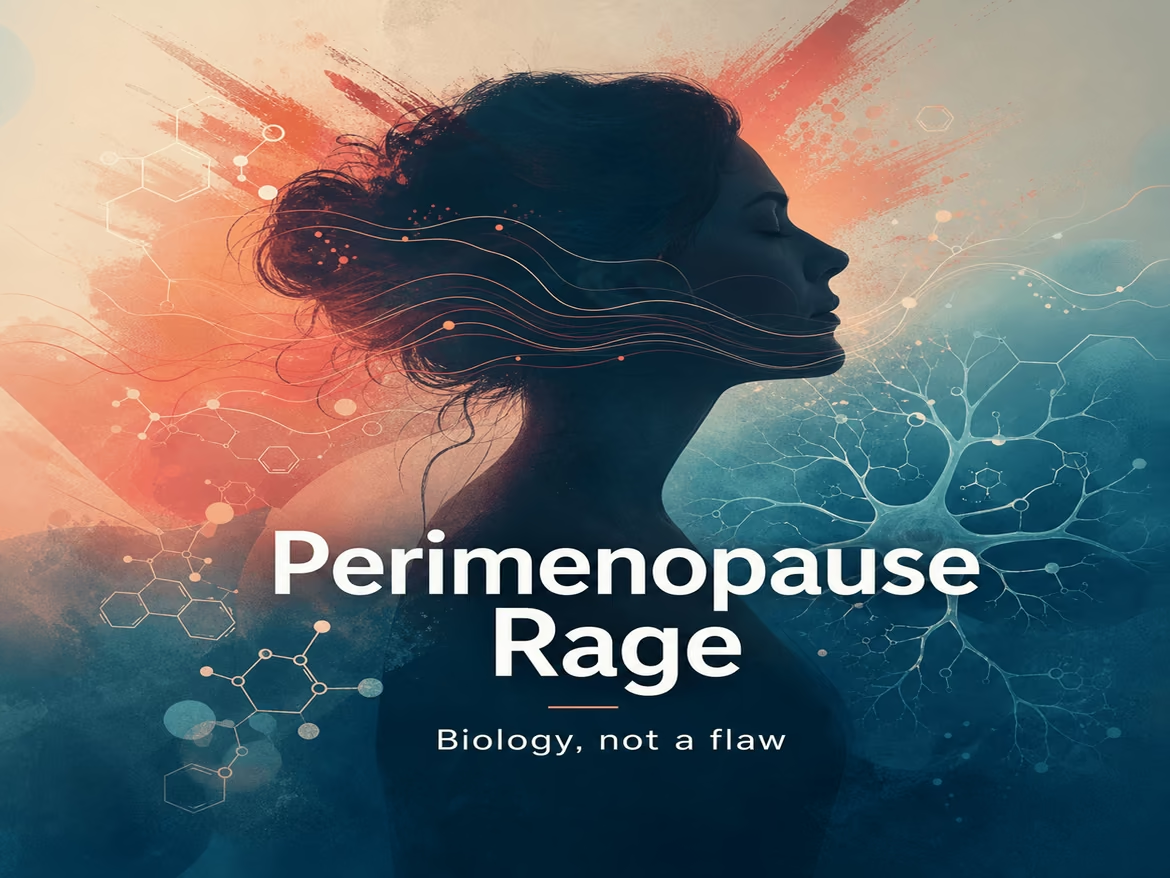
Perimenopause rage is real. It’s common. And it is not a character defect.
It’s biology. And it’s fixable, or at least very, very workable once you understand what’s happening and what your body is asking for.
This article is going to be a mix of science and real life, because that’s how this shows up. Not in a lab. In your kitchen. In your car. In your relationship. In your inbox.
First, what perimenopause actually is (because nobody explained it)
Perimenopause is the transition phase before menopause, when your ovaries start shifting hormone output in a more erratic pattern. Not just “lower estrogen” like the memes say.
It’s more like… hormone whiplash.
This can start in your late 30s or early 40s, sometimes earlier. It can last several years. And it’s defined by fluctuation, not a smooth decline.
So one month you feel sort of okay. The next month you’re anxious, weepy, furious, bloated, exhausted, and you can’t remember why you walked into the pantry.
That inconsistency is part of why it messes with your head. You don’t get a neat pattern to point to. You get unpredictability. And your nervous system hates unpredictability.
Additionally, perimenopause can also bring about extreme fatigue which compounds these emotional fluctuations and adds another layer of complexity to an already challenging phase of life.
Rage is a symptom. Not a personality change.
Most women I talk to don’t describe it as “I’m angry.”
They describe it like:
- “My fuse is shorter.”
- “I can’t tolerate nonsense.”
- “Everything is too much.”
- “I’m overstimulated all the time.”
- “I feel trapped in my own reactions.”
- “I don’t recognize myself.”
That last one matters.
Because when the emotion feels unfamiliar, the brain tries to explain it with identity. This must be who I am now.
No. This is your brain and body responding to changing inputs.
And here’s what those inputs are.
The biology behind perimenopause rage (what’s really driving it)
1) Estrogen and progesterone are not just “reproductive hormones”
They are neuroactive hormones. They affect your brain chemistry, your stress response, your sleep, your blood sugar, your inflammation, and how loud the world feels.
When they fluctuate, you feel it in mood and behavior, sometimes more than you feel it in your cycle.
Estrogen supports serotonin and dopamine signaling
Estrogen interacts with serotonin production, serotonin receptors, and the serotonin transporter. Translation: estrogen helps the brain use serotonin efficiently.
When estrogen drops suddenly, serotonin signaling can drop with it. That can look like:
- irritability
- low frustration tolerance
- anxiety
- depressive mood
- “I want to crawl out of my skin”
Also, estrogen tends to support dopamine tone (motivation, reward, focus). So when it swings, you might feel less resilient, less patient, less capable of brushing things off. It’s important to note that dopamine is not merely an energy booster, but rather plays a significant role in our overall mental state.
Things feel personal. Even when they aren’t.
Progesterone is your natural calming chemistry
Progesterone (and especially its metabolite allopregnanolone) interacts with GABA receptors, the brain’s main calming system.
In perimenopause, progesterone often declines earlier than estrogen because ovulation becomes less consistent. No ovulation, no robust progesterone.
So you can end up with a state that feels like:
- “tired but wired”
- more insomnia
- more anxiety
- more reactivity
- more rage, honestly
Not because you’re dramatic. Because the brake pedal is weaker.
2) Cortisol gets louder when hormones get erratic
Cortisol is not the enemy. It’s a survival hormone. But it’s supposed to rise in the morning, fall at night, and respond appropriately to stress.
When estrogen and progesterone fluctuate, your HPA axis (hypothalamic pituitary adrenal axis) gets more sensitive. And many women are already running on a high stress baseline from life. Work, kids, caregiving, relationship strain, not enough sleep. All of it.
So now your stress response is easier to trigger, and slower to shut off.
That “rage” can be a stress response in disguise. Your body is basically saying:
I can’t buffer one more thing.
3) Sleep disruption is gasoline on the fire
You can’t talk about perimenopause rage without talking about sleep. Even one week of poor sleep can change emotional regulation in measurable ways.
And perimenopause can mess with sleep through:
- night sweats and temperature dysregulation
- cortisol rhythm shifts
- progesterone decline (less GABA calm)
- blood sugar dips at night
- increased anxiety and rumination
- alcohol sensitivity increasing, which fragments sleep even if you fall asleep fine
When you’re sleep deprived, your prefrontal cortex has less capacity to regulate your limbic system. The “thinking brain” is offline. The “reactive brain” runs the show.
So your reaction is bigger than the situation.
And then you judge yourself for the reaction. Which adds more stress. Fun cycle.
4) Blood sugar swings can feel like rage
This one gets missed constantly, and it’s a big deal.
During perimenopause, insulin sensitivity can shift. Muscle mass can decline if you’re not intentionally strength training. Stress is often higher. Sleep is often worse. All of that pushes blood sugar stability in the wrong direction.
Blood sugar crashes can create symptoms that look like emotional instability:
- sudden irritability
- shaky anxiety
- heart racing
- “hangry” but more intense
- feeling panicky or enraged out of nowhere
If you ever feel like you want to throw your phone across the room at 11am, and then you eat lunch and you feel… human again.
That’s not a moral issue. That’s glucose.
5) Histamine and inflammation can amplify mood symptoms
Estrogen and histamine have a relationship. Estrogen can increase histamine, and histamine can stimulate estrogen. It’s a loop, and for some women it gets louder in perimenopause.
Higher histamine can contribute to:
- insomnia
- anxiety
- irritability
- headaches
- flushing
- rashes
- congestion
- “wired” feeling
Meanwhile, inflammation in general influences brain function and mood. Gut issues, blood sugar issues, sleep issues. They all feed inflammatory tone.
So if you’re noticing rage plus digestive issues, skin changes, headaches, joint aches, or new sensitivities, it’s worth zooming out.
This is systems medicine stuff. Not “just take a deep breath.”
Why it can feel targeted at the people you love most
A lot of women say, “I can hold it together at work, but I lose it at home.”
That’s not because you’re cruel.
That’s because home is where your nervous system finally drops the mask. It’s where the accumulated stress releases. And it’s where the requests keep coming. The noise. The touch. The questions. The mess.
Perimenopause often comes with sensory overload. You may literally have less tolerance for sound, clutter, chaos, and interruptions. The brain is already working harder to regulate internal states. External input becomes too much.
This is why rage can show up as:
- snapping when someone repeats your name
- wanting to be alone in a way you never did before
- intolerance for inefficiency or “small talk”
- feeling trapped by everyone else’s needs
It’s not that you stopped loving people. It’s that your internal bandwidth changed.
The “rage” is often grief, boundaries, and burnout too
Ok, quick pivot here, because biology is real. But so is context.
Perimenopause hits at a stage of life where many women are holding an absurd amount:
- career pressure
- parenting teens or young kids
- aging parents
- relationship stress
- body changes
- existential stuff. big stuff.
And you’re also losing the hormonal buffering that used to help you tolerate too much. So what used to be manageable becomes unbearable.
Rage can be the first honest emotion you’ve had in years. It can be a boundary signal. A truth signal.
But it still doesn’t mean you’re broken. It means you need support, and likely a new strategy.
What to do about perimenopause rage (practical, not fluffy)
I’m going to give you a layered approach because this is not one lever. It’s a bunch of levers.
1) Track patterns for two cycles, even if your cycles are irregular
Not obsessively. Just enough data to remove the self blame.
Track:
- cycle day (if you can)
- sleep quality
- mood (1 to 10)
- anxiety (1 to 10)
- rage episodes (yes/no, what time)
- meals and caffeine
- alcohol
- hot flashes or night sweats
Often you’ll see patterns like:
- worse mood in the late luteal phase
- rage after poor sleep
- rage before lunch
- rage after wine
- rage on high caffeine, low protein days
Patterns give you power. Not perfection. Power.
2) Stabilize blood sugar like it’s your job (because it kind of is)
This one changes lives fast.
Basics that work for most women:
- eat protein at breakfast, ideally 25 to 35g
- do not do coffee first on an empty stomach if you’re prone to anxiety
- include fiber and healthy fats with carbs
- aim for consistent meal timing
- consider an afternoon protein snack if you crash
If you want a simple test: for 7 days, eat a high protein breakfast within 60 to 90 minutes of waking. Watch what happens to your irritability by midday.
3) Protect sleep with a slightly annoying level of commitment
Sleep is the emotional regulation lever.
Some practical moves:
- keep the bedroom cooler than you think you need
- stop scrolling in bed, yes I know, but it matters
- reduce alcohol, especially if you wake at 2 to 4am
- add magnesium glycinate if appropriate for you (check with your clinician if you’re on meds or have kidney issues)
- get morning light in your eyes within 30 minutes of waking, even for 5 minutes
- keep a “brain dump” notebook by the bed for racing thoughts
If your main symptom is waking at night with a surge of anxiety or heat, that’s a clue. It often points to cortisol shifts, blood sugar drops, or hot flash physiology. Different root causes, different solutions.
4) Strength train. Not for weight loss. For nervous system stability.
Strength training improves insulin sensitivity, supports estrogen metabolism, and helps preserve muscle mass. It also improves mood, and gives your body a safer outlet for stress hormones.
You do not need to do anything extreme.
Two to four sessions a week. Basic compound movements. Consistency over intensity.
5) Reduce inflammatory load. Start with gut, because it’s often involved.
If your gut is inflamed, your immune system is louder. Your histamine may be higher. Your detox pathways may be sluggish. Your brain feels it.
A functional medicine approach often looks at:
- stool testing when appropriate
- food sensitivities or intolerances
- constipation (huge, and under discussed)
- microbiome diversity
- nutrient absorption
Sometimes improving digestion reduces irritability more than any “mood supplement” ever did.
And if you’re reading this on Dr. Lisa Silvani’s site, this is very much in her wheelhouse. The whole point of a systems approach is that mood symptoms are not separate from gut, hormones, and metabolism. They are tied together. If you want help connecting the dots for your body, you can explore resources on LisaSilvani.com or book a free consultation there.
6) Consider targeted support (with a clinician who actually understands perimenopause)
Depending on your symptoms and history, options can include:
- menopausal hormone therapy (MHT) for eligible patients
- non hormone prescriptions that support mood or hot flashes
- targeted nutrients (not a random shelf of supplements)
- addressing iron, B12, folate, vitamin D
- thyroid evaluation when symptoms overlap
- supporting progesterone when low progesterone symptoms dominate (this is individualized)
This is where you don’t want to DIY too hard, because “natural” doesn’t automatically mean safe or correct for your physiology.
7) Communication. Yes, really. But make it tactical.
Try language like:
- “My nervous system is more reactive right now. I’m working on it, but I need fewer last minute changes.”
- “If I snap, I will repair. But I need quiet when I walk in the door.”
- “I can do two things tonight, not seven. Help me choose.”
You’re not asking permission to have symptoms. You’re creating a plan so your household isn’t guessing.
And for the record, repair matters. Rage is understandable, but it can still hurt people. You can validate your biology and still take responsibility for how you speak. Both are true at the same time.
When to get help sooner (not later)
Please don’t white knuckle this for years.
Get support if you have:
- rage that feels uncontrollable
- intrusive thoughts
- panic attacks
- insomnia that’s persistent
- depression, hopelessness
- thoughts of self harm
- severe PMDD like symptoms that are new or worsening
- heavy bleeding, bleeding between periods, or sudden cycle changes that concern you
Perimenopause is common. Suffering is optional, and sometimes dangerous.
The takeaway (the part I want you to remember)
Perimenopause rage is not you becoming a worse person.
It’s a nervous system under strain, in a body with fluctuating estrogen and progesterone, often sleeping poorly, often running unstable blood sugar, often inflamed, often carrying too much.
When you address the biology, the emotional volume often comes down. Not overnight. But noticeably.
And even before you “fix” anything, just naming it helps. Because the shame is its own fuel.
If you want a more personalized, root cause approach, the kind that looks at hormones, gut, stress physiology, sleep, and metabolism together, you can find that style of care and education at https://www.lisasilvani.com. Start with the resources, or book a free consultation if you’re ready to talk through what’s going on.
You’re not failing.
Your body is signaling. Loudly.
Now we listen.
FAQs (Frequently Asked Questions)
What is perimenopause and how does it affect my emotions?
Perimenopause is the transition phase before menopause, marked by erratic hormone fluctuations rather than a simple decline. These unpredictable changes in estrogen and progesterone levels can lead to emotional symptoms like anxiety, irritability, mood swings, and even rage.
Why am I experiencing sudden anger or irritability during perimenopause?
Sudden anger or irritability during perimenopause is often due to fluctuating levels of neuroactive hormones like estrogen and progesterone. Estrogen supports serotonin and dopamine signaling, influencing mood and stress tolerance, while progesterone has calming effects. When these hormones fluctuate, your brain chemistry changes, leading to shorter fuses and heightened reactivity.
Is perimenopause rage a sign of a personality change or a character defect?
No, perimenopause rage is not a personality change or character defect. It is a biological response to hormone fluctuations affecting brain chemistry and the nervous system. Understanding this helps reduce guilt and shame associated with these emotional shifts.
How do cortisol levels influence mood swings and rage in perimenopause?
During perimenopause, hormonal fluctuations make your HPA axis more sensitive, causing cortisol—the stress hormone—to be easier triggered and slower to shut off. This heightened stress response can manifest as increased irritability or rage when your body feels overwhelmed.
Can sleep disruption during perimenopause contribute to emotional challenges like rage?
Yes, sleep disruption common in perimenopause compounds emotional fluctuations by increasing fatigue and lowering resilience. Poor sleep weakens your ability to manage stress and regulate emotions, making feelings of anger or irritability more intense.
Are there ways to manage or work through perimenopause-related rage effectively?
Absolutely. While perimenopause rage stems from biology, it is fixable or at least very workable once you understand the underlying causes. Strategies include managing stress, improving sleep quality, supporting hormonal balance through lifestyle changes or medical guidance, and recognizing that these symptoms are temporary responses—not permanent identity shifts.
References
- Santoro, N., Epperson, C. N., & Mathews, S. B. (2015). Menopausal Symptoms and Their Management. New England Journal of Medicine, 372(25), 2397-2406. https://doi.org/10.1056/NEJMcp1410152
- Freeman, E. W., Sammel, M. D., Lin, H., & Gracia, C. R. (2014). Hormones and Menopausal Status as Predictors of Depression in Women in Transition to Menopause. Archives of General Psychiatry, 67(3), 262–270. https://doi.org/10.1001/archgenpsychiatry.2009.12
- Schmidt, P. J., & Rubinow, D. R. (2009). Sex Hormones and Mood in the Perimenopause: A Focus on Estrogen and Progesterone Effects on Brain Functioning and Neurotransmitter Systems Involved in Mood Regulation. Biological Psychiatry, 65(12), 991-997. https://doi.org/10.1016/j.biopsych.2008.11.027
- McEwen, B. S., & Wingfield, J.C. (2010). What Is in a Name? Integrating Homeostasis, Allostasis and Stress. Hormones and Behavior, 57(2), 105-111. https://doi.org/10.1016/j.yhbeh.2009.09.011
- Krystal, A.D., Edinger, J.D., Wohlgemuth, W.K., & Marsh, G.R. (2002). Sleep Hygiene Behaviors As Predictors of Sleep Quality: Results from a Survey of Older Adults with Insomnia Symptoms and a Randomized Controlled Trial of Behavior Therapy for Insomnia in Older Adults with Comorbid Medical Conditions*. Sleep, 25(7), 839–846.
- Davis, S.R., Lambrinoudaki, I., Lumsden, M., Mishra, G.D., Pal, L., Rees, M., Santoro, N., & Simoncini, T.; Menopause Working Group of the International Menopause Society (2015). Menopause: A Review of Clinical Practice Guidelines for Management of Symptoms and Health Risks in Midlife Women*. Nature Reviews Endocrinology, 11(10), 606–619.
- Luoto R.M., Helander E.E., Auvinen J.A.K., et al.(2021). The Role of Blood Sugar Regulation During Menopausal Transition: A Review of Physiology and Clinical Implications.* Diabetes Spectrum*, 34(2), 180-188.
- NHS UK (2023). Menopause: Managing Your Symptoms – Emotional Changes During the Menopause Transition.* Retrieved from* https://www.nhs.uk/conditions/menopause/symptoms/
- Ruscio M.E., Ruscio J.P.(2011). Gut Microbiota and Mood Disorders – An Emerging Connection.* BMC Medicine*, 9:17.
- Fitzgerald K.T.(2020). Hormonal Influences on Inflammation and Mood Disorders During Perimenopause.* Journal of Alternative and Complementary Medicine*, 26(4), 295-301.
- Hyman M.(2018). The Blood Sugar Solution: The UltraHealthy Program for Losing Weight, Preventing Disease, and Feeling Great Now! Little Brown Spark.
- Cleveland Clinic.(2023). Estrogen: Functions and Effects on the Body.* Retrieved from* https://my.clevelandclinic.org/health/body/22353-estrogen
- ScienceDirect (2022). The Hypothalamic-Pituitary-Adrenal Axis in Stress Response: Mechanisms Underlying Mood Disorders.* Neuroscience & Biobehavioral Reviews*, 132:751-770.
- MindBodyGreen Editorial Team.(2020). Understanding Perimenopause Rage from a Holistic Perspective.* MindBodyGreen*. https://www.mindbodygreen.com/articles/perimenopause-rage-explained

