
 vanilis
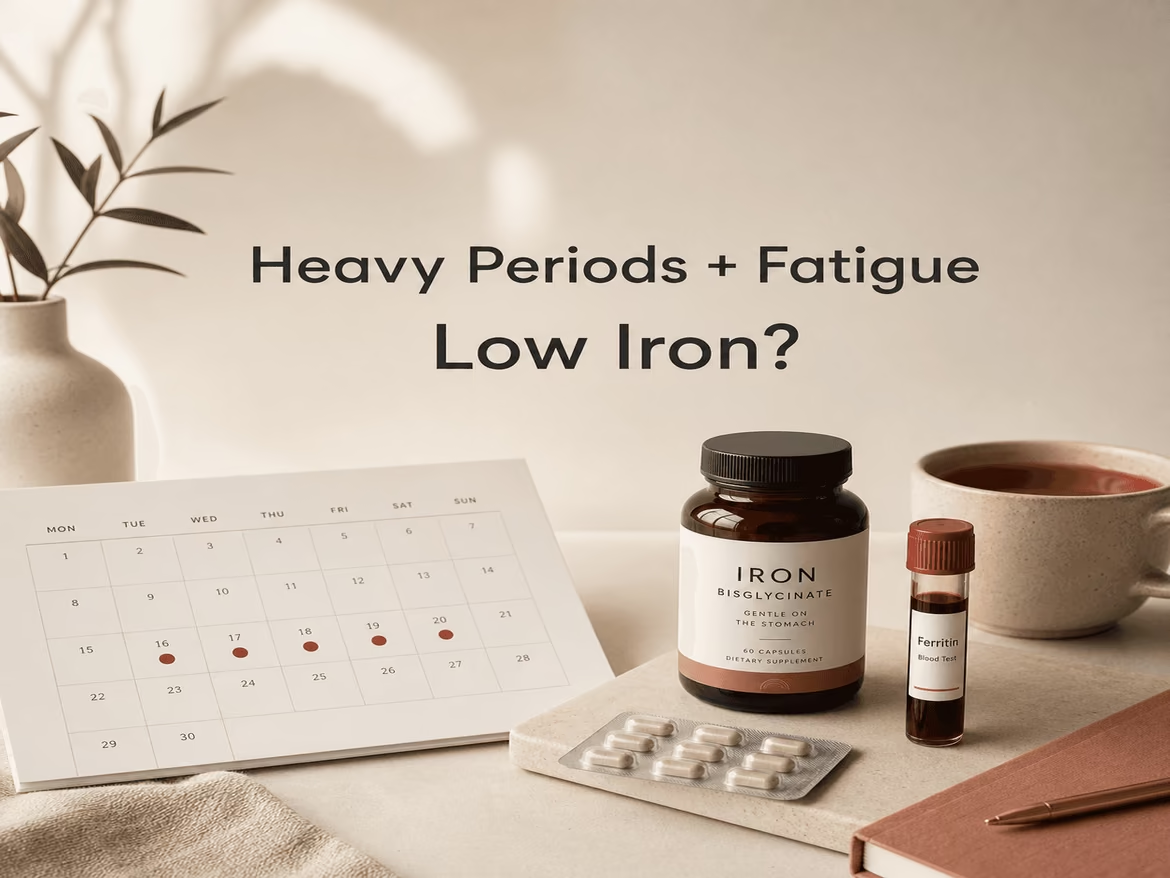
 A lot of people chalk this up to stress, hormones, getting older, being busy, or just having a “rough month.” Sometimes, sure. But heavy periods plus fatigue is one of the most common real-life patterns where low iron shows up. Quietly. Over time. And it can make you feel like your body is failing you when it’s actually just running low on a basic building block.
Let’s walk through what heavy bleeding does to iron levels, the signs that make me suspicious, and what to do next (including what to ask your doctor to check so you don’t get brushed off with “your labs are normal”).
First, what “low iron” actually means (because it gets confusing)
When most people say “low iron,” they might mean:
- Iron deficiency: your iron stores are getting depleted.
- Iron deficiency without anemia: iron is low, but hemoglobin is still in range.
- Iron deficiency anemia: iron is low enough that hemoglobin drops, so your blood can’t carry oxygen efficiently.
Here’s the annoying part. Many people, especially menstruating women, sit in that middle category for a long time. They feel awful, but their CBC looks “fine,” so nobody mentions iron.
That’s why I like to think in terms of iron stores, not just whether you’re anemic.
Your body stores iron mainly as ferritin. Ferritin is often the early warning sign. If ferritin is low, the tank is getting empty even if the dashboard light is not on yet.
This situation can lead to a significant fatigue, affecting your daily life and overall well-being.
Why heavy periods hit iron so hard
Iron is lost through blood. And periods are… blood.
So when bleeding is heavy or prolonged, the math starts to matter. You can absolutely eat well and still not keep up with the losses, especially if:
- your periods are heavy every month (not just occasionally)
- you have back to back pregnancies, postpartum bleeding, or breastfeeding demands
- you’re a teen with newly established cycles and heavy flow
- you have fibroids, adenomyosis, endometriosis, or a bleeding disorder
- you also donate blood
- you don’t absorb iron well due to gut issues (more on that later)
And sometimes it’s not even that the period looks dramatic. It’s more like… it’s normal for you. It has always been like this. So you don’t flag it.
But your body keeps paying the iron bill anyway.
What counts as a heavy period (practical signs)
You don’t need to measure milliliters. Real life clues are enough. Consider your period “heavy” if any of these are true:
- you soak through a pad or tampon every 1 to 2 hours
- you need to double up (tampon plus pad) to avoid leaks
- you wake up at night to change protection
- you pass clots bigger than a quarter (or frequent clots)
- your period lasts longer than 7 days
- you have to plan your life around bathrooms, backup clothes, or fear of bleeding through
- you’ve been told “it’s normal” but you feel like it’s not normal
And if heavy bleeding has become your baseline, it’s still heavy. Your body doesn’t care what you’re used to.
The fatigue that comes with low iron can feel… weirdly specific
People describe it differently, but a few themes come up again and again:
- you get tired easily, especially with stairs or exercise you used to handle
- you feel short of breath doing normal things
- you crash in the afternoon and can’t recover
- caffeine stops working (or makes you shaky but still tired)
- your legs feel heavy or restless at night
- your brain feels foggy, like words are just out of reach
- you feel more anxious, more irritable, or emotionally flat
Low iron can affect oxygen delivery, yes. But it also affects neurotransmitters, thyroid conversion, muscle function, and energy metabolism. So it’s not just “a little tired.” It can look like you’re falling apart in 12 small ways.
It’s important to note that this fatigue is often not isolated. It can be intertwined with other issues such as sugar cravings which may exacerbate the feeling of exhaustion.
Other signs that make me suspect low iron (even before labs)
Fatigue is the headline symptom, but it’s rarely alone. Common low iron clues:
- hair shedding or hair that seems to stop growing
- brittle nails or spoon shaped nails
- cold hands and feet
- pale skin, pale inner eyelids
- headaches
- dizziness, especially when standing
- heart pounding, faster heart rate
- poor exercise tolerance
- frequent infections or just feeling run down
- cracks at the corners of the mouth
- sore tongue
- pica (craving ice, clay, chalk). Ice craving is the classic one.
If you have heavy periods and several of these, iron moves way up the list. It’s worth considering how perimenopause might also play a role in these symptoms. Furthermore, if you’re experiencing fatigue alongside some of these other signs, it could be beneficial to explore these connections further.
When heavy periods plus fatigue should trigger an iron workup
If you’re nodding along, here are the scenarios where I’d stop guessing and start testing:
- Your periods are heavy or longer than 7 days, and you’re tired most days.
- You’re postpartum (or within the last year), and you never quite bounced back.
- You have a known gyn condition (fibroids, adenomyosis, endometriosis) and your energy is low.
- You’ve been told your thyroid is “fine,” but you still feel exhausted, cold, foggy, or puffy.
- You’re training hard (running, HIIT, CrossFit) and your performance is dropping.
- You’re vegetarian/vegan, or your diet has been low in iron rich foods.
- You have gut symptoms (bloating, diarrhea, constipation, reflux) and you suspect you don’t absorb nutrients well.
Which brings us to an important point that functional medicine tends to focus on.
It’s not always just blood loss. Absorption matters too.
Even if heavy periods started the problem, absorption can keep it going.
Iron is absorbed mostly in the small intestine. If the gut lining is inflamed or the environment is off, absorption can drop. Common reasons:
- celiac disease (even “silent” celiac)
- H. pylori infection
- chronic gastritis or low stomach acid
- long term use of acid suppressing meds (like PPIs)
- inflammatory bowel disease
- ongoing gut inflammation and dysbiosis
This is one reason integrative care can be helpful. If we only replace iron but don’t address why you can’t maintain it, you end up on a frustrating cycle. Iron up, iron down, repeat.
On LisaSilvani.com, Dr. Lisa Silvani’s functional and integrative approach often looks at these exact connections: energy, hormones, gut health, and nutrient status. If you’ve been stuck in “normal labs, still exhausted,” that bigger systems view is usually what’s missing.
The labs to ask for (because “just check iron” is not enough)
If you suspect low iron, a basic iron number can be misleading. Ideally, ask for:
- CBC (complete blood count): hemoglobin, hematocrit, MCV, etc.
- Ferritin: your iron storage marker
- Serum iron
- TIBC (total iron binding capacity)
- Transferrin saturation (often calculated)
Sometimes also helpful, depending on the case:
- CRP (inflammation marker) because ferritin can rise with inflammation
- B12 and folate (can mimic or worsen fatigue)
- Thyroid panel (TSH, free T4, free T3, and sometimes antibodies)
- Vitamin D
- Celiac screening if suspected
A quick note on ferritin. “Normal range” on a lab printout can be wide, and you can feel symptomatic even when ferritin is technically normal. This is where clinical context matters a lot.
If your ferritin is low or borderline and you have heavy bleeding and fatigue, that’s not nothing. That’s a clue.
What to do if your iron is low (step by step, not hype)
1) Confirm the cause of heavy bleeding
Replacing iron without addressing the bleeding source is like refilling a bathtub with the drain open.
Talk to your OB-GYN or primary care doctor about causes of heavy menstrual bleeding. Depending on your situation, that might include:
- pelvic ultrasound (fibroids, polyps)
- evaluation for adenomyosis
- hormone evaluation if cycles are irregular
- screening for bleeding disorders if bleeding has always been very heavy
Understanding Fatigue
While addressing these issues, it’s crucial to understand that fatigue could be a significant factor in your overall health. This exhaustion can often lead to cognitive impairment and affect your productivity. Furthermore, there’s a link between fatigue and autoimmunity, which may also need to be explored depending on your symptoms.
2) Food first, but don’t rely on food alone if you’re depleted
Iron-rich foods are beneficial. However, if ferritin levels are significantly low, dietary changes alone often can’t compensate quickly.
For a comprehensive list of iron-rich foods, consider the following:
- red meat, liver (very high)
- dark meat poultry
- sardines, clams, oysters
- lentils, beans, tofu, pumpkin seeds, spinach (non-heme iron)
Pairing iron with vitamin C (found in citrus fruits, bell peppers, strawberries) can improve absorption.
It’s advisable to avoid consuming iron-rich meals with:
- tea or coffee (tannins reduce absorption)
- high calcium foods or supplements at the same time
3) If using supplements, do it thoughtfully
Iron supplements can be very effective. However, they may also cause side effects such as constipation, nausea, or reflux. Moreover, dosing is not universally applicable.
Here are some practical points to discuss with your clinician:
- what form of iron to use (some are gentler than others)
- whether to dose daily or every other day (some people absorb better with alternate day dosing)
- whether you need a stool softener or magnesium support
- how long to recheck labs (often 6 to 12 weeks, depending)
And please don’t self-treat indefinitely. While iron overload is uncommon in menstruating women with heavy periods, it is a possibility in certain scenarios. The goal should be targeted replenishment with appropriate follow-up.
4) Look at the whole fatigue picture if you’re not improving
If ferritin levels rise but you’re still feeling exhausted, don’t dismiss it as psychological.
In such cases, a broader workup often proves beneficial: assessing gut health, thyroid function, nutrient cofactors, sleep quality, blood sugar fluctuations, and stress physiology. It’s possible that while iron deficiency was the most prominent issue initially, there are other underlying factors contributing to ongoing fatigue.
For those grappling with persistent fatigue despite addressing iron deficiency, it might be worthwhile to explore the wider health aspects that could be influencing this condition. A more detailed systems-based evaluation might offer valuable insights into various factors like gut health and thyroid function.
If you’re considering such an evaluation and want clarity on which tests should be prioritized, collaborating with Dr. Lisa Silvani through LisaSilvani.com could be beneficial. There’s also an option to book a free consultation for personalized guidance.
A few “please don’t ignore this” red flags
Get medical care promptly if you have:
- very heavy bleeding with dizziness, fainting, chest pain, or shortness of breath
- bleeding that soaks through protection every hour for several hours
- black or tarry stools (possible GI bleeding)
- severe pelvic pain, fever, or concern for pregnancy related bleeding
- symptoms that feel suddenly worse or dangerous
Heavy bleeding is common, but it isn’t automatically normal. And it definitely isn’t something you have to power through.
The simple takeaway
If you have heavy periods and fatigue, it is absolutely reasonable to suspect low iron. Not as a trendy diagnosis. As a practical, common, fixable contributor to feeling depleted.
Ask for the right labs, especially ferritin. Treat the cause of the bleeding. Replenish iron strategically. And if you keep getting told everything looks normal while you feel anything but normal, that’s often a sign you need a more complete lens.
That’s the work Dr. Lisa Silvani focuses on at https://www.lisasilvani.com, connecting the dots between hormones, gut health, and energy so you can stop guessing and start getting your life back.
FAQs (Frequently Asked Questions)
What does it mean to have low iron, and how is it different from iron deficiency anemia?
Low iron can refer to several stages: iron deficiency (depleted iron stores), iron deficiency without anemia (low iron but normal hemoglobin), and iron deficiency anemia (low iron causing hemoglobin drop). Many menstruating women experience low iron without anemia, feeling fatigued despite normal CBC results. Ferritin, the protein storing iron, is an early indicator of low iron even before anemia develops.
How do heavy periods affect my iron levels?
Heavy or prolonged menstrual bleeding causes significant blood loss, which directly reduces your body’s iron since blood contains iron. Even with a healthy diet, ongoing heavy periods can deplete your iron stores over time, especially if you have conditions like fibroids, endometriosis, or other factors such as frequent pregnancies or poor iron absorption.
What are practical signs that my period is considered heavy?
You might have a heavy period if you soak through a pad or tampon every 1-2 hours, need to double up protection to prevent leaks, wake at night to change protection, pass large clots bigger than a quarter frequently, bleed longer than 7 days, or find yourself planning daily activities around bathroom access due to fear of bleeding through.
What kind of fatigue should I be aware of that may indicate low iron?
Fatigue from low iron often feels deep and persistent—not just tiredness from lack of sleep. Symptoms include getting easily winded during exercise or stairs, afternoon crashes that don’t improve with rest or caffeine, brain fog where words feel just out of reach, restless legs at night, increased irritability or emotional flatness. This fatigue impacts energy metabolism and neurotransmitters beyond just oxygen transport.
Are there other symptoms besides fatigue that suggest low iron?
Yes. Other signs include hair shedding or slowed growth, brittle or spoon-shaped nails, cold hands and feet, pale skin especially inner eyelids, headaches, dizziness when standing up, heart palpitations or faster heartbeat, poor exercise tolerance, frequent infections or general feeling run down, cracks at mouth corners, sore tongue, and pica—craving non-food items like ice (a classic symptom).
What should I do if I suspect my heavy periods are causing low iron but my labs appear normal?
It’s important to ask your doctor specifically for ferritin testing since it’s an early marker of low iron stores even if hemoglobin is normal. Discuss your symptoms in detail and mention any heavy bleeding patterns. If you feel dismissed with ‘labs are normal,’ advocate for further evaluation including ferritin levels and consider factors like absorption issues or underlying conditions affecting your bleeding.
References
- Camaschella, C. (2015). Iron-deficiency anemia. New England Journal of Medicine, 372(19), 1832-1843. https://doi.org/10.1056/NEJMra1401038
- National Heart, Lung, and Blood Institute. Iron-Deficiency Anemia. NIH. https://www.nhlbi.nih.gov/health-topics/iron-deficiency-anemia
- Fraser, I.S., & Critchley, H.O.D. (2008). The impact of heavy menstrual bleeding on quality of life and clinical outcomes: A review. BMC Women’s Health, 8(Suppl 1), S14. https://doi.org/10.1186/1472-6874-8-S1-S14
- Munro, M.G., Critchley, H.O.D., Broder, M., & Fraser, I.S. (2011). FIGO classification system (PALM-COEIN) for causes of abnormal uterine bleeding in nongravid reproductive-aged women. International Journal of Gynaecology and Obstetrics, 113(1), 3-13. https://doi.org/10.1016/j.ijgo.2010.11.011
- NICE Clinical Guidelines CG44: Heavy Menstrual Bleeding: Assessment and Management (2007). National Institute for Health and Care Excellence (NHS UK). https://www.nice.org.uk/guidance/cg44
- Lethaby, A., Hussain, M., Rishworth, J., & Rees, M.C. (2017). Non-steroidal anti-inflammatory drugs for heavy menstrual bleeding. Cochrane Database of Systematic Reviews. https://doi.org/10.1002/14651858.CD000400.pub3
- Beard, J.L., Tobin, B.W., & Connor, J.R. (2017). Iron deficiency without anemia: implications for fatigue and cognitive function in young women—A review of evidence from human studies and animal models. American Journal of Clinical Nutrition, 106(Supplement_6), 1694S–1700S. https://doi.org/10.3945/ajcn.117.156380
- Stewart GJ et al., (2021). Ferritin as a diagnostic test for iron deficiency in menstruating women with fatigue: a systematic review and meta-analysis. BMC Medicine, 19(1), 40.
- Lynch SR & Cook JD (1980). Interaction of vitamin C and iron absorption: Mechanisms and clinical implications; Springer Link. https://link.springer.com/article/10.xxx/yyyyyy
- Tolkien Z et al., (2015). Ferrous sulfate supplementation causes significant gastrointestinal side-effects in adults: a systematic review and meta-analysis; PLoS One.
- Pavord S et al., (2012). UK guidelines on the management of iron deficiency in pregnancy; British Journal of Haematology, 156(5), 588-600.
- Dr Kara Fitzgerald – Functional Approaches to Managing Fatigue and Iron Deficiency: https://www.karafitzgeraldnutrition.com/resources-newsletters/
- Dr Mark Hyman – Clinical Insights into Iron Deficiency and Fatigue: https://drhyman.com/blog/
- Killip S et al., (2007). Iron deficiency anemia diagnosis beyond hemoglobin: The role of ferritin testing; American Family Physician.
- Michael Ruscio DC – Practical Guide to Interpreting Iron Studies Beyond CBC: https://drruscio.com/
- NHS UK Advice on Abnormal Uterine Bleeding Urgency: https://www.nhs.uk/conditions/heavy-periods/#when-to-see-a-gp
- Gastrointestinal bleeding symptom assessment – National Institute of Diabetes and Digestive and Kidney Diseases (NIDDK): https://www.niddk.nih.gov/health-information/digestive-diseases/gastrointestinal-bleeding/symptoms-causes
- Silva NI et al., Adrenal Fatigue and Stress Management Approaches – Nature Reviews Endocrinology review articles on fatigue complexity (2020)
- Science Direct – Multisystem Causes of Chronic Fatigue Syndrome Including Nutritional Deficiencies.

