
 vanilis
 One person is “tired” because they’re iron deficient. Another is tired because their cortisol curve is upside down. Another one is tired because they’re inflamed, constipated, and not absorbing nutrients. And a lot of people are just… running on adrenaline and caffeine until the body finally calls in sick.
So when someone asks me, “Dr. Lisa, what supplements do you recommend for energy?” I always want to say: depends. Because it really does.
But.
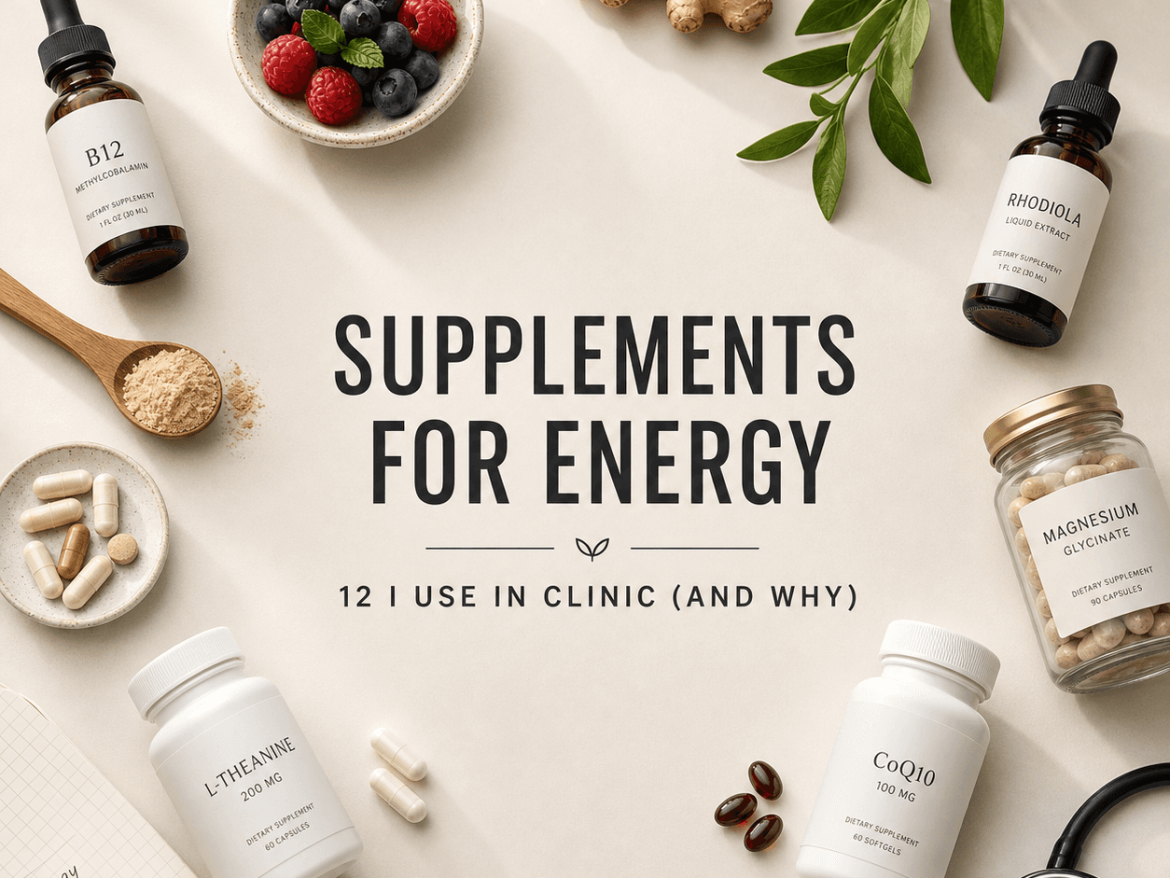
There are a handful of supplements I reach for again and again in clinic. Not because they’re trendy. Because they map to the most common energy bottlenecks I see in real humans with real lives.
This is that list. The 12 I use most, and why. Plus the “please don’t do this” notes, because energy supplements can either be supportive and steady… or they can be rocket fuel that burns you out faster.
Quick note before we start: this is education, not personal medical advice. If you’re pregnant, breastfeeding, on meds (especially blood thinners, SSRIs, thyroid meds, diabetes meds), or you have a chronic condition, loop in your clinician.
Also, if you want the deeper root cause workup (labs, systems approach, the whole functional medicine flow), you can book a free consultation through my site at LisaSilvani.com. That’s literally what we do all day.
First, the “energy” problem is usually not an energy problem
Most fatigue isn’t a lack of motivation. It’s physiology.
In clinic, I usually see fatigue coming from a few buckets:
- Blood sugar swings (the 3 pm crash, irritability when hungry, waking at 2 am)
- Poor sleep quality (not just hours, but depth and recovery)
- Low iron or B vitamin status (common in menstruating women, restrictive diets, GI issues)
- Thyroid and hormone imbalance (perimenopause especially)
- Gut dysfunction and inflammation (bloating, constipation, food sensitivities, acne, brain fog, and yes, fatigue)
- Mitochondrial slowdown (the “my body feels heavy” fatigue)
- Too much stress signaling (wired but tired, anxiety, palpitations)
Supplements can help. But they work best when they match the bucket.
For instance, dopamine isn’t actually an energy booster as many believe. It’s crucial to understand what you’re supplementing for to avoid missteps.
If you’re dealing with conditions like fibromyalgia which often involve debilitating fatigue among other symptoms,unlocking energy might require a tailored approach that goes beyond conventional methods.
To aid in identifying your specific fatigue triggers or evaluating your overall energy levels, there are resources available that provide comprehensive assessments.
Lastly,this boost energy checklist outlines practical steps to manage your energy levels effectively.
Ok. Let’s get into my 12.
1. Magnesium glycinate (or magnesium threonate)
If I could pick one supplement that helps energy indirectly but consistently, it’s magnesium.
Because low magnesium doesn’t always feel like “low magnesium.” It looks like:
- poor sleep
- muscle tension
- constipation
- headaches
- anxiety
- PMS
- sugar cravings
- that edgy, depleted feeling
All of that drains energy.
Why I use it: magnesium supports relaxation, nervous system tone, sleep quality, and bowel motility. Better sleep plus better elimination equals better daytime energy. Not glamorous. Just effective.
How I use it in clinic:
- Glycinate for sleep, stress, muscle tension
- Threonate if brain fog is a major complaint and we want more cognitive support
- Citrate if constipation is the main issue (but it can loosen stools)
Watch outs: too much can cause diarrhea. Start low, go slow. If you have kidney disease, do not self-supplement without medical guidance.
2. Creatine monohydrate
Creatine is not just for bodybuilders. I use it with women all the time, especially as they approach midlife.
Why I use it: creatine supports cellular energy via ATP, and it can improve strength, exercise tolerance, and sometimes even cognitive stamina. If you feel like your workouts wipe you out for two days, or you’re losing muscle, this one matters.
Also, muscle is a metabolic organ. More muscle usually means better glucose handling and better energy. It’s a whole chain reaction.
How I use it: plain creatine monohydrate, typically daily.
Watch outs: it can cause a bit of water retention inside the muscle (not fat gain, but it can feel like “puffiness” at first). If someone has significant kidney disease, we coordinate carefully.
If you’re unsure about your current energy levels and how these supplements might fit into your routine, consider taking this energy level quiz to gain some insights.
3. CoQ10 (ubiquinol preferred for many)
If your fatigue feels physical, heavy, “my battery is at 20%” and you’re doing the basics… CoQ10 comes up a lot.
Why I use it: CoQ10 is central for mitochondrial energy production. I especially consider it if someone is:
- over 40
- on a statin
- dealing with chronic inflammation
- experiencing low exercise tolerance
How I use it: I often use ubiquinol (the reduced form) for better absorption, especially in older adults.
Watch outs: can interact with blood thinners. Always check.
4. B vitamins (targeted, not always a mega-dose)
B vitamins are a classic “energy” supplement. And sometimes they’re exactly what someone needs. Sometimes they just make expensive neon urine.
Why I use them: B vitamins support methylation, neurotransmitter production, red blood cell formation, and energy metabolism. If someone is low, they can feel:
- flat mood
- brain fog
- low motivation
- exercise intolerance
- tingling (in some B12 deficiency patterns)
In clinic I’m thinking about B12, folate, and B6 most often, and I like to be intentional about forms.
How I use them: sometimes a balanced B complex, sometimes just B12 or folate depending on labs and symptoms.
Watch outs: too much B6 over time can cause neuropathy in susceptible people. And high-dose methylated Bs can make some anxious patients feel worse (wired, edgy). This is a “match the person” supplement.
5. Iron (only when it’s indicated)
Iron is huge for energy. But iron is also one of the supplements I’m most cautious with.
Why I use it: if ferritin is low, oxygen delivery and energy production suffer. Period. And a lot of menstruating women are walking around with ferritin that is technically “normal” but functionally too low for them.
Symptoms that make me think “check iron”:
- fatigue that feels weak and breathless
- hair shedding
- restless legs
- dizziness
- poor exercise tolerance
- heavy periods
How I use it: only after labs. And we choose a form that is tolerated, because iron can be rough on the gut.
Watch outs: iron can worsen constipation and nausea. It can be harmful if overloaded. If you’re not sure, test first. Please.
6. Vitamin D (when low, it’s a quiet energy thief)
Vitamin D isn’t a “stimulant,” but low vitamin D is associated with fatigue, low mood, immune issues, and muscle weakness.
Why I use it: correcting deficiency can improve resilience and overall vitality. And in people with frequent infections, low vitamin D is a common background factor.
How I use it: based on labs, usually with food (it’s fat soluble).
Watch outs: don’t megadose without monitoring. More is not always better.
7. Omega 3s (EPA and DHA)
If inflammation is part of the picture, energy often improves when inflammation calms down. Omega 3s are one of the simplest levers.
Why I use them: omega 3s can support inflammatory balance, brain function, mood, and even menstrual symptoms. If someone’s fatigue is tied to mood dips, brain fog, joint aches, or chronic inflammatory issues, omega 3s are foundational.
How I use them: quality matters. I look for a reputable brand with adequate EPA and DHA.
Watch outs: can increase bleeding risk at high doses, especially combined with blood thinners. Also, some people get reflux. Freezing capsules or taking with meals can help.
However, it’s not just about supplements; understanding your body’s unique needs is crucial for optimal health and energy levels. For those seeking deeper insights into their health and personalized strategies to enhance their vitality, consider exploring The Energy Code, which offers valuable resources and guidance tailored to individual requirements.
8. Rhodiola (for stress related fatigue, not “crash and burn” fatigue)
Rhodiola is one of the adaptogens I actually see work, when used for the right person.
Why I use it: it can support stress resilience, mental performance, and that “I’m tired but I still have to function” feeling. Think: overwhelmed professionals, students, caregivers.
How I use it: usually earlier in the day.
Watch outs: it can be too activating for anxious patients, and it’s not my first pick for someone with insomnia. Also, we’re careful with bipolar disorder and certain psychiatric meds.
9. L theanine (calm focus energy)
Sometimes fatigue is not low energy. It’s scattered energy. Too much sympathetic tone, too much mental noise. You’re “on” all the time, but you’re not productive and you feel drained anyway.
Why I use it: L theanine can support relaxed alertness. It pairs well with caffeine for people who get jittery, or it can be used solo for anxious fatigue.
How I use it: situationally. Before meetings, mid afternoon, or during high stress periods.
Watch outs: usually well tolerated, but always consider the full supplement stack. People combine a lot of “calming” things and then wonder why they feel flat.
10. Acetyl L carnitine (ALCAR)
ALCAR is another mitochondrial support that can be helpful when fatigue feels physical and brain foggy at the same time.
Why I use it: carnitine helps shuttle fatty acids into mitochondria for energy production. In some people, it can support mental clarity and stamina.
How I use it: usually earlier in the day.
Watch outs: can be activating. If someone is already wired, we go carefully.
11. Electrolytes (especially if you’re “tired but also dizzy”)
This one is not fancy, but it’s common.
People are under hydrated. Or they’re drinking a lot of plain water while eating very little salt. Or they’re doing intermittent fasting, low carb, intense workouts, sauna, hot yoga. And then they’re tired, lightheaded, and craving sugar.
Why I use it: electrolytes support blood volume, nerve conduction, muscle function, and energy. If your fatigue comes with headaches, dizziness on standing, or exercise intolerance, this is an easy experiment.
How I use it: in water, usually earlier in the day. Sometimes around workouts.
Watch outs: if you have high blood pressure, kidney disease, or you’re on meds that affect electrolytes, we tailor it. Also check the sugar content in commercial products.
12. Probiotics (and gut repair support, when the gut is clearly involved)
I know this is an “energy supplement” article, but the gut is often the hidden energy drain.
If you’re bloated, constipated, having loose stools, reacting to foods, breaking out, anxious, sleeping poorly… your gut is not just a digestion issue. It’s an inflammation issue. It’s a nutrient absorption issue. It’s a nervous system issue.
And that shows up as fatigue.
Why I use it: targeted probiotics can support gut balance, and when the gut calms down, energy often comes up. Not overnight, but steadily.
How I use it: this depends heavily on symptoms. Some people do great on a lactobacillus blend. Others need spore based strains. Others need antimicrobial work first because probiotics make them worse. This is why I don’t love one size fits all.
Watch outs: if probiotics increase bloating or brain fog, stop and reassess. That can be a clue (SIBO, histamine issues, etc.).
If the gut piece feels like you, that’s exactly why I built resources around it on my site. You can start with the free tools on LisaSilvani.com, and if you want a structured plan we can map out next steps in a consult.
The supplement stack I don’t love (but people do anyway)
Just because something “gives energy” doesn’t mean it builds energy.
A few patterns I see a lot:
1) High dose caffeine plus adrenal supplements, every day
If you need stronger and stronger stimulants to function, that’s not a motivation problem. It’s a signaling problem.
We want to rebuild sleep, blood sugar stability, minerals, mitochondria, and gut. Not just whip the nervous system harder.
2) Taking iron “just in case”
Please don’t. Test first.
3) Buying 12 supplements at once and changing everything in a week
When someone starts everything at the same time, and then they feel weird, we have no idea what caused it. Or what helped.
I’d rather you do two things consistently than twelve things sporadically.
How I usually build an energy plan in clinic (simple version)
If you’re trying to do this in a sane way, here’s the order I typically think in:
- Sleep support first: magnesium, maybe theanine, sleep hygiene
- Hydration and electrolytes: especially if dizziness, headaches, workouts
- Foundational labs: iron/ferritin, B12, vitamin D, thyroid markers, inflammation, glucose/insulin patterns
- Mitochondrial support: CoQ10, creatine, carnitine depending on person
- Stress resilience: rhodiola only when appropriate
- Gut work: if symptoms point there, we address it early because it blocks everything else
If you want a more personalized version of this, that’s the point of working together. There’s a free consultation option through https://www.lisasilvani.com and we’ll look at your symptoms, your history, and what you’ve already tried.
A quick reality check, because this matters
If you’re exhausted and you’ve been exhausted for a while, you’re not lazy. You’re not broken.
But you do need a plan that matches your body. Energy is not one thing. It’s blood sugar, sleep, hormones, inflammation, mitochondria, nutrient status, stress signaling, gut health. All tangled together.
Supplements can be part of the solution. The right ones can genuinely change how you feel.
The wrong ones, or the right ones at the wrong time, just add noise.
If you want help sorting it out, start with the resources on LisaSilvani.com and book a free consult when you’re ready. That’s the cleanest next step.
FAQs (Frequently Asked Questions)
What are the common physiological causes of fatigue?
Fatigue often stems from physiological issues rather than lack of motivation. Common causes include blood sugar swings, poor sleep quality, low iron or B vitamin status, thyroid and hormone imbalances, gut dysfunction and inflammation, mitochondrial slowdown, and excessive stress signaling.
How can magnesium supplements help improve energy levels?
Magnesium supports relaxation, nervous system tone, sleep quality, and bowel motility. Supplementing with magnesium glycinate or threonate can alleviate symptoms like poor sleep, muscle tension, headaches, anxiety, PMS, sugar cravings, and constipation—all of which drain energy—leading to better daytime vitality.
Why is creatine monohydrate recommended for energy support beyond bodybuilding?
Creatine monohydrate supports cellular energy production via ATP and can improve strength, exercise tolerance, and cognitive stamina. It’s especially beneficial for women approaching midlife who experience prolonged workout fatigue or muscle loss. Increased muscle mass also enhances metabolic health and energy levels.
When should I be cautious about taking energy-boosting supplements?
If you are pregnant, breastfeeding, on medications (especially blood thinners, SSRIs, thyroid meds, diabetes meds), or have chronic conditions like kidney disease, consult your clinician before supplementing. Some supplements like magnesium or creatine require careful dosing to avoid side effects such as diarrhea or water retention.
Are dopamine supplements effective for boosting energy?
Dopamine is often misunderstood as an energy booster but it doesn’t directly increase energy. Understanding the specific cause of your fatigue is crucial to choosing the right supplement; misusing dopamine supplements can lead to ineffective results or unintended effects.
How can I identify my specific fatigue triggers to choose the right supplements?
Identifying fatigue triggers involves evaluating symptoms such as blood sugar fluctuations, sleep quality, nutrient deficiencies, hormonal imbalances, gut health issues, mitochondrial function, and stress levels. Resources like energy assessments and consultations with functional medicine practitioners can help tailor a personalized approach to managing your energy.
References
- Dantzer, R., et al. (2014). Fatigue and inflammation: mechanisms and implications. New England Journal of Medicine, 371(23), 2244-2252. https://doi.org/10.1056/NEJMra1406755
- de Baaij, J.H.F., et al. (2015). Magnesium in man: implications for health and disease. Physiological Reviews, 95(1), 1-46. https://doi.org/10.1152/physrev.00012.2014
- Wyss, M., & Kaddurah-Daouk, R. (2000). Creatine and creatinine metabolism. Physiological Reviews, 80(3), 1107–1213. https://doi.org/10.1152/physrev.2000.80.3.1107
- Littarru, G.P., & Tiano, L. (2007). Bioenergetic and antioxidant properties of coenzyme Q10: recent developments. Molecular Biotechnology, 37(1), 31-37. https://doi.org/10.1007/s12033-007-0030-9
- Kennedy, D.O. (2016). B Vitamins and the Brain: Mechanisms, Dose and Efficacy—A Review. Nutrients, 8(2), 68. https://doi.org/10.3390/nu8020068
- British Society of Haematology Guidelines on Iron Deficiency (2020). British Journal of Haematology, 188(3), 345–354. https://doi.org/10.1111/bjh.16445
- Holick, M.F., & Chen, T.C. (2008). Vitamin D deficiency: a worldwide problem with health consequences. The American Journal of Clinical Nutrition, 87(4), 1080S–1086S. https://doi.org/10.1093/ajcn/87.4.1080S
- Calder, P.C., et al.(2020). Omega-3 fatty acids and inflammatory processes: from molecules to man*. Biochemical Society Transactions, 48(1), 29-44. https://doi.org/10.1042/BST20190203
- Panossian, A., & Wikman, G.K.(2010). Effects of adaptogens on the central nervous system and the molecular mechanisms associated with their stress-protective activity.* Pharmaceuticals (Basel), 3(1):188-224 https://doi.org/10.3390/ph3010188
- Lowry, C.A., & Hale, M.W.(2010). The role of serotonin in stress-induced anxiety-related behavior in rodents. Neuroscience* 170(4):1219-32 https://doi.org/10.1016/j.neuroscience.2009.09.072
- Hoppel, C.L.(2003). The role of carnitine in normal and altered fatty acid metabolism.* The American Journal of Kidney Diseases* ,41(4 Suppl 4):S4-S12 https://doi.org/10.1053/ajkd.medicaljournalarchive
- Stefka, A.T., et al.(2014). Commensal bacteria protect against food allergen sensitization.* Proceedings of the National Academy of Sciences* USA,111(36):13145-50 https://doi.org/10.1073/pnas

