
 dr. Lisa Silvani
 It’s one of the few fitness trends that is not just hype. It’s actually tied to something real. Better mitochondrial function, improved metabolic flexibility, lower resting heart rate over time, better endurance without wrecking your nervous system. All the stuff people want when they say they want to feel “healthier” and have more energy, not just look a certain way.
But there’s a catch.
Most people doing “Zone 2” are either not in Zone 2 at all… or they’re doing so much cardio that it quietly becomes another form of overtraining. Just slower.
So let’s talk about what Zone 2 actually is, how to find it, how to program it in real life, and how to keep it from turning into yet another stressor your body has to compensate for.
This is especially important if you’re already dealing with fatigue, stubborn weight, sleep issues, or hormonal and gut stuff. The people who most need gentle aerobic work are often the same people who can’t tolerate “more” very well.
What Zone 2 cardio actually means (and why it works)
Zone 2 refers to an intensity level where your body is primarily using fat as fuel, with lactate staying relatively low and stable. It’s aerobic. Sustainable. Not easy, but not crushing.
It’s the pace where you can keep going for a while and still feel like you could continue after you’re done.
The goal isn’t to “burn calories.” The goal is to train your aerobic base. The engine.
Physiologically, Zone 2 work tends to:
- Increase mitochondrial density and efficiency
- Improve the body’s ability to use fat as fuel (metabolic flexibility)
- Lower lactate at submax efforts (you feel less “winded” doing normal life)
- Improve insulin sensitivity over time
- Support cardiovascular health without the same recovery cost as higher intensity intervals
A lot of people notice a simple, practical outcome: everyday activities feel easier. Walking up stairs, carrying groceries, chasing kids, even thinking clearly in the afternoon. That’s not nothing.
But again. Only if you do it correctly.
The big Zone 2 mistake: going too hard, too often
Here’s what usually happens.
Someone hears Zone 2 is “easy cardio.” So they hop on a bike or start running and they pick a pace that feels… productive. Like they’re working. Slight burn, slightly breathless, kind of pushing.
That tends to be Zone 3. The gray zone.
Zone 3 isn’t evil, but it’s not what most people think they’re doing. It’s also the zone that can rack up fatigue fast if you live there.
The other mistake is frequency creep. Zone 2 feels manageable, so people do it every day. Then they add long sessions. Then they add a “little HIIT” too. Suddenly their sleep gets lighter, hunger gets weird, HRV drops, motivation disappears, and they think they need more discipline.
No. You need more recovery.
Zone 2 is low-ish intensity. It’s not low stress if your total life stress is already high.
That’s the part that gets missed.
How to find your Zone 2 without fancy lab testing
The gold standard is metabolic testing or lactate testing. Most people are not doing that. Totally fine.
You can get close enough with a few tools.
1) The talk test (the simplest and surprisingly accurate)
In Zone 2, you should be able to speak in full sentences, but you would not want to give a long speech.
- If you can sing easily, you’re probably too low (Zone 1)
- If you can only say a few words at a time, you’re too high (Zone 3 or above)
- If you can talk in sentences but you’re aware you’re exercising, that’s the Zone 2 sweet spot
This is my favorite way because it forces honesty. Your body doesn’t care what your watch says.
2) Heart rate estimates (useful, but not perfect)
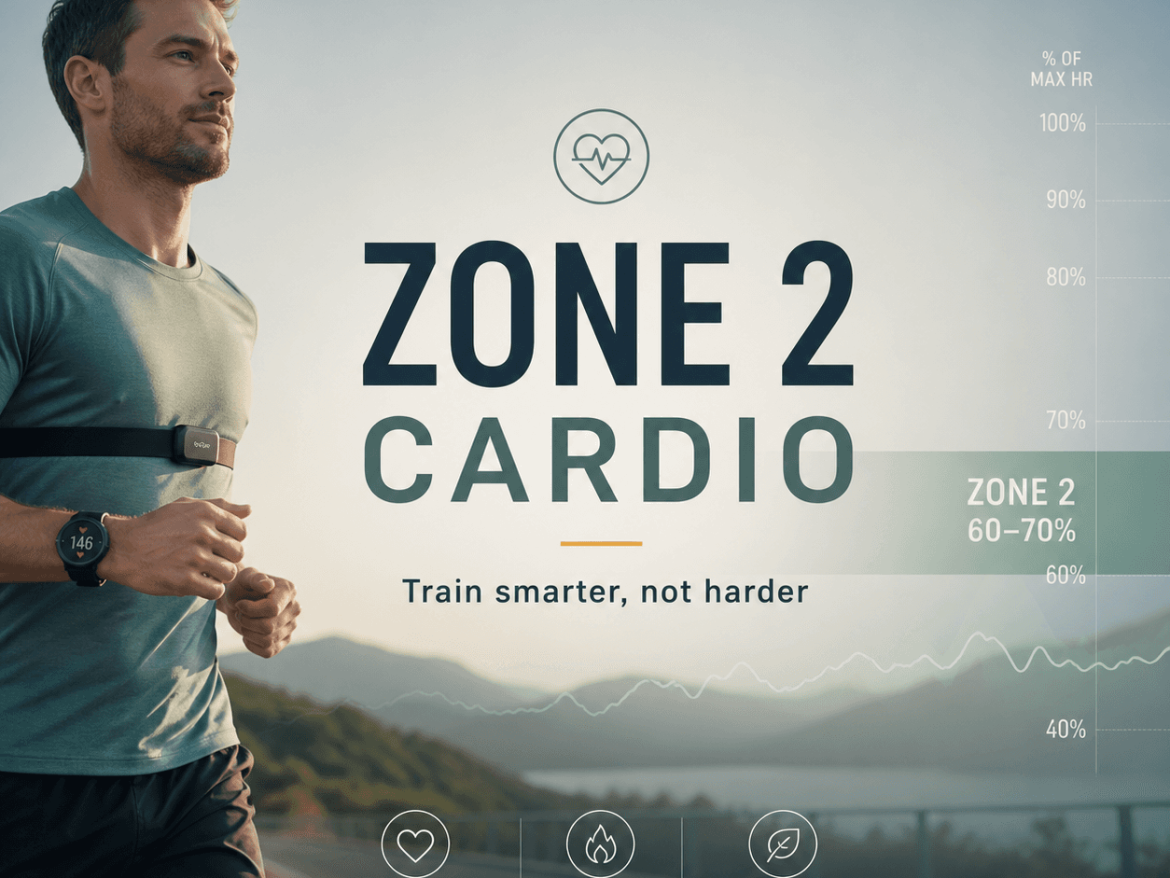
A common starting point is 60 to 70% of max heart rate. But max HR formulas can be off by a lot.
If you want a quick estimate:
- Estimate max HR as 220 minus age (rough, but common)
- Multiply by 0.60 and 0.70
- That range is your starting Zone 2 window
Example: age 40
Max HR estimate: 180
Zone 2 estimate: 108 to 126 bpm
Some people will be higher or lower. If you’re deconditioned, stressed, or on certain meds, heart rate behaves differently. Which is why the talk test matters.
3) RPE (rate of perceived exertion)
On a 1 to 10 scale, Zone 2 is usually around a 3 to 4.
Not 6. Not 7. If it feels like “a solid workout,” it’s probably not Zone 2.
4) Nasal breathing test (a good extra filter)
Try to keep your breathing mostly through your nose.
If nasal breathing becomes impossible, you’ve drifted up. A little mouth breathing can happen, especially later in longer sessions, but if you’re huffing early, you’re too high.
What Zone 2 should feel like (and what it should not)
It should feel like:
- Warmth in the body
- Slightly elevated breathing
- Sustainable rhythm
- You finish feeling better than when you started (most days)
It should not feel like:
- Leg burn that builds fast
- Heavy breathlessness
- That edgy, wired feeling afterward
- Needing to lie down after
If you finish a “Zone 2” session and you’re ravenous, irritable, and shaky, that’s a sign something is off. Either intensity is too high, duration is too long, or your overall system is under-fueled and under-recovered.
Best Zone 2 modalities (choose the one your body tolerates)
You can do Zone 2 in a bunch of ways. The best one is the one you can do consistently without joint pain, without spiking stress hormones, and without turning it into a competition.
Here are good options.
Walking (yes, walking counts)
Incline walking is one of the easiest ways to hit Zone 2 without orthopedic stress.
- Treadmill incline walk
- Outdoor brisk walk with hills
- Weighted vest walking (advanced, but be careful)
If you’re new or rebuilding fitness after burnout, walking is not a “starter” option. It’s a legitimate cornerstone.
Cycling (stationary or outdoor)
Cycling is great because it’s joint-friendly and easy to control intensity. Just watch the ego. People turn Zone 2 cycling into a tempo ride fast.
Rowing
Rowing can work, but it’s easy to overshoot intensity. Keep it smooth. Lower stroke rate. Focus on rhythm.
Easy jogging
Jogging can be Zone 2 for some people. For others it immediately bumps them into Zone 3. If you’re chasing Zone 2 and your heart rate shoots up, you might be better with walking for now.
Elliptical, swimming
Both can be excellent. Swimming especially, but again, it can drift high if you push.
How much Zone 2 should you do per week?
This is where people want a universal answer. The honest answer is it depends on your recovery capacity.
But let’s make it practical.
If you’re generally healthy and sleeping well
A solid range is:
- 2 to 4 sessions per week
- 30 to 60 minutes per session
That’s enough to build a base without turning it into a second job.
If you’re dealing with fatigue, burnout, high stress, or hormonal issues
Start smaller. Like, almost annoyingly small.
- 2 to 3 sessions per week
- 20 to 40 minutes
- Stay on the low end of Zone 2
And if that still feels like too much, start with Zone 1 walking and build up.
This is where a functional medicine lens really matters. Your training plan has to match your physiology, not your goals on paper.
If you’re not sure where your body is at, this is exactly the kind of thing Dr. Lisa Silvani’s work focuses on. The systems underneath. Energy, metabolism, stress response, hormones, gut, all of it. If you want a deeper look, you can explore resources on https://www.lisasilvani.com and book a free consultation if you’re stuck.
If you’re also lifting weights (recommended)
Zone 2 pairs really well with strength training, but the schedule matters.
A common weekly structure that works for a lot of people:
- 2 to 3 strength sessions
- 2 to 3 Zone 2 sessions
- 1 to 2 true rest or very light movement days
And no, you don’t need to do Zone 2 every day to get benefits.
How to do Zone 2 without overtraining (the real guide)
Overtraining isn’t just for elite athletes. It’s for busy, stressed, under-slept humans who keep adding “healthy habits” without accounting for total load.
Here’s how you avoid that.
1) Cap the intensity, even when you feel good
This is the hardest part for Type A people.
You will have days where Zone 2 feels too easy. You will want to push. Don’t.
Zone 2 only works as Zone 2 if it stays aerobic. The adaptations are specific. Think of it like skill practice for your mitochondria.
If you want to go hard, do it on purpose, on the right day, with enough recovery. Not by accidentally creeping into Zone 3 every session.
2) Start with less than you think you need
If you’re new, don’t begin with 5 days a week.
Start with 2 days. Let your body prove it can recover. Then add.
A simple ramp that works:
- Weeks 1 to 2: 2 sessions x 25 to 35 minutes
- Weeks 3 to 4: 3 sessions x 30 to 45 minutes
- Weeks 5+: add time or a 4th session only if recovery is solid
If your sleep gets worse, motivation drops, or you feel heavy and sore, hold the line. Don’t add.
3) Keep at least one real rest day
Zone 2 can feel “easy,” but it’s still training.
A rest day is where the adaptations consolidate. It’s where your nervous system exhales.
Rest can be:
- No workout, just normal walking
- Gentle mobility work
- Light stretching
- An actual day off
Not a “rest day” that becomes a 90 minute power walk with a weighted vest.
4) Don’t stack Zone 2 on top of already intense training (all the time)
If you lift heavy, do CrossFit, do HIIT classes, play competitive sports. Great. But now Zone 2 becomes supportive work, not another big stress block.
Two common setups:
Option A: Separate days
- Strength days: lift, done
- Cardio days: Zone 2
- This is easiest on recovery.
Option B: Same day, but careful
- Lift first, then 20 to 30 minutes Zone 2
- or
- Zone 2 in the morning, lift later (with good fueling)
Avoid doing long Zone 2 after a brutal leg day if you’re already running on fumes.
5) Fuel it like an adult (especially if you’re prone to fatigue)
A lot of overtraining is under-fueling in disguise.
If you’re doing Zone 2 fasted and you feel shaky, wired, or you crash later, that’s data. Not a character flaw.
Some people do fine with fasted Zone 2. Many do not, especially women with hormone sensitivity, people with adrenal stress patterns, or anyone already dealing with low energy availability.
Try this instead:
- Small protein + carb snack before (even 150 to 250 calories can help)
- Electrolytes during longer sessions
- A real meal after
And if your goal is fat loss, don’t panic. Fueling appropriately often improves body composition because it reduces stress, improves training consistency, and keeps thyroid and hormones happier.
6) Watch the signs you’re doing “too much”
Overtraining signs can be subtle at first.
Common early ones:
- Sleep gets lighter or you wake at 2 to 4am
- Resting heart rate trends up
- HRV trends down (if you track it)
- You feel more sore than you “should”
- Cravings spike, especially for sugar
- Irritability, anxiety, low mood
- Period changes (cycle length, PMS intensity)
- You dread workouts you usually enjoy
If you see this, the move is not “push through.” The move is reduce volume or intensity for 7 to 14 days and reassess.
7) Deload on purpose
Even with Zone 2, deloading matters.
Every 4 to 8 weeks, take a lighter week:
- Cut Zone 2 volume in half
- Keep it truly easy
- Keep strength lighter too, if needed
Most people wait until they’re forced to rest. Deloading lets you stay consistent long term.
A simple Zone 2 plan you can actually follow
Here are a few templates. Pick the one that matches where you are, not where you wish you were.
Beginner (or rebuilding after burnout)
- 2x/week Zone 2: 25 to 35 minutes (walking or bike)
- 2x/week strength: full body, moderate effort
- Other days: walking, mobility, rest
Goal: finish sessions feeling better, not depleted.
Intermediate (healthy base, wants metabolic and endurance gains)
- 3x/week Zone 2: 35 to 55 minutes
- 2 to 3x/week strength
- 1 rest day
Optional: add one short interval session every 7 to 10 days if recovery is excellent. Not required.
Busy schedule, minimum effective dose
- 2x/week Zone 2: 30 to 45 minutes
- 2x/week strength
- Daily steps as able
This works. Not forever if you have big performance goals, but it’s plenty for health and longevity.
How to know you’re improving (without obsessing)
Progress in Zone 2 looks different than progress in lifting.
Here are realistic markers:
- You can maintain the same pace at a lower heart rate
- You can go longer with the same perceived effort
- Recovery improves, you feel less “wrecked” between sessions
- Your resting heart rate trends down over months
- You feel calmer after workouts, not wired
One of my favorite signs is when people realize their “normal walk” has become faster and easier without trying. That’s the aerobic base doing its thing.
Special notes for people with fatigue, weight resistance, or hormone issues
This is where I want to slow down a bit.
If you’re dealing with chronic fatigue, long-term stress, perimenopause changes, thyroid dysfunction, or gut inflammation, your tolerance for training load can be very different. You might have the mindset to push, but your physiology is not cooperating.
Zone 2 can still be a great tool. Sometimes it’s the best tool.
But it has to be dosed correctly. And it has to be paired with the basics that actually allow adaptation:
- Sleep quality
- Blood sugar stability
- Protein intake
- Micronutrients (iron, B12, magnesium, etc.)
- Hormone balance
- Addressing underlying inflammation or infections when present
If you keep adding cardio on top of a system that is already strained, you don’t get “healthier.” You get more depleted.
This is where working with someone who looks at the whole picture matters. Dr. Lisa Silvani’s practice is built around that functional and integrative approach, especially for people who feel like their body is not responding to the usual advice. If that’s you, you can start by exploring her resources or booking a free consultation at https://www.lisasilvani.com.
Quick FAQ (the stuff everyone asks)
Is Zone 2 better than HIIT?
They do different things.
HIIT improves VO2 max and power, but it’s more stressful and recovery-demanding. Zone 2 builds the aerobic base and tends to be easier to recover from.
Most people benefit from both, but not at the same time, not in the same season of life, and not in huge quantities.
If you’re tired all the time, start with Zone 2. Earn the right to do HIIT later.
Do I have to do it for 60 to 90 minutes?
No.
Longer Zone 2 sessions can be great, but the internet has made it feel mandatory. It’s not.
You can get meaningful benefits from 30 to 45 minute sessions done consistently.
Can Zone 2 help with weight loss?
It can, but not in a simplistic “burn fat” way.
Zone 2 supports insulin sensitivity, metabolic flexibility, and stress regulation. Those matter for body composition. Especially for people who feel like their metabolism is stuck.
But if you use Zone 2 to punish yourself, under-eat, and sleep poorly, it can backfire.
Should Zone 2 be done fasted?
Sometimes. For some people.
If you try it and you feel good, energy is stable, and sleep stays great, fine.
If you feel shaky, irritable, wired, or you crash later, don’t force it. Fueling is not failure.
Let’s wrap this up (without making it complicated)
Zone 2 cardio is simple. Not easy, but simple.
- Stay truly aerobic. Use the talk test.
- Do it 2 to 4 times per week, depending on recovery.
- Start small. Add slowly.
- Fuel and rest like it matters. Because it does.
- If your body starts throwing warning signs, listen early.
If you do Zone 2 this way, it becomes one of the most sustainable health habits you can build. It supports energy, heart health, metabolism, and longevity, without beating you up.
And if you’re trying to piece this together while also dealing with fatigue, sleep issues, stubborn weight, or “I’m doing everything right but I feel off” energy, it might be time to zoom out and look at the whole system. That’s what Dr. Lisa Silvani does every day in her work. You can learn more and book a free consultation at https://www.lisasilvani.com.
FAQs (Frequently Asked Questions)
What is Zone 2 cardio and why is it beneficial?
Zone 2 cardio refers to a moderate intensity level where your body primarily uses fat as fuel, with lactate levels staying low and stable. It’s aerobic and sustainable, allowing you to maintain the pace for extended periods without feeling exhausted. Benefits include increased mitochondrial density and efficiency, improved metabolic flexibility, lower resting heart rate over time, better endurance without overwhelming your nervous system, enhanced insulin sensitivity, and overall cardiovascular health support.
How can I accurately find my Zone 2 heart rate without lab testing?
You can estimate your Zone 2 heart rate using several practical methods: 1) The Talk Test – you should be able to speak in full sentences but not comfortably sing; 2) Heart Rate Estimates – roughly 60-70% of your max heart rate (estimated as 220 minus your age); 3) Rate of Perceived Exertion (RPE) – aiming for a 3 to 4 on a scale of 1 to 10; and 4) Nasal Breathing Test – maintaining mostly nasal breathing indicates you’re in Zone 2.
What are common mistakes people make when doing Zone 2 cardio?
A frequent mistake is exercising too hard, often drifting into Zone 3 intensity which feels more like pushing or slightly breathless rather than sustainable. Another error is overdoing frequency—doing Zone 2 every day with long sessions or adding high-intensity workouts can lead to overtraining symptoms like poor sleep, decreased motivation, and hormonal imbalances. It’s important to balance exercise with adequate recovery.
What should Zone 2 cardio feel like during and after exercise?
During Zone 2 cardio, you should feel warmth in your body with slightly elevated breathing in a sustainable rhythm. You should be able to maintain conversation without gasping for air. After the session, most days you should feel better rather than drained. It shouldn’t cause heavy breathlessness, fast-building leg burn, an edgy or wired feeling, or leave you needing to lie down.
Why is Zone 2 cardio especially important for people dealing with fatigue or metabolic issues?
People experiencing fatigue, stubborn weight issues, sleep disturbances, hormonal imbalances, or gut problems often benefit most from gentle aerobic work like Zone 2 cardio because it improves mitochondrial function and metabolic flexibility without adding excessive stress. However, these individuals may also have lower tolerance for additional stressors, so careful programming and avoiding overtraining are crucial.
What types of exercises are best suited for Zone 2 cardio training?
Zone 2 cardio can be performed through various modalities such as cycling, jogging, brisk walking, swimming, or rowing—essentially any activity that allows you to maintain the moderate intensity zone comfortably. The best choice is one that you can do consistently without joint pain or causing stress hormone spikes. Consistency and sustainability matter more than the specific exercise type.
References
- Joyner, M. J., & Coyle, E. F. (2008). Endurance exercise performance: the physiology of champions. The Journal of Physiology, 586(1), 35-44. https://doi.org/10.1113/jphysiol.2007.143834
- Seiler, S., & Tønnessen, E. (2009). Intervals, Thresholds, and Long Slow Distance: The Role of Intensity and Duration in Endurance Training. Sports Science, 13(6), 32-53.
- Achten, J., & Jeukendrup, A. E. (2003). Heart rate monitoring: applications and limitations. Sports Medicine, 33(7), 517-538. https://doi.org/10.2165/00007256-200333070-00004
- NHS UK. (2023). Physical activity guidelines for adults: recommended levels of physical activity for health benefits. Retrieved from https://www.nhs.uk/live-well/exercise/
- Hawley, J.A., & Holloszy, J.O. (2009). Exercise metabolism: fuels for the fire. Cold Spring Harbor Perspectives in Medicine, 2(12), a004579.
- Fitzgerald, K., & Hyman, M. (2020). Optimizing metabolic health with Zone 2 training: practical approaches for clinicians and patients. Integrative Medicine, 19(3), 36-45.
- Ruscio, M., (2019). The role of mitochondrial function in fatigue syndromes and metabolic health: implications for exercise prescription.Functional Medicine Reviews, 15(2), 78-89.
- Horton, R.S., et al., (2019). Metabolic flexibility and mitochondrial function during moderate intensity exercise in metabolic disease states.Nature Reviews Endocrinology, 15(10), 597-610.
- Swain, D.P., & Franklin, B.A. (2006). Comparison of cardioprotective benefits of vigorous versus moderate intensity aerobic exercise.American Journal of Cardiology, 97(1), 141-147.
- American College of Sports Medicine (ACSM). (2021). ACSM’s Guidelines for Exercise Testing and Prescription (11th edition). Wolters Kluwer Health/Lippincott Williams & Wilkins.

