
 vanilis
 And sometimes it does.
But for a frustrating number of people, the infection clears and the fatigue just… stays. Weeks. Months. It can feel heavy, wired but tired, foggy, like your battery meter is stuck at 12 percent. You try the usual stuff. More sleep. Less screen time. A “good” multivitamin. Maybe magnesium because everyone on the internet is taking magnesium.
Still tired.
Here’s the part that gets missed. Post COVID fatigue is not one single problem. It’s a symptom with a long list of possible drivers. And if you jump straight to supplements without checking the basics, you can waste money, delay the real fix, or in some cases make things worse.
So this is a practical guide to what to screen, and why, before you start stacking bottles on your kitchen bench.
Not medical advice, obviously. But it will help you have a smarter conversation with your GP or clinician and advocate for a proper workup.
First, a quick reality check on what “chronic fatigue after COVID” can be
People use a lot of labels interchangeably.
- Post viral fatigue
- Long COVID
- PASC (post acute sequelae of SARS-CoV-2 infection)
- ME/CFS like illness
- Dysautonomia, POTS
- “I’m just burnt out”
The experience can overlap, but the root causes can be very different. Some people have inflammation plus iron deficiency. Others have sleep apnea that got unmasked. Some have thyroid issues. Some have blood sugar swings, or low cortisol output, or mast cell activation patterns. Some have post exertional malaise where exercise makes them worse, not better.
That’s why screening matters.
Supplements can be helpful. But only after you check for the common, fixable, sometimes serious stuff.
The red flags you should not “treat with supplements”
If any of these are happening, this is straight to your doctor, urgent care, or emergency depending on severity.
- Chest pain, pressure, or shortness of breath that is new or worsening
- Fainting, near fainting, new palpitations with dizziness
- One sided weakness, facial droop, new speech issues
- Severe headaches that are new for you
- Black stools, blood in stools, heavy bleeding
- Rapid unintentional weight loss, persistent fevers, night sweats
- Severe depression, suicidal thoughts
COVID can affect the heart and lungs. Blood clots and myocarditis are uncommon but not imaginary. Don’t let anyone hand wave that away as “just fatigue.”
Step 1: Get clear on the pattern of fatigue (because it changes what you screen)
Before labs, it helps to answer a few boring but important questions.
1) Is it constant fatigue or crashing after exertion?
If you feel “okay-ish” and then crash 12 to 48 hours after activity, that’s a different pattern. It points toward post exertional malaise and pushes the strategy toward pacing, autonomic support, and careful rehab. Not “push through it.”
2) Is it sleepiness or fatigue?
Sleepiness is “I could fall asleep.” Fatigue is “I’m exhausted but not sleepy.” Sleepiness often points toward sleep disorders, medications, or sleep debt. Fatigue can be metabolic, inflammatory, nutrient, hormonal, autonomic.
3) Any new intolerance?
Alcohol intolerance, heat intolerance, exercise intolerance, histamine reactions, new food sensitivities. These clues matter.
If you want a structured way to map symptoms to likely drivers, Dr. Lisa Silvani’s resources at Reviva Health and Wellbeing are built exactly for this kind of root cause thinking. Her “Fatigue Root Cause” quiz can help you organise what’s going on before you walk into an appointment.
Now, to the screenings.
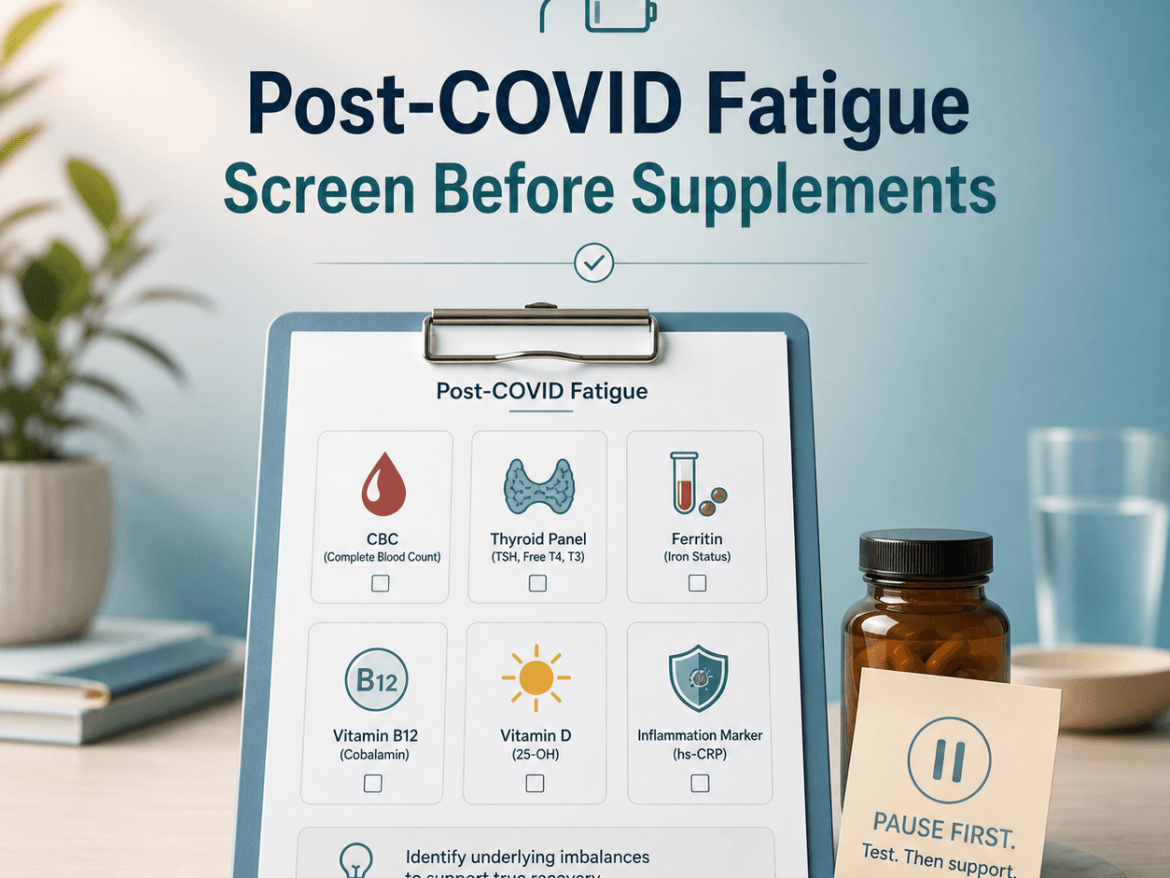
Step 2: The core lab panel to do before supplements (the “don’t skip this” list)
Different clinicians will order different things, but if someone has lingering fatigue after COVID, these are the common foundations. If you only do a few tests, start here.
1) Full blood count (FBC / CBC)
This picks up:
- Anaemia
- Low or high white cell patterns
- Platelet issues
Anaemia is obvious, but the sneaky thing is that you can have “normal haemoglobin” and still have iron depletion brewing. Which brings us to ferritin.
2) Iron studies, especially ferritin and transferrin saturation
Ferritin is your iron storage marker, but it is also an inflammation marker. After infections, ferritin can be elevated even when iron availability is poor. That’s why transferrin saturation helps.
Why it matters: low iron can feel like brain fog, breathlessness on exertion, restless sleep, palpitations, heavy legs. People often take iron blindly and get constipated, or they don’t take it when they actually need it.
Also important. If ferritin is high, don’t assume “great iron.” High ferritin can mean inflammation, liver stress, metabolic issues.
3) Thyroid panel (at least TSH and free T4, sometimes free T3 and antibodies)
Post viral thyroiditis can happen. Autoimmune thyroid disease can be unmasked. Hypothyroidism can mimic depression and chronic fatigue almost perfectly.
If someone is exhausted, cold, constipated, gaining weight, losing hair, dry skin. You check the thyroid.
And you interpret it properly. Not just “TSH is in range, goodbye.”
4) Vitamin B12 and folate
B12 deficiency can show up as fatigue, brain fog, tingling, mood changes, poor exercise tolerance.
Important nuance: serum B12 can look “fine” while functional deficiency exists, especially if you’re supplementing already. In some cases, MMA (methylmalonic acid) and homocysteine are more useful. But a basic screen is still better than guessing.
5) Vitamin D
Low vitamin D is common and it correlates with immune function, mood, musculoskeletal pain, and general resilience. It is not the one magic fatigue fix, but if it’s very low, it matters.
6) Electrolytes, kidney and liver function (CMP / UEC / LFTs)
This helps identify:
- Dehydration patterns
- Kidney stress
- Liver enzyme elevation
- Protein status (albumin)
- Glucose
Also, if you’re thinking about supplements, you want to know if your liver and kidneys are fine. Because they are doing the processing.
7) Fasting glucose and HbA1c (and sometimes fasting insulin)
COVID can disrupt glucose regulation. Blood sugar swings can drive fatigue, shakiness, anxiety, crashes after meals, and poor sleep.
HbA1c shows average glucose. It can still miss the rollercoaster, so symptoms matter. Sometimes clinicians add fasting insulin or even a CGM trial to get clearer data.
8) Inflammation markers (CRP, sometimes ESR)
CRP is not perfect, but if it’s elevated, it tells you there’s inflammation in the background. Could be infection, autoimmunity, metabolic inflammation, periodontal disease. Anything. But it shifts the conversation away from “just take more supplements” and toward “why is there ongoing inflammation?”
Step 3: Screens that are often relevant in post COVID fatigue, depending on symptoms
This is the part where a good clinician earns their keep. Not everyone needs all of this. But many people need some of it.
1) Sleep assessment (and sometimes a sleep study)
If you snore, wake unrefreshed, have morning headaches, dry mouth, or daytime sleepiness, consider sleep apnea. COVID weight changes and airway inflammation can make it worse.
Fixing sleep apnea can change someone’s life faster than any supplement.
Also, insomnia is extremely common post COVID. A sleep plan might include behavioural therapy, light exposure timing, caffeine cutoffs, nervous system downshifting, and in some cases short term medication support.
2) Orthostatic vitals and POTS screening
If you get dizzy standing up, feel your heart race, have exercise intolerance, heat intolerance, nausea, tremor, or feel better lying down, you need autonomic screening.
At home, you can do a rough version:
- Lie down 5 to 10 minutes, measure heart rate and BP
- Stand, measure at 1, 3, 5, 10 minutes
A sustained heart rate rise of 30+ bpm (or over 120 bpm) without a big BP drop suggests POTS patterns. A BP drop suggests orthostatic hypotension. Not a diagnosis on its own. But a clue.
And it changes the supplement conversation. For dysautonomia, hydration, electrolytes, salt strategies, compression, pacing, and sometimes medication are key. Random “energy boosters” can backfire.
3) Cardiac screening if you have chest symptoms or exercise intolerance
Depending on symptoms: ECG, troponins, echocardiogram, sometimes Holter monitoring.
If your fatigue comes with chest tightness, palpitations, breathlessness, or you cannot tolerate exertion the way you used to, don’t assume it’s deconditioning.
4) Ferritin high? Screen for metabolic and liver contributors
If ferritin is elevated, your clinician may look at:
- Liver ultrasound
- Hepatitis screening
- Metabolic markers (triglycerides, HDL, ALT, fasting insulin)
High ferritin is not automatically iron overload, but it deserves a thoughtful workup.
5) Autoimmune screening if symptoms point that way
Not routine for everyone. But if there are joint pains, rashes, mouth ulcers, Raynaud’s, persistent fevers, swollen glands, neurological symptoms. Your clinician might consider ANA and related panels.
Some people develop new autoimmune issues after viral infections. You want to catch that early.
6) Gut and malabsorption clues
If there is chronic diarrhea, weight loss, ongoing nausea, reflux, or you cannot tolerate foods you used to. Consider:
- Coeliac screening
- Stool testing if indicated
- H. pylori depending on symptoms
Because if you are not absorbing nutrients, supplements can become an expensive guessing game.
7) Histamine and mast cell type patterns
This is a messy area and easy to over diagnose. But some post COVID patients have flushing, itching, hives, reflux, headaches, insomnia, tachycardia, and react to high histamine foods.
This is usually symptom led. A clinician might trial H1/H2 blockers or dietary changes short term. You still do the basics first.
8) Medication and supplement audit (yes, really)
Some common fatigue drivers:
- Sedating antihistamines
- Certain antidepressants
- Beta blockers
- Benzodiazepines
- Frequent alcohol use
- Overuse of “calming” herbs that actually sedate
- High dose melatonin causing grogginess
Also, too much magnesium can cause diarrhea and dehydration, which worsens fatigue. Too much zinc can induce copper deficiency over time. Too much B6 can cause neuropathy.
More is not always more.
Step 4: The big trap, taking “energy supplements” when the real issue is pacing
If your fatigue has a post exertional malaise pattern, the usual advice, get fit, push through, do more cardio, can be actively harmful.
This is the part where people get stuck for months. They feel a tiny bit better, do a big clean up of the house or go to the gym, then crash for days. So they rest. Then repeat.
Before you add supplements, make sure you understand your activity envelope. If you keep exceeding it, no supplement will out supplement the crash cycle.
Pacing sounds boring, but it’s foundational. It’s also hard. It takes ego out of the equation. It means you stop on purpose while you still feel “fine.”
Step 5: Okay, so when do supplements make sense?
After you screen. Or at least while screening is underway, you can use a cautious, minimal approach.
In general, supplements make the most sense when:
- A deficiency is confirmed (iron, B12, vitamin D, magnesium)
- You have a clear clinical target (sleep support, migraine support, dysautonomia support)
- You are monitoring response and not taking 14 things at once
Because if you start five new supplements in one week and you feel worse, you will have no idea which one did it.
A simple approach is often better.
Correct deficiencies first.
Iron deficiency, low B12, low vitamin D. These are not glamorous, but they are common.
Build the basics.
Protein intake, hydration, electrolytes, regular meals, light exposure in the morning, sleep routine, gentle movement within tolerance.
Then consider targeted supports.
Depending on the person, that might include magnesium glycinate for sleep, omega-3s for inflammation, creatine for muscle energy, riboflavin for headaches, etc. But again. Targeted, not random.
And if you want a mitochondria and root cause focused framework to think through this, that is basically the whole vibe of Dr. Lisa Silvani’s work at lisasilvani.com. It’s less “take this supplement” and more “why is your energy system struggling in the first place?”
Step 6: A quick checklist you can bring to your appointment
If you want something practical to copy into your notes app, here.
Symptom notes
- When did fatigue start, relative to COVID infection?
- Is there post exertional malaise? If yes, describe timing.
- Sleep quality, snoring, unrefreshing sleep, insomnia
- Dizziness on standing, palpitations, heat intolerance
- Breathlessness, chest symptoms
- Mood changes, anxiety, depression
- GI symptoms, appetite, weight change
- Menstrual changes and bleeding (if relevant)
Screening requests (discuss with clinician)
- CBC/FBC
- Ferritin + iron studies
- Thyroid (TSH, free T4, consider antibodies if indicated)
- B12, folate
- Vitamin D
- CMP (electrolytes, kidney, liver)
- Fasting glucose, HbA1c (consider fasting insulin)
- CRP (and ESR if indicated)
Conditional based on symptoms
- Sleep study referral if signs of sleep apnea
- Orthostatic vitals, POTS evaluation
- ECG and cardiac workup if chest symptoms, palpitations, exertional breathlessness
- Autoimmune screening if red flag symptoms
- Coeliac screen if GI symptoms or unexplained deficiencies
That alone can save you months of guessing.
Wrapping up (because you do not need to earn your recovery)
Chronic fatigue after COVID is real. It is not laziness. It is not weakness. And it is not always solved by the supplement aisle.
Start with screening. Get the basics checked. Look for iron issues, thyroid shifts, B12 and vitamin D status, glucose regulation, inflammation, sleep problems, autonomic dysfunction.
Then, and only then, build a supplement plan that actually makes sense for your body.
If you want a structured root cause approach, with an energy and mitochondria lens that connects symptoms to likely drivers, head to Reviva Health and Wellbeing and take the Fatigue Root Cause quiz. Even if you do nothing else, it will help you stop treating fatigue like one generic problem and start asking better questions.
FAQs (Frequently Asked Questions)
What is post COVID fatigue and why doesn’t it always resolve quickly?
Post COVID fatigue is a lingering symptom experienced by many after recovering from COVID-19, characterized by persistent tiredness that can last weeks or months. Unlike normal fatigue, it may feel heavy, wired but tired, or foggy, with energy levels stuck low. It doesn’t always resolve quickly because it can stem from various underlying causes such as inflammation, iron deficiency, thyroid issues, sleep disorders, or autonomic dysfunction.
Why should I avoid jumping straight to supplements for post COVID fatigue?
Jumping straight to supplements without proper screening can waste money, delay effective treatment, or even worsen symptoms. Post COVID fatigue is a complex symptom with multiple possible drivers. It’s important to first check for common and potentially serious issues like anemia, thyroid problems, sleep apnea, or heart conditions before starting supplements.
What are the red flags in post COVID fatigue that require immediate medical attention?
Red flags include new or worsening chest pain or shortness of breath; fainting or near fainting; new palpitations with dizziness; one-sided weakness or facial droop; new speech difficulties; severe new headaches; black or bloody stools; rapid unintentional weight loss; persistent fevers or night sweats; and severe depression or suicidal thoughts. These symptoms warrant urgent evaluation as they may indicate serious complications such as blood clots or myocarditis.
How can understanding the pattern of fatigue help in managing post COVID fatigue?
Identifying whether your fatigue is constant or occurs as crashing after exertion helps tailor management strategies. Post exertional malaise—where activity leads to worsening symptoms 12-48 hours later—requires pacing and careful rehabilitation rather than pushing through. Differentiating between sleepiness (feeling like you could fall asleep) versus fatigue (exhaustion without sleepiness) guides whether to investigate sleep disorders or metabolic/hormonal causes.
What core lab tests should be done before starting supplements for post COVID fatigue?
Essential lab tests include a full blood count (to detect anemia and immune cell changes), iron studies including ferritin and transferrin saturation (to assess iron status and inflammation), thyroid panel (TSH and free T4 at minimum to check for thyroid dysfunction), and vitamin B12 and folate levels (to identify deficiencies that cause fatigue and brain fog). These tests help uncover treatable causes before supplement use.
Can post COVID fatigue be caused by multiple overlapping conditions?
Yes, post COVID fatigue can involve overlapping issues such as inflammation combined with iron deficiency, unmasked sleep apnea, thyroid problems, blood sugar irregularities, hormonal imbalances like low cortisol, mast cell activation syndromes, dysautonomia including POTS, and more. Because of this complexity, comprehensive screening is key to identifying the root causes and guiding appropriate treatment.
References
- Townsend, L., Dyer, A. H., Jones, K., Dunne, J., Mooney, A., Gaffney, F., … & Molloy, E. (2020). Persistent fatigue following SARS-CoV-2 infection is common and independent of severity of initial infection. PLoS ONE, 15(11), e0240784. https://doi.org/10.1371/journal.pone.0240784
- Nalbandian, A., Sehgal, K., Gupta, A., Madhavan, M. V., McGroder, C., Stevens, J. S., … & Wan, E. Y. (2021). Post-acute COVID-19 syndrome. Nature Medicine, 27(4), 601-615. https://doi.org/10.1038/s41591-021-01283-z
- Carfì, A., Bernabei, R., & Landi, F.; Gemelli Against COVID-19 Post-Acute Care Study Group (2020). Persistent symptoms in patients after acute COVID-19. JAMA, 324(6), 603–605. https://doi.org/10.1001/jama.2020.12603
- NHS England and NHS Improvement (2021). Your COVID recovery: managing the long-term effects of coronavirus (COVID-19). NHS UK. https://www.nhs.uk/conditions/coronavirus-covid-19/long-term-effects-of-coronavirus-long-covid/
- Becker, W.J., & Pardi N. (2022). Fatigue After COVID-19: Understanding and Managing Post-COVID Conditions in Primary Care. The New England Journal of Medicine, 386(2), 173-176. https://doi.org/10.1056/NEJMp2118586
- Komaroff, A.L., & Bateman, L. (2021). Will COVID-19 Lead to Myalgic Encephalomyelitis/Chronic Fatigue Syndrome? Frontiers in Medicine, 7:606824. https://doi.org/10.3389/fmed.2020.606824
- Proal, A.D., & VanElzakker, M.B. (2021). Long COVID or post-acute sequelae of COVID-19 (PASC): An overview of biological factors that may contribute to persistent symptoms following SARS-CoV-2 infection. Frontiers in Microbiology, 12:698169. https://doi.org/10.3389/fmicb.2021.698169
- Fitzgerald K.T., et al.(2022) Nutritional and Supplement Strategies for Post-Viral Fatigue Syndromes: Insights from Clinical Practice and Research.Integrative Medicine.
- Ruscio M.R.(2022) Diagnostic Approach to Chronic Fatigue—Guidance for Clinicians.Journal of Functional Medicine.

