 vanilis
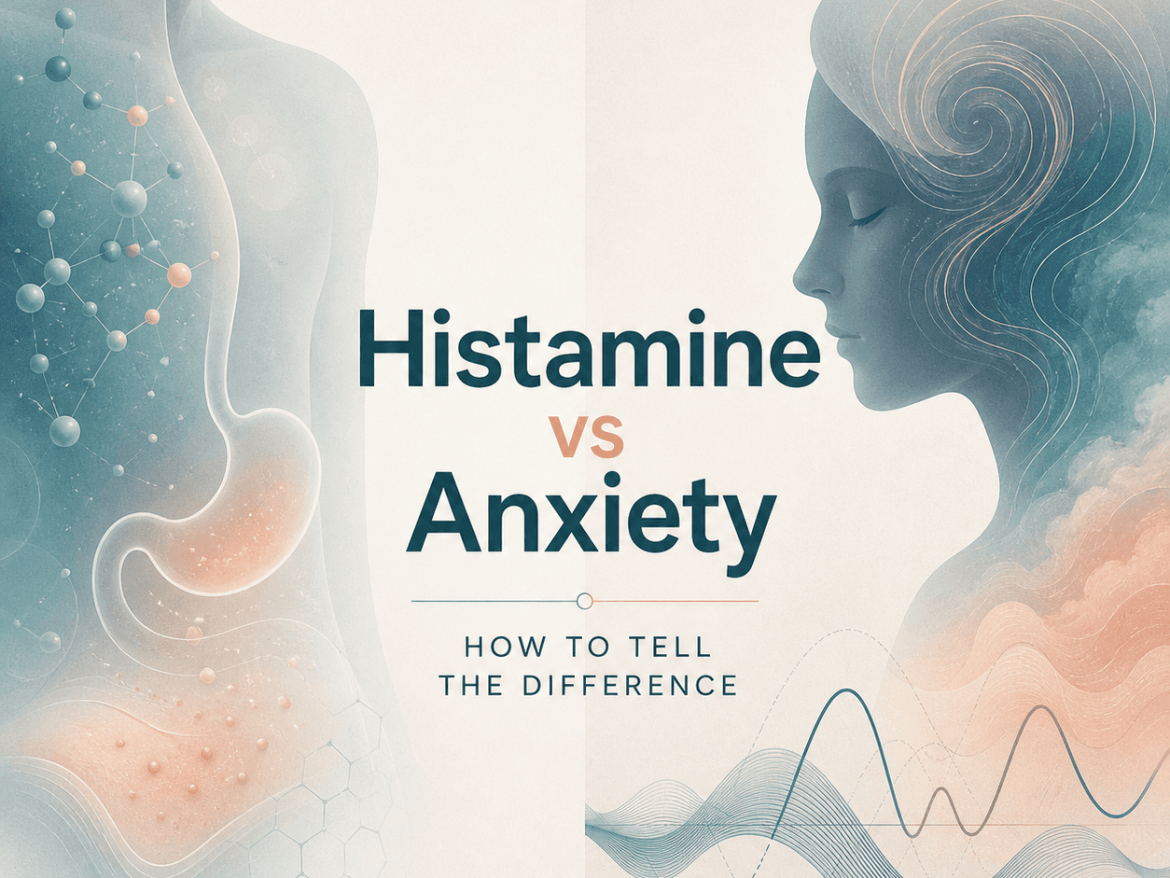
 But sometimes it is not “just anxiety”. Sometimes it is your body reacting to something, and histamine is one of those things that can mimic anxiety so well it is honestly annoying.
Histamine intolerance can look like panic. Anxiety can look like a “food reaction”. And to make it messier, you can have both at the same time, feeding off each other.
So let’s slow it down and sort it out. Not in a perfect diagnostic way, because you still need a clinician for that, but in a practical, day to day, what should I notice kind of way.
First, what histamine intolerance actually is (in normal language)
Histamine is a natural chemical your body makes. You need it. It helps with:
- immune responses (allergies, inflammation)
- stomach acid and digestion
- brain signaling, wakefulness
- blood vessel dilation
- menstrual and reproductive processes
You also get histamine from foods, and some foods can trigger your own cells to release more histamine.
Normally, histamine gets broken down mainly by an enzyme called DAO (diamine oxidase) in the gut, and also by other pathways like HNMT in tissues. If histamine builds up faster than you can break it down, you can get symptoms.
That is basically what people mean when they say “histamine intolerance”. It is not the same as a classic IgE food allergy. It is more like a threshold problem. Your bucket fills, then spills.
And when it spills, it can hit multiple systems at once. Skin, gut, sinuses, nervous system, cardiovascular. That is why it can feel like anxiety. Or a weird flu. Or a migraine. Or all of the above.
Anxiety, on the other hand, is a state plus a pattern
Anxiety is not fake. It is not “in your head” in the dismissive way people say it. Anxiety is a real body state, involving nervous system threat signaling, stress hormones, changes in breathing, blood sugar shifts, muscle tension, and often a learned pattern of catastrophic interpretation.
It can show up as:
- racing thoughts, worry loops
- panic symptoms
- sleep disruption
- nausea, diarrhea, appetite changes
- tremor, sweating
- dizziness, depersonalization
- fatigue, brain fog after the spike
So yes. Overlap everywhere.
The difference is usually in the triggers, timing, and the cluster of symptoms that travel together.
Let’s talk about those.
The overlap symptoms that confuse everyone
Here are symptoms that commonly show up in both histamine issues and anxiety:
- rapid heartbeat or palpitations
- flushing or feeling hot
- sweating
- nausea, “butterflies”
- shaky, jittery feeling
- diarrhea or urgent bowel movements
- lightheadedness
- shortness of breath or air hunger
- insomnia
- feeling “wired but tired”
- brain fog
So you cannot use one symptom. You have to look for patterns.
Clues that lean more toward histamine intolerance
Not a diagnosis, but if you see a bunch of these together, histamine climbs higher on the list.
1. Food and drink timing is suspiciously consistent
Histamine reactions often happen:
- during the meal
- within 15 to 120 minutes after eating
- sometimes later that evening, especially with dinner
- sometimes the next morning if your “bucket” was already full
And it is often certain categories of food, not one random thing.
Common higher histamine or histamine liberator foods include:
- alcohol (especially wine, beer)
- aged cheeses
- cured meats, smoked meats
- fermented foods (kombucha, sauerkraut, yogurt, vinegar)
- leftovers, especially fish and meat that sit in the fridge
- canned fish
- shellfish
- tomatoes, spinach, eggplant (varies by person)
- chocolate (for some people)
- certain broths, slow cooked meats (can be a big one)
The leftover thing is a weird but useful clue. Some people feel fine with freshly cooked chicken, but not with the same chicken reheated the next day. That points away from anxiety and toward biochemistry.
2. You get a “multi system” flare, not just mental worry
Histamine intolerance often comes with physical signs that are not typical for anxiety alone, like:
- itching, hives, rashes, eczema flare
- flushing on the face, neck, chest
- watery eyes, sneezing, nasal congestion
- headache or migraine
- reflux or burning
- bloating that feels inflammatory, not just nervous stomach
- menstrual cramps worsening or cycle related flares
- swelling or a puffy face feeling
- sudden fatigue crash after the episode
Anxiety can cause gut symptoms and sweating, sure. But hives plus palpitations plus diarrhea after wine and cheese is a different vibe.
3. The episodes feel “chemical” and abrupt
A lot of people describe histamine spikes like:
- “It comes out of nowhere”
- “My body panics but my mind is calm”
- “I do not even feel anxious about anything”
- “I feel poisoned”
- “My heart is racing and I am not even worried”
That matters. Anxiety can also feel out of nowhere, but often there is a background of stress load, rumination, or fear of symptoms themselves.
4. Antihistamines sometimes help (even partially)
If someone takes an H1 antihistamine and the “panic” reduces, that is a clue.
Not proof. Placebo exists, and antihistamines can make people sleepy, which also calms things down. But if there is a clear, repeatable pattern where allergy meds reduce symptoms like flushing, itching, gut urgency, and the anxious body feeling, histamine is likely part of the picture.
Important: do not self medicate long term without medical guidance. Just noting patterns here.
5. There is a strong link with gut issues or dysbiosis
Histamine intolerance often travels with:
- IBS type symptoms
- SIBO (especially in some cases)
- low stomach acid or digestion problems
- inflammatory gut conditions
- food sensitivities stacking up over time
Because DAO is made in the gut lining, gut inflammation can lower tolerance. Also certain gut bacteria can produce histamine.
So if your symptoms began after a gut infection, antibiotics, major diet changes, long term stress, or chronic GI issues, that context matters.
6. You notice a “bucket” effect
This one is classic. You are fine for days, then suddenly you are not.
Contributors that can fill the bucket include:
- alcohol
- poor sleep
- high stress
- intense exercise
- menstrual cycle shifts (especially around ovulation and premenstrual phase for some)
- allergies or seasonal pollen exposure
- infections
- high histamine meals stacked back to back
So you might tolerate tomato sauce one day. But not tomato sauce plus red wine plus leftovers plus no sleep. Then you get “anxiety”.
It is not random. It is cumulative.
Clues that lean more toward anxiety (or panic)
Again, not diagnosis. But these are patterns that often point more toward anxiety being primary.
1. Episodes are strongly linked to thoughts, situations, or fear loops
If symptoms show up with:
- public speaking, driving, crowded places
- conflict, deadlines, work pressure
- health anxiety spirals
- “What if I have a heart problem” thoughts
- fear of the symptoms themselves
That leans anxiety.
Also, if your symptoms improve when you feel emotionally safe, distracted, supported, or grounded, that is a clue too.
2. Breathing patterns are central
Hyperventilation can create symptoms that look like histamine issues:
- tingling in hands/face
- dizziness
- chest tightness
- feeling unreal
- heart racing
- nausea
A big tell is that symptoms reduce when you slow breathing, extend the exhale, breathe into the diaphragm, or do paced breathing for a few minutes.
Histamine flares can still improve with calming, but they often do not fully resolve just from breathwork if the biochemical trigger is still active.
3. There is a longer background of generalized anxiety
Histamine issues can be episodic. Anxiety can be more constant, like:
- chronic worry across multiple topics
- sleep disruption from racing mind
- muscle tension daily
- perfectionism, hypervigilance
- avoidance behaviors
Panic attacks can be isolated too, but often there is a broader nervous system pattern.
4. Food triggers are inconsistent
If you cannot find any repeatable link with food, alcohol, leftovers, or specific categories, and episodes happen at random times including on an empty stomach, anxiety rises on the list.
Not always. But it is a useful differentiator.
5. SSRIs, therapy, or nervous system regulation approaches clearly help
If cognitive behavioral therapy, exposure therapy, SSRIs, or trauma focused work dramatically reduce the episodes, that suggests anxiety is the driver. Histamine may still play a role, but it is not the main engine.
The tricky middle: histamine can trigger anxiety, and anxiety can worsen histamine
This is where people get stuck.
Histamine is not just an “allergy chemical”. It is also a neurotransmitter. It interacts with the nervous system, and it can influence wakefulness and arousal. If histamine is high, you can feel wired, restless, overstimulated.
Meanwhile, stress and anxiety can affect gut permeability, digestion, immune signaling, and even mast cell reactivity in some people. Poor sleep raises inflammation, and that can lower your tolerance too.
So yes. You can have:
- primary histamine intolerance that causes anxious sensations
- primary anxiety that increases histamine type symptoms
- both, tangled together
The goal is not to win an argument with yourself. The goal is to map what is happening so you can choose the right next step.
A simple “pattern check” you can do this week
Nothing fancy. Just data.
Step 1: track 4 things for 7 days
In a notes app, track:
- What you ate and drank (especially alcohol, leftovers, aged/fermented foods)
- Timing of symptoms (during, 30 minutes after, 2 hours after, bedtime, middle of night)
- Symptoms list (be specific, include skin, nose, gut, headache, heart)
- Context (stress level, sleep, cycle day if relevant, exercise)
You are looking for repeatable relationships, not perfection.
Step 2: watch for “stacking”
Notice when symptoms happen after:
- 2 to 3 histamine leaning foods in a day
- stress plus poor sleep plus certain meals
- menstrual phase plus a dietary trigger
That stacking pattern is very histamine bucket like.
Step 3: test one change, not ten
If histamine seems likely, try a short, gentle experiment, like 5 to 10 days of reducing the biggest triggers:
- pause alcohol
- avoid leftovers, eat foods freshly cooked
- reduce aged/fermented foods for now
If anxiety seems likely, try a different experiment:
- daily paced breathing practice
- reducing caffeine
- regular meals to stabilize blood sugar
- therapy tools, journaling, exposure work if panic is involved
If either experiment helps clearly, that is useful information.
Symptoms that are more “histamine specific” (not always, but often)
If you see these repeatedly, especially around meals or alcohol, histamine becomes more likely:
- flushing and burning skin sensation
- itching without a clear rash
- hives
- sudden nasal congestion after eating
- headaches after wine or aged foods
- reflux that flares with fermented foods
- worsening symptoms with leftovers
Anxiety can still cause flushing and nausea, but hives and nasal congestion after meals is a classic histamine hint.
Common mistakes that keep people confused
Mistake 1: assuming it has to be one or the other
It can be both. A histamine flare can trigger panic. A panic pattern can make the body more reactive.
Mistake 2: cutting out 30 foods overnight
This often backfires. It increases stress, reduces nutrient intake, and can worsen fatigue. Also, overly restrictive diets can create more anxiety around eating, which muddies the water even more.
Mistake 3: ignoring blood sugar and caffeine
Low blood sugar can mimic anxiety hard. So can too much caffeine. If you are skipping meals, living on coffee, and then getting “histamine anxiety” in the afternoon, we need to consider the basics.
Mistake 4: ignoring fatigue and the energy picture
When your cellular energy is low, your stress tolerance drops. Your nervous system becomes more reactive, digestion can weaken, sleep gets lighter, and the same stimulus feels bigger.
This is one reason fatigue and “mystery anxiety” often travel together.
If fatigue is part of your story, Dr. Lisa Silvani’s work at Reviva Health and Wellbeing is worth exploring, because she frames symptoms through a root cause and energy lens. Sometimes the question is not only “Is it histamine or anxiety?” but also “Why is my system so reactive right now?”
When to get medical help, not just self experiment
Please do not tough it out if symptoms are intense or escalating. Get evaluated, especially if you have:
- chest pain, fainting, severe shortness of breath
- swelling of lips, tongue, throat, or trouble breathing
- severe hives with systemic symptoms
- new, sudden panic like episodes with no history
- significant unintended weight loss
- persistent GI bleeding, severe vomiting, dehydration
Also, talk to a clinician if you suspect histamine intolerance because there are overlapping conditions, and you want to rule out things like true food allergy, thyroid issues, anemia, arrhythmias, POTS, medication effects, and more.
So, how do you tell the difference, really?
Here is the clearest practical summary.
Histamine intolerance tends to be:
- more connected to meals, alcohol, leftovers, fermented and aged foods
- more multi system (skin, sinuses, gut, headache plus the anxious body feeling)
- more “bucket” and cumulative
- sometimes improved by antihistamine type approaches (with clinician guidance)
Anxiety tends to be:
- more connected to thoughts, situations, fear loops, and nervous system patterns
- more responsive to breathing, reassurance, grounding, therapy tools
- less tied to specific food categories, more tied to stress context
- often part of a longer story of worry, hypervigilance, or panic patterning
And when it is both, the best approach is usually to lower the total load. Calm the nervous system and reduce the most obvious histamine triggers for a short period. Then rebuild from there, ideally with guidance.
A gentle next step (if you feel stuck)
If fatigue, crashes, brain fog, and reactivity are part of your day, not just occasional, you might want to step back and look at the bigger picture.
Dr. Lisa Silvani has a free “Fatigue Root Cause” quiz and resources on her site that help connect symptoms to underlying energy and metabolic patterns. You can find that at lisasilvani.com. Sometimes the biggest relief comes from realizing you are not broken, you are just running on low power and your body is compensating loudly.
That is the real thread here. Whether it is histamine, anxiety, or both, your body is communicating. The more clearly you can read the pattern, the easier it is to respond without fear.
FAQs (Frequently Asked Questions)
What is histamine intolerance and how does it differ from a classic food allergy?
Histamine intolerance occurs when your body accumulates histamine faster than it can break it down, mainly due to insufficient activity of the DAO enzyme in the gut. Unlike classic IgE food allergies, which involve an immune response to specific allergens, histamine intolerance is more about a threshold problem where excess histamine triggers symptoms across multiple systems such as skin, gut, sinuses, nervous system, and cardiovascular system.
How can histamine intolerance mimic anxiety symptoms?
Histamine intolerance can cause symptoms like rapid heartbeat, flushing, sweating, nausea, jitteriness, diarrhea, lightheadedness, shortness of breath, insomnia, and brain fog. These overlap significantly with anxiety symptoms such as panic attacks and nervous system activation, making it easy to confuse the two conditions without careful observation of triggers and symptom patterns.
What are common foods that can trigger histamine intolerance reactions?
Common high-histamine or histamine-releasing foods include alcohol (especially wine and beer), aged cheeses, cured and smoked meats, fermented foods like kombucha and sauerkraut, leftovers especially fish and meat stored in the fridge, canned fish, shellfish, tomatoes, spinach, eggplant (varies by person), chocolate (for some people), and certain broths or slow-cooked meats.
What clues suggest that symptoms are more likely due to histamine intolerance rather than anxiety?
Clues favoring histamine intolerance include consistent timing of symptoms during or shortly after meals (15-120 minutes), multi-system flares involving skin (itching, hives), nasal congestion or watery eyes, migraine headaches, reflux or inflammatory bloating, menstrual cycle-related flares, swelling or facial puffiness. Also notable are abrupt ‘chemical-like’ episodes where the body panics but the mind remains calm and symptom relief with antihistamines.
Can antihistamines help distinguish between histamine intolerance and anxiety?
Sometimes yes. If taking H1 antihistamines partially reduces symptoms such as flushing, itching, gut urgency along with the anxious body feeling in a repeatable pattern, it suggests a role for histamine in the symptoms. However, this is not definitive proof since antihistamines can also cause sedation which may calm anxiety symptoms.
How do anxiety symptoms differ from those caused by histamine intolerance?
Anxiety involves nervous system threat signaling with stress hormones changes leading to racing thoughts, worry loops, panic attacks triggered often by psychological stressors or learned patterns. Physical symptoms include muscle tension, sleep disruption, nausea from stress responses. Anxiety usually has identifiable triggers related to stress or fear whereas histamine intolerance is linked to biochemical reactions often triggered by specific foods or environmental factors.
References
- Maintz, L., & Novak, N. (2007). Histamine and histamine intolerance. The American Journal of Clinical Nutrition, 85(5), 1185-1196. https://doi.org/10.1093/ajcn/85.5.1185
- Schink, M., Konturek, P. C., & Tietz, E. (2018). Histamine intolerance: The more we know the less we know? World Journal of Gastroenterology, 24(30), 3334–3347. https://doi.org/10.3748/wjg.v24.i30.3334
- Baeza, M., et al. (2020). The role of gut microbiota in the modulation of histamine production and degradation: Implications for histamine intolerance diagnosis and therapy. Nutrients, 12(11), 3457. https://doi.org/10.3390/nu12113457
- American Psychiatric Association. (2013). Diagnostic and statistical manual of mental disorders (5th ed.). Washington, DC: Author.
- Kessler, R.C., et al. (2005). Lifetime prevalence and age-of-onset distributions of DSM-IV disorders in the National Comorbidity Survey Replication. Archives of General Psychiatry, 62(6), 593-602. https://doi.org/10.1001/archpsyc.62.6.593
- Schirmer, B., & Zündorf, I. (2021). The role of histamine in anxiety and depression: A systematic review of preclinical and clinical studies with a focus on pharmacological interventions targeting the histaminergic system. Frontiers in Neuroscience, 15, 644444. https://doi.org/10.3389/fnins.2021.644444
- NHS.uk (2022). Anxiety disorders – symptoms and causes: https://www.nhs.uk/mental-health/conditions/anxiety-disorders/symptoms/
- Hyman, M., & Fitzgerald, K. (2019). UltraMetabolism. Little Brown Spark Publishing – discussion on biochemical reactions influencing mental health symptoms including histamine effects on anxiety-like presentations.
- Manzotti, G., et al., (2020). The gut-brain axis in anxiety disorders: A systematic review from a neuroendocrine perspective with implications for therapeutic interventions targeting the gut microbiome.Neuroscience & Biobehavioral Reviews, 115, 327-343. https://doi.org/10.1016/j.neubiorev.2020.04.005
- Ruscio, M.E., et al., (2018). Histamine intolerance and its relationship to gastrointestinal and neurological symptoms: A clinical overview with treatment insights from integrative medicine perspectives.Alternative Therapies in Health and Medicine, 24(S1), 27-34.

