 vanilis
 You run a cortisol test.
Maybe it is a 4 point saliva test. Maybe DUTCH. Maybe a blood draw at 8am. You look at the graph, you look at the ranges, you look at the little green zone, and there it is.
“Normal.”
And yet you are still awake at 2:47am staring at the ceiling, tired but wired, replaying a conversation from 2019, or feeling your heart thump a little too loudly in your chest.
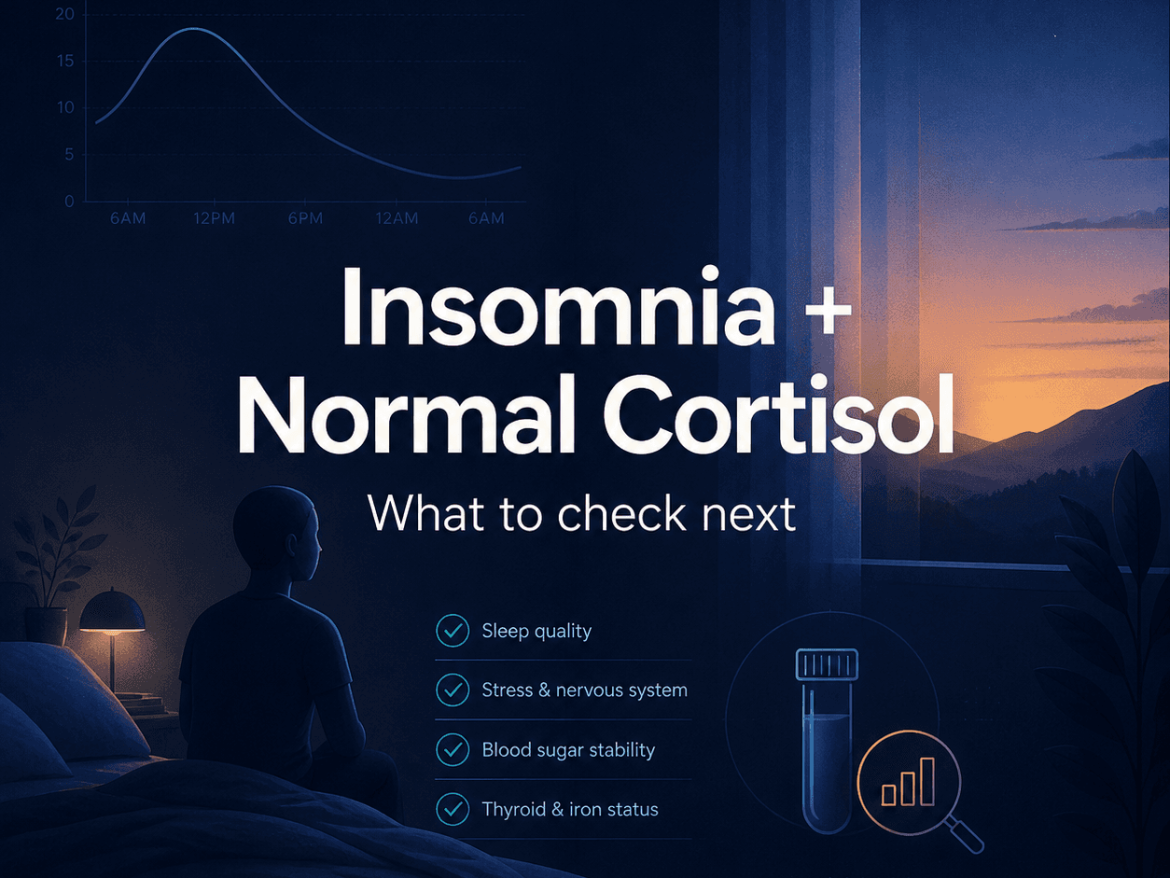
This is way more common than people think. Normal cortisol does not automatically mean your sleep system is fine. It just means cortisol, on that day, on that test, fell inside a reference range.
So if cortisol looks “normal” but sleep is still a mess, here is where I look next in a functional medicine style workup. Not because we love testing for the sake of testing. But because insomnia is rarely one thing.
It is usually layers.
First, a quick reality check about “normal”
Most cortisol labs use population reference ranges. That means your result is being compared to a big mix of humans, including stressed out humans, inflamed humans, under slept humans, and people who are also not doing great.
So “normal” can still be suboptimal for you.
Also, cortisol is only one hormone in a whole orchestra that regulates sleep. Sleep is governed by circadian rhythm, nervous system tone, blood sugar stability, temperature regulation, neurotransmitters, inflammation, airway mechanics, light exposure, and yes, hormones. Cortisol is in there, but it is not the whole story.
And one more point. You can have a “normal” total cortisol output but still have a circadian timing problem. Meaning, your curve is technically in range but peaking too late, dipping too early, or not dropping enough at night. Depending on the test, that can be easy to miss.
Still, let’s assume you truly have a normal looking pattern and you are still not sleeping. Here is what to check next.
1) Blood sugar swings at night (the sneaky one)
This is one of the most under appreciated drivers of middle of the night wakeups.
If your blood sugar drops too low at 1am to 3am, your body treats that like an emergency. It responds with counter regulatory hormones like adrenaline, glucagon, and yes, sometimes cortisol. Even if your cortisol testing is normal overall, you can still get these micro surges that jolt you awake.
Clues this might be you:
- You fall asleep fine but wake up suddenly, often around the same time.
- You wake up hungry, shaky, sweaty, or with a racing heart.
- You feel better after a snack.
- You crave carbs at night.
- You are dealing with insulin resistance, prediabetes, or PCOS.
- You feel anxious in the middle of the night for no clear reason.
What to consider checking:
- Fasting glucose, fasting insulin, HbA1c (basic, but still helpful)
- CGM data for 10 to 14 days (often the clearest)
- Triglycerides, HDL, and liver enzymes (metabolic context)
What to try while you are figuring it out:
- Prioritize protein at dinner.
- Do not do a super low carb diet if it is worsening sleep (some people do better, others absolutely do not).
- Avoid alcohol close to bedtime. It can drop glucose later in the night.
- If you wake up nightly, experiment with a small balanced bedtime snack for a few nights (protein plus fat, not just carbs).
If this is the main driver, fixing glucose stability can be life changing. And it does not always show up on a single cortisol report.
2) Your nervous system is stuck in high alert (even if labs look fine)
Some insomnia is not hormonal. It is neurophysiological.
If you are living in sympathetic mode all day, rushing, scrolling, overworking, under recovering, your brain does not suddenly flip into parasympathetic mode because you turned off the lights.
Clues:
- You are exhausted but cannot “drop in.”
- You startle easily.
- You clench your jaw or grind teeth.
- Your mind feels loud at night.
- You feel better sleeping away from home stress, like on vacation.
- You have a history of trauma, chronic stress, caregiving, burnout, or postpartum depletion.
What to consider checking:
- HRV trend (wearables are not perfect, but patterns matter)
- Resting heart rate trend
- Basic inflammation markers (hs CRP), ferritin, B12, thyroid markers, because inflammation and deficiencies can keep the nervous system on edge
What actually helps (more than another supplement, honestly):
- Morning outdoor light, daily
- A consistent wake time
- Breathwork that you will actually do, 3 to 5 minutes, not 45
- Strength training and walking, earlier in the day
- Therapy, somatic work, EMDR, or nervous system retraining if this is longstanding
A lot of people with “normal cortisol” are still running on adrenaline. Adrenaline is not always measured, but you feel it.
3) Low ferritin or iron issues (especially in women)
Ferritin is a big one. It is not just about anemia. Low ferritin can worsen restless legs, fragmented sleep, and that wired feeling. I see this a lot in menstruating women, postpartum women, plant based eaters, endurance exercisers, and anyone with gut absorption problems.
Clues:
- Restless legs, creepy crawly sensation in the legs at night
- Hair shedding, brittle nails
- Shortness of breath with exertion
- Palpitations
- Feeling cold easily
- Sleep that is light and easily disrupted
What to consider checking:
- Ferritin (and do not accept “normal” if it is low normal and symptoms fit)
- Iron, TIBC, transferrin saturation
- CBC
This is one area where normal ranges can be misleading. A ferritin of 12 might be “in range” but the body is not happy.
4) Thyroid problems that do not show up on TSH alone
Thyroid imbalance can show up as insomnia, anxiety, palpitations, heat intolerance, and early waking. And you can have thyroid issues even if a single marker was fine.
Clues:
- Heat intolerance, sweating
- Racing thoughts, higher resting heart rate
- Weight changes that do not match your food intake
- Hair changes, bowel changes
- Anxiety that feels chemical, not situational
What to consider checking (with your clinician):
- TSH, free T4, free T3
- Thyroid antibodies (TPO, TgAb)
- Sometimes reverse T3, depending on the case
Thyroid and cortisol interact, but you can absolutely have insomnia from thyroid imbalance even when cortisol looks normal.
5) Sleep disordered breathing (not just obvious sleep apnea)
This is a big one and it gets missed constantly, especially in women and in people who are not overweight.
Upper airway resistance syndrome, mild obstructive sleep apnea, mouth breathing, nasal obstruction, all of these can fragment sleep without you remembering “waking up.” Your brain is basically micro aroused all night to keep you breathing.
Clues:
- You wake up unrefreshed no matter how long you sleep
- Dry mouth in the morning
- Headaches on waking
- Night sweats
- Bruxism (teeth grinding)
- Snoring, or you do not snore but you breathe through your mouth
- Waking to pee
- Anxiety and fatigue that do not make sense
What to consider checking:
- Home sleep test can be a start, but if it is negative and suspicion is high, consider in lab polysomnography
- ENT evaluation if nasal obstruction is an issue
- Dental evaluation for airway, tongue tie, palate, bruxism
If you are not getting air, your body will not choose deep sleep. It will choose survival.
6) Histamine intolerance or mast cell activation patterns
This is the classic “I fall asleep but wake between 1am and 3am feeling hot, itchy, wired, or with a pounding heart” situation. Histamine is a wake promoting neurotransmitter. Some people also get a histamine surge at night.
Clues:
- Itching, hives, flushing
- Stuffy nose at night
- Acid reflux, nausea, loose stools
- Headaches, especially around food, alcohol, fermented foods
- Worse sleep after wine, aged cheese, leftovers, kombucha
- Cyclical symptoms around ovulation or before period (histamine and estrogen interact)
What to consider checking:
There is no perfect single test. Often this is a pattern recognition situation. Some clinicians will look at tryptase, plasma histamine, DAO activity, but results can be inconsistent.
What to try:
- Track food triggers for 1 to 2 weeks
- Consider a short low histamine trial, done carefully
- Work on gut health and nutrient status (B6, copper, vitamin C can matter here, but do not self dose aggressively)
Which brings us to the gut.
7) Gut dysfunction (yes, it can drive insomnia even with normal cortisol)
Your gut talks to your brain through the vagus nerve, immune signaling, microbial metabolites, and neurotransmitter pathways. If your gut is inflamed, overgrown, infected, or just struggling, sleep often becomes lighter, more fragmented, and more anxious.
Clues:
- Bloating, constipation, diarrhea, reflux
- Skin issues, acne, rashes
- Frequent sickness
- Food sensitivities that keep expanding
- Anxiety, overthinking, low mood
- Feeling tired on waking even after “enough” sleep
What to consider checking:
- Comprehensive stool testing (depending on symptoms)
- H pylori testing if reflux, nausea, or upper GI symptoms are present
- SIBO breath testing if bloating and distension are prominent
- Celiac screening if indicated
- Micronutrients linked to gut absorption (B12, folate, magnesium, iron)
And honestly, even without heavy testing, starting with foundations can move the needle. If you have been following Dr. Lisa Silvani’s work at Reviva Health and Wellbeing, you know the vibe here is root cause first. Not just sedate the symptoms.
If your gut symptoms are loud and your sleep is fragile, it might be worth starting with a structured reset rather than random supplements. A guided, step by step program is often easier than trying to piece it together at 1am.
8) Sex hormone shifts (perimenopause, postpartum, luteal phase issues)
You can have “normal cortisol” and still have insomnia from estrogen and progesterone changes.
Progesterone has a calming, GABA supporting effect for many women. When progesterone drops in the luteal phase, postpartum, or in perimenopause, sleep often becomes lighter and more interrupted. Estrogen fluctuations can also affect temperature regulation, histamine, and mood.
Clues:
- Insomnia that worsens before period
- New insomnia in your late 30s to 50s
- Night sweats, hot flashes
- More anxiety, more ragey PMS, more heart palpitations
- Waking at 3am with a sudden surge of alertness
What to consider checking (timing matters):
- A thoughtful symptom timeline is sometimes more useful than a random lab
- Depending on the case, estradiol, progesterone, FSH, LH, and sometimes testosterone, SHBG
- If cycling, testing in the correct phase, otherwise interpretation gets messy fast
This is where individualized care matters. Blanket hormone advice online gets risky.
9) Magnesium, B vitamins, and the “simple” deficiencies (not always simple)
Magnesium is over marketed, sure. But deficiency is real. Same for B12, folate, and vitamin D. And these can influence sleep quality, mood, muscle tension, and circadian rhythm.
Clues:
- Muscle cramps, twitching
- Constipation
- Anxiety, irritability
- Tingling, numbness (B12)
- Frequent infections (vitamin D)
- Low mood, low resilience
What to consider checking:
- RBC magnesium (more informative than serum for some, still imperfect)
- B12 with MMA if needed
- Folate
- Vitamin D
Supplements can help, but if you are not absorbing them because of gut issues, or you are burning through them due to stress, you will keep chasing your tail.
10) Medications, caffeine, alcohol, and “healthy” habits that quietly wreck sleep
This part is not glamorous, but it matters.
Things that commonly interfere:
- Caffeine after late morning, even if you think you tolerate it
- Alcohol, even 1 to 2 drinks, even if it helps you fall asleep
- Late intense workouts (for some people, not all)
- THC that helps sleep onset but worsens deep sleep or causes rebound wakeups
- Decongestants, stimulants, thyroid meds dosed too late
- Some antidepressants can be activating
- Over restrictive dieting or fasting windows that create nighttime glucose drops
If you want a simple experiment: do a 14 day sleep stability trial. Same wake time, morning light, caffeine cut off by 10am to noon, no alcohol, consistent meals with adequate protein, walk daily. Then reassess.
Not forever. Just long enough to see what is actually driving the problem.
A practical “what do I do next?” checklist
If you are reading this at night, half tired, half annoyed, here is a simple order of operations.
- Rule out sleep disordered breathing if you snore, grind, wake unrefreshed, or have morning headaches.
- Check glucose stability if you wake around the same time nightly, especially with racing heart.
- Check ferritin and thyroid markers if you have fatigue plus sleep issues.
- Look at histamine and gut patterns if you have bloating, reflux, itching, flushing, or food triggers.
- Consider hormone timing if this is cyclical or perimenopausal.
- Work the nervous system angle if you are stuck in high alert mode, regardless of labs.
And if you want help putting the pieces together, this is exactly the kind of case that does well with a root cause, personalized plan. You can explore working with Dr. Lisa Silvani virtually through Reviva Health and Wellbeing at https://www.lisasilvani.com, and book a free discovery call if you are not sure where to start.
Sometimes you do not need more willpower.
You need a better map.
The bottom line
Insomnia with “normal” cortisol is not a dead end. It is a clue.
It tells you cortisol is probably not the main lever. Or not the only one. So you zoom out.
You look at blood sugar, breathing, iron, thyroid, histamine, gut inflammation, sex hormone shifts, nervous system tone, and the daily inputs that keep your brain on duty at night.
Because sleep is not a switch.
It is a whole body permission slip. And when the body does not feel safe, stable, and fueled, it does not hand over that permission easily.
FAQs (Frequently Asked Questions)
Why can I have normal cortisol levels but still struggle with insomnia?
Normal cortisol levels mean your cortisol is within a population reference range on the day of testing, but this doesn’t guarantee your sleep system is functioning well. Insomnia often involves multiple layers beyond cortisol, including circadian rhythm issues, nervous system tone, blood sugar stability, inflammation, and more. Additionally, normal total cortisol output can mask timing problems where cortisol peaks too late or doesn’t drop enough at night.
How do blood sugar swings at night affect my sleep?
Blood sugar drops between 1am and 3am can trigger your body to release counter-regulatory hormones like adrenaline and cortisol, jolting you awake. Signs include waking suddenly at the same time, feeling hungry or shaky at night, craving carbs before bed, or having conditions like insulin resistance or PCOS. Monitoring fasting glucose and using continuous glucose monitoring (CGM) can help identify this issue.
What lifestyle changes can help stabilize blood sugar for better sleep?
To improve nighttime blood sugar stability, prioritize protein at dinner, avoid super low carb diets if they worsen your sleep, limit alcohol close to bedtime (as it can cause later glucose drops), and try a small balanced snack with protein and fat if you wake up frequently. These strategies can reduce middle-of-the-night awakenings caused by blood sugar dips.
How does a high-alert nervous system contribute to insomnia despite normal lab results?
Chronic stress keeps your nervous system in sympathetic ‘fight or flight’ mode all day. At night, this prevents you from relaxing into parasympathetic ‘rest and digest’ mode needed for sleep. Symptoms include feeling exhausted but unable to relax, easy startle responses, jaw clenching, loud mental chatter at night, and improvement during vacations away from stressors.
What assessments and practices support calming an overactive nervous system?
Tracking heart rate variability (HRV) trends and resting heart rate can provide insight into nervous system balance. Checking inflammation markers like hs-CRP and nutrients such as ferritin and B12 also helps. Effective practices include daily morning outdoor light exposure, consistent wake times, brief breathwork sessions (3-5 minutes), earlier strength training or walking, and therapies like somatic work or EMDR for chronic stress relief.
Why is low ferritin important in sleep disturbances and who is most affected?
Low ferritin—beyond just anemia—can worsen restless legs syndrome, fragmented sleep, and that wired feeling at night. It commonly affects menstruating women, postpartum women, plant-based eaters, endurance athletes, and those with gut absorption issues. Symptoms include leg discomfort at night, hair loss, brittle nails, shortness of breath on exertion, palpitations, feeling cold easily, and light disrupted sleep. Checking ferritin alongside iron studies is crucial since low-normal levels may still cause symptoms.
References
- Tasali, E., & Van Cauter, E. (2006). Sleep-disordered breathing and the current epidemic of obesity: consequence or contributor? American Journal of Respiratory and Critical Care Medicine, 173(1), 2-4. https://doi.org/10.1164/rccm.200509-1376ED
- McEwen, B. S. (2017). Neurobiological and Systemic Effects of Chronic Stress. Chronic Stress, 1, 2470547017692328. https://doi.org/10.1177/2470547017692328
- Allen, R. P., Picchietti, D. L., Garcia-Borreguero, D., Ondo, W. G., Walters, A. S., Winkelman, J. W., … & Lee, H. B. (2014). Restless legs syndrome/Willis-Ekbom disease diagnostic criteria: updated International Restless Legs Syndrome Study Group (IRLSSG) consensus criteria—history, rationale, description, and significance. Sleep Medicine, 15(8), 860-873. https://doi.org/10.1016/j.sleep.2014.03.025
- Wartofsky, L., & Dickey, R.A. (2005). The evidence for a narrower thyrotropin reference range is compelling. The Journal of Clinical Endocrinology & Metabolism, 90(9), 5483-5488. https://doi.org/10.1210/jc.2005-1151
- Heinzer, R., Vat, S., Marques-Vidal, P., Marti-Soler, H., Andries, D., Tobback, N., … & Haba-Rubio, J. (2015). Prevalence of sleep-disordered breathing in the general population: the HypnoLaus study. The Lancet Respiratory Medicine, 3(4), 310-318. https://doi.org/10.1016/S2213-2600(15)00043-0
- Valent, P., Akin, C., Hartmann, K., Nilsson, G., Reiter, A., Schernthaner, G.H., … & Horny, H.P.; European Competence Network on Mastocytosis (ECNM). (2019). Advances in the classification and treatment of mastocytosis: current status and outlook toward the future from the ECNM consensus meeting 2018–2019 update on diagnosis and treatment strategies for patients with mastocytosis and mast cell activation syndromes (MCAS). Cancer Immunology Immunotherapy, 68(2), 163-174. https://doi.org/10.1007/s00262-018-2263-x
- Randler C., Rahafar A., Vollmer C.W.M.(2018). Gut microbiome and sleep disorders: New insights into interrelationships and mechanisms affecting human health and disease outcomes.Nature Reviews Gastroenterology & Hepatology,15(11),600–612.doi:10.1038/s41575-018-0064-y
- Stachenfeld NS.(2008) Sex Hormones’ Effects on Body Fluid Regulation.Journal of Women’s Health(larchmt).17(11):1797–1803.doi:10 .1089/jwh .2008 .1047
- de Baaij JH et al.(2015) Magnesium in Man: Implications for Health and Disease.Physiological Reviews;95(1):1–46.doi:10 .1152/physrev.00012.2014
- Hirshkowitz M et al.(2015) National Sleep Foundation’s sleep time duration recommendations:“Methodology”and Results Summary.Sleep Health;1(1):40–43.doi:10 .1016/j.sleh .2014 .12 .010

