 vanilis
 You clean up your meals. You walk more. You try to be “good” during the week. Maybe you even lift weights, take supplements, do the fasting window, the protein goal, the whole routine.
And yet. The waistline stays stubborn. Especially that lower belly softness that does not match the effort.
Here’s a place I always look first, because it quietly drives everything else.
Your sleep. Not just “how many hours” either.
Your sleep architecture.
Sleep architecture is the pattern and quality of your sleep stages across the night. It is the difference between 8 hours that actually restore your metabolism and 8 hours that are basically… light dozing with a few drops into deeper sleep.
And yes, it can absolutely show up as belly fat that will not budge.
Let’s talk about why, what’s going on under the hood, and what you can do about it in a way that feels doable.
What “sleep architecture” actually means (in normal human language)
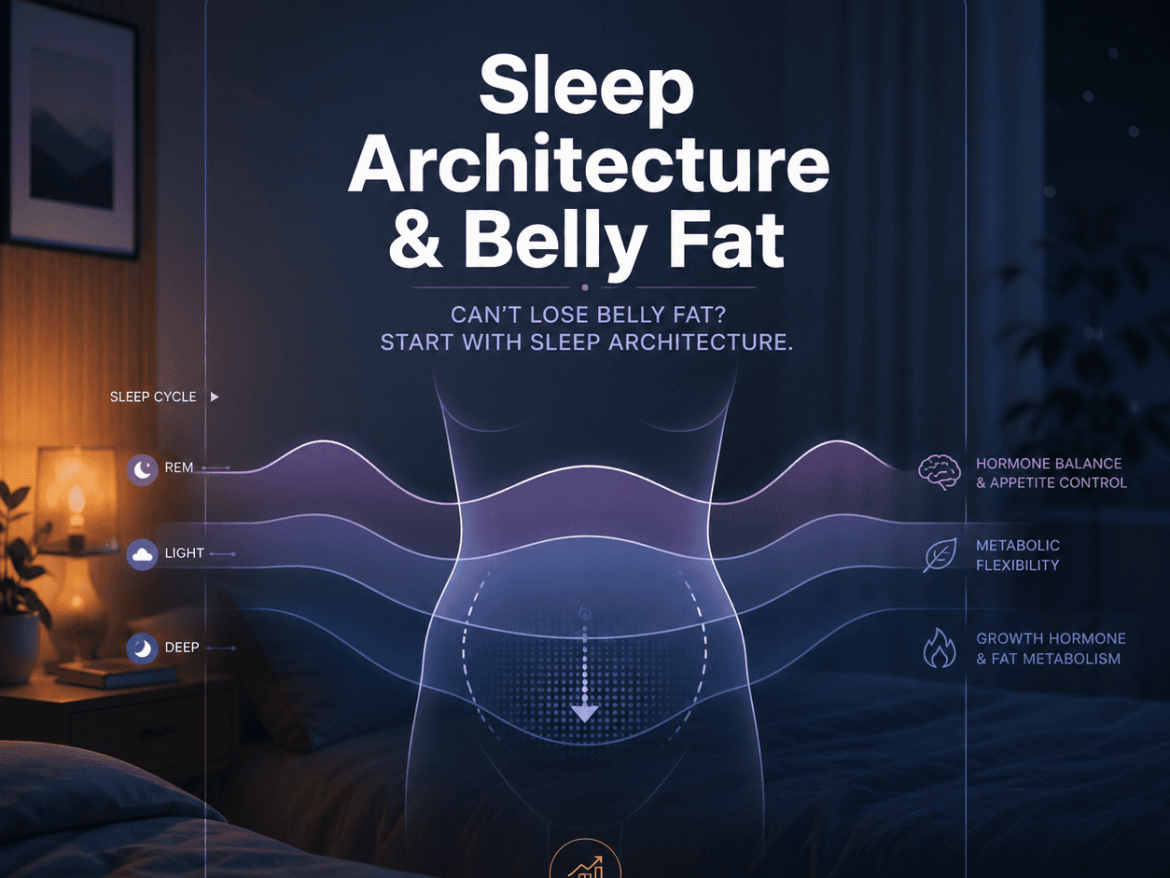
Sleep is not one uniform state. It cycles through stages, roughly every 90 minutes. Across a typical night you move in and out of:
- Light sleep (N1 and N2): you spend a lot of time here. It matters, but it is not the big metabolic reset.
- Deep sleep (N3, slow wave): this is the physical repair zone. Tissue repair, growth hormone pulses, immune regulation, glucose control. Big stuff.
- REM sleep: brain and nervous system restoration. Emotional processing, memory consolidation, and a lot of hormonal regulation happens here too.
Good sleep architecture means you are getting enough deep sleep early in the night, enough REM later in the night, and you are not constantly fragmented by micro awakenings that you barely remember.
Bad sleep architecture can look like:
- You fall asleep fast but wake at 2 to 4 am wired.
- You sleep 8 hours but wake up tired, puffy, hungry, or anxious.
- You are a light sleeper, every noise wakes you.
- You have vivid dreams but feel unrested, like your brain never shut off.
- Your tracker shows lots of “awake” time, low deep sleep, low REM, or erratic cycles.
And belly fat is one of the most common downstream effects. Not the only effect. But a very common one.
Why messed up sleep architecture pushes belly fat, specifically
Belly fat is not just “extra calories.” Abdominal fat, especially visceral fat, is deeply tied to stress physiology, insulin regulation, inflammation, and hormones.
Sleep architecture sits right in the middle of all of that.
1) Cortisol gets out of rhythm (and your body stores in the middle)
Cortisol is supposed to be highest in the morning, then gradually decline across the day, and reach its lowest point at night.
When sleep is fragmented, too short, or missing deep sleep, cortisol can drift:
- Elevated at night (hello, 2 am wide awake)
- Lower in the morning (hello, can’t get going)
- More reactive during the day (hello, cravings and irritability)
Chronic cortisol dysregulation nudges fat storage toward the abdomen. It also makes you more insulin resistant, more inflamed, and more likely to snack for fast energy.
So yes. You can eat “pretty well” and still be stuck, because the stress chemistry is steering the ship.
2) Insulin sensitivity tanks with poor sleep, even fast
Sleep is one of the strongest insulin sensitizers we have. One or two bad nights can reduce insulin sensitivity measurably. Not forever, but enough to change how your body handles carbs and glucose the next day.
When insulin sensitivity is lower, your body is more likely to:
- Store energy rather than burn it
- Crave sugar and refined carbs
- Have reactive hunger, especially mid afternoon and late at night
- Hold onto belly fat even with a calorie deficit that “should” work
And if this is happening most nights, the body adapts into a new not so fun normal.
3) Hunger hormones change. You are hungrier and less satisfied
Poor sleep shifts appetite hormones in a predictable direction:
- Ghrelin (hunger hormone) tends to rise
- Leptin (satiety hormone) tends to drop
So you wake up hungrier, and your normal meals feel less satisfying. And then the brain starts hunting for quick energy because it is tired. Not because you are weak.
That combo makes fat loss harder. And again, belly fat is usually the last to go when the body feels stressed and under recovered.
4) Deep sleep is when you earn metabolic flexibility
During deep sleep, your body does real repair work. Growth hormone pulses. Muscle repair. Nervous system downshifts. Inflammation markers calm down. Glucose regulation improves.
If deep sleep is consistently low, you often see:
- Slower recovery from workouts
- More soreness
- More water retention and puffiness
- Worse blood sugar stability
- More cravings and fatigue
You can still lose weight without perfect deep sleep, sure. But stubborn belly fat tends to stick around when the body is not getting that deep repair signal.
5) Sleep fragmentation acts like stress, even if you “slept enough”
This one matters. Lots of people technically spend 7 to 9 hours in bed, but their sleep is broken into chunks.
Micro awakenings, breathing disruptions, temperature discomfort, alcohol rebound, blood sugar drops, histamine spikes, partner movement, scrolling before bed, all of it.
Fragmented sleep keeps your system in a lighter, more vigilant state. Your body does not interpret that as safety. And when your body does not feel safe, it clings to energy reserves.
It is not poetic. It is physiology.
The sneaky reasons your sleep architecture is off (and nobody told you)
Here are patterns I see all the time in functional and metabolic medicine. Some of these will surprise you, some will feel obvious in hindsight.
Sleep apnea, upper airway resistance, or mouth breathing
You do not have to be overweight to have sleep disordered breathing. You can be a healthy weight and still have:
- Snoring (obvious)
- Waking with dry mouth
- Morning headaches
- Night sweats
- Grinding teeth
- Needing caffeine to function
- Waking unrefreshed even after “enough” hours
Breathing disruptions fragment sleep architecture and spike cortisol and blood sugar. This can be a huge driver of belly fat resistance.
If you suspect this, it is worth taking seriously, not just buying another magnesium.
Blood sugar dips at night
Some people wake at 2 to 3 am with a racing mind, hunger, or anxiety. Sometimes that is cortisol. Sometimes it is blood sugar dropping and the body releasing adrenaline and cortisol to rescue it.
Common clues:
- You fall asleep fine, then wake suddenly later
- You feel shaky, hungry, or wired
- You cannot fall back asleep unless you eat
- You crave carbs at night
This is fixable, but the fix depends on why your blood sugar is unstable in the first place.
Alcohol (even “just a glass”) and late eating
Alcohol can help you fall asleep but it reliably worsens REM and fragments the second half of the night. Late heavy meals can do something similar by increasing body temperature, reflux, and glucose variability.
You might not notice it until you stop for a week and suddenly your belly feels less inflamed and your cravings ease. It is a very real pattern.
Perimenopause and menopause hormone shifts
Progesterone tends to support sleep. When it declines, sleep can become lighter and more broken. Estrogen changes can affect temperature regulation and neurotransmitters.
If your sleep changed in your late 30s, 40s, or early 50s and belly fat followed, this is not random. It is a common physiologic shift that often needs a layered approach.
Gut issues and inflammation (yes, this matters for sleep)
You shared background about gut health content, and honestly, gut and sleep are tightly connected.
Bloating, reflux, constipation, histamine intolerance, and dysbiosis can all disrupt sleep quality. Also, a stressed gut can increase systemic inflammation, which can push cortisol and fragment sleep.
Sometimes the “belly fat” someone is seeing is part fat, part chronic bloat and inflammation. The mirror does not tell you which is which.
If you are thinking, “ok but I also wake up tired and bloated,” that is a big clue.
Stress and overtraining
Hard workouts are great. But if your nervous system is already on edge, intense training late in the day can reduce deep sleep. You end up in a loop: tired, push harder, sleep worse, crave more, belly holds on.
Sometimes the most effective fat loss strategy is not more intensity. It is better recovery.
What to do first (simple, not perfect)
You do not need a complicated biohacking routine. You need a few foundational signals that tell your body it is safe to sleep deeply.
Here’s a practical starting list.
1) Lock in a consistent wake time for 10 days
Not bedtime. Wake time.
A steady wake time anchors circadian rhythm. Within a week or two, many people naturally start getting sleepy earlier, and their sleep stages stabilize.
Pick a wake time you can keep within 30 to 45 minutes even on weekends. Yes, weekends count. Sorry.
2) Get outdoor light in your eyes early
10 minutes outside in the first hour of waking. 20 minutes if it is cloudy.
This is one of the highest return habits for better sleep architecture. It improves melatonin timing later, supports cortisol rhythm, and helps appetite regulation.
3) Stop negotiating with the phone at night
If your brain is trained to get novelty at 10 pm, it will want novelty at 2 am too.
Try this:
- Screens off 45 minutes before bed
- Phone out of the bedroom, or at least across the room
- If you wake at night, no clock checking. None. It trains vigilance.
It feels small but it matters.
4) Temperature. Cool the room, warm the body
Your core body temp needs to drop for deep sleep. A cool room helps.
- Keep the room cool
- Take a warm shower 60 to 90 minutes before bed (counterintuitive but effective)
- Breathable bedding matters more than fancy supplements
5) Protein earlier in the day, not all at dinner
If you under eat protein and calories earlier, you can get a cortisol bump at night. Also, blood sugar stability improves when meals are balanced earlier.
Aim for a protein forward breakfast, even if it is light.
6) Be careful with alcohol and late heavy meals for 7 days
If you want a quick experiment, do this:
- No alcohol for 7 days
- Finish dinner 3 hours before bed when possible
Track what happens to your waist, cravings, and sleep quality. A lot of people are shocked by this one.
7) Don’t over supplement your way out of a sleep problem
Magnesium can help. Glycine can help. L theanine can help. But if the core issue is sleep apnea, blood sugar swings, or perimenopause hormone shifts, supplements will be a band aid.
Not useless. Just not the main lever.
If you want to get strategic, look at your sleep like a clinician would
If you are doing “all the healthy things” and your belly fat will not move, I would look at:
- Signs of sleep disordered breathing
- Blood sugar patterns (fasting insulin, A1c, maybe CGM data depending)
- Cortisol rhythm and stress load
- Thyroid function (not just TSH)
- Sex hormones in the context of symptoms and life stage
- Inflammation markers
- Gut health patterns that are interfering with sleep and metabolism
This is where functional medicine can be incredibly helpful, because the goal is not a generic plan. It is figuring out why your body is resisting change.
If you want support with that kind of root cause approach, you can explore the virtual consults and programs at Reviva Health and Wellbeing with Dr. Lisa Silvani here: https://www.lisasilvani.com. There is also a free discovery call option on the site if you are not sure where to start.
A quick reality check (because this matters)
Sometimes belly fat is actually:
- bloating and constipation
- inflammation and water retention
- stress driven muscle tension and posture changes
- a metabolic slowdown from chronic under eating
- a hormone transition that needs a different strategy
Sleep architecture does not fix everything. But it is one of the most overlooked “first domino” issues.
And when it improves, people often notice:
- appetite is calmer
- cravings drop
- workouts feel easier to recover from
- their waist looks different without changing much else
- the scale might not move first, but the body composition starts shifting
Which is what you wanted in the first place.
If you only do one thing this week
For the next 7 nights, try this mini protocol:
- Wake up at the same time daily
- Get 10 minutes of outdoor light in the morning
- No alcohol
- Dinner finished 3 hours before bed
- Screens off 45 minutes before bed
- Cool dark bedroom
That is it. No perfection. Just data.
If your sleep deepens and your belly starts softening, you just found a major lever.
If nothing changes, that is also data. It suggests you may be dealing with something like sleep disordered breathing, blood sugar instability, hormonal shifts, or gut driven inflammation. All addressable, but you want the right map.
Because forcing harder workouts and stricter dieting on top of broken sleep architecture usually backfires.
Quietly. Slowly. Then all at once.
Start with sleep. The belly often follows.
FAQs (Frequently Asked Questions)
Why does my belly fat stay stubborn even when I eat well and exercise?
Stubborn belly fat can be linked to poor sleep architecture, not just diet and exercise. Even with clean meals, regular walking, weightlifting, and supplements, disrupted or low-quality sleep affects metabolism and hormones like cortisol and insulin, making belly fat resistant to change.
What is sleep architecture and why does it matter for belly fat?
Sleep architecture refers to the pattern of your sleep stages—light sleep, deep sleep (slow wave), and REM sleep—cycling roughly every 90 minutes. Good sleep architecture means enough deep sleep early in the night and REM later, which supports metabolic repair. Poor sleep architecture disrupts hormones and stress responses that contribute to belly fat accumulation.
How does poor sleep affect cortisol levels and belly fat?
Poor or fragmented sleep disrupts the normal cortisol rhythm, causing elevated nighttime cortisol and lower morning levels. This hormonal imbalance promotes abdominal fat storage, increases insulin resistance, inflammation, and triggers cravings, all of which make losing belly fat more difficult despite healthy habits.
Can disrupted sleep reduce insulin sensitivity and impact weight loss?
Yes. Sleep is a powerful insulin sensitizer. Just one or two nights of poor quality sleep can lower insulin sensitivity temporarily, leading your body to store energy rather than burn it, crave sugar and carbs, experience reactive hunger, and hold onto belly fat even with a calorie deficit.
How do hunger hormones change with poor sleep affecting appetite?
Poor sleep raises ghrelin (the hunger hormone) and lowers leptin (the satiety hormone), causing increased hunger upon waking and less satisfaction from meals. This drives the brain to seek quick energy sources like sugar, making fat loss harder—especially around the belly area.
What role does deep sleep play in metabolic health and belly fat reduction?
Deep sleep is crucial for physical repair including growth hormone release, muscle recovery, immune regulation, and glucose control. Insufficient deep sleep slows recovery from workouts, increases inflammation and cravings, destabilizes blood sugar, and contributes to persistent belly fat despite weight loss efforts.
References
- Spiegel, K., Leproult, R., & Van Cauter, E. (1999). Impact of sleep debt on metabolic and endocrine function. The Lancet, 354(9188), 1435-1439. https://doi.org/10.1016/S0140-6736(99)01376-8
- Tasali, E., & Van Cauter, E. (2006). Sleep-disordered breathing and the current epidemic of obesity: consequence or contributing factor? American Journal of Respiratory and Critical Care Medicine, 173(1), 2-4. https://doi.org/10.1164/rccm.200508-1190OE
- Taheri, S., Lin, L., Austin, D., Young, T., & Mignot, E. (2004). Short sleep duration is associated with reduced leptin, elevated ghrelin, and increased body mass index. PLoS Medicine, 1(3), e62. https://doi.org/10.1371/journal.pmed.0010062
- Mullington, J.M., Haack, M., Toth, M., Serrador, J.M., & Meier-Ewert, H.K. (2009). Cardiovascular, inflammatory, and metabolic consequences of sleep deprivation. Progress in Cardiovascular Diseases, 51(4), 294-302. https://doi.org/10.1016/j.pcad.2008.10.003
- Van Cauter, E., & Knutson, K.L. (2008). Sleep and the epidemic of obesity in children and adults. European Journal of Endocrinology, 159(Suppl_1), S59-S66. https://doi.org/10.1530/EJE-08-0295
- St-Onge, M.P., Wolfe, S., Sy, M., Shechter, A., & Hirsch, J. (2016). Sleep restriction increases the neuronal response to unhealthy food in normal-weight individuals: a functional magnetic resonance imaging study. The American Journal of Clinical Nutrition, 105(4), 798-805. https://doi.org/10.3945/ajcn.115.124651
- Buxton, O.M., & Marcelli, E. (2010). Short and long sleep are positively associated with obesity, diabetes, hypertension, and cardiovascular disease among adults in the United States*. Social Science & Medicine, 71(5), 1027-1036. https://doi.org/10.1016/j.socscimed.2010.05.041
- Medic G., Wille M., Hemels M.E.H (2017). Short- and long-term health consequences of sleep disruption.Nature and Science of Sleep, 9:151-161 https://doi.org/10.2147/NSS.S134864
- NHS UK (2023). Why good-quality sleep matters for weight loss and metabolism [Online]. Available at: https://www.nhs.uk/live-well/sleep-and-tiredness/how-sleep-affects-your-weight/
- Mark Hyman MD (2020). How Poor Sleep Leads to Weight Gain – And What to Do About It.DrMarkHyman.com. Available at: https://drhyman.com/blog/2020/07/31/how-poor-sleep-leads-to-weight-gain-and-what-to-do-about-it/
