
 dr. Lisa Silvani
 Now they are everywhere.
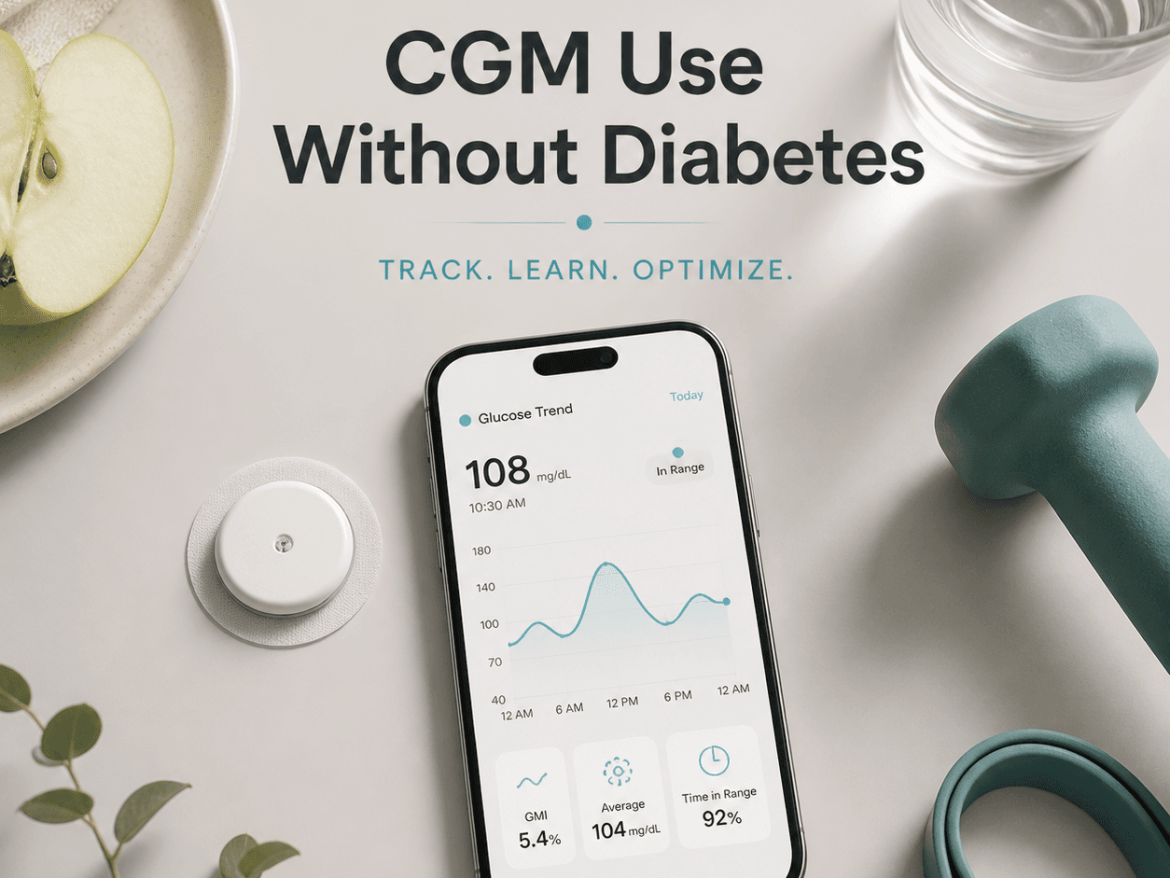
Athletes wear them. Biohackers wear them. People who are just tired of feeling tired wear them. And the pitch is always kind of the same: see what food is doing to you in real time.
That pitch is not wrong. It is also not the whole story.
If you do not have diabetes, a CGM can still be useful. Really useful. But only if you use it like a tool, not like a scoreboard. Otherwise it becomes one more app you check too much, one more number to chase, and somehow you end up afraid of blueberries.
So let’s talk about the best use of a continuous glucose monitor when you do not have diabetes. What it can tell you, what it cannot. How to interpret patterns without spiraling. And how to turn the data into actual change, which is the point.
What a CGM actually measures (and what it does not)
A CGM measures glucose in interstitial fluid, not directly in your bloodstream. That matters because:
- It can lag behind blood glucose by roughly 5 to 15 minutes (sometimes more).
- It is directionally accurate, but it is not a perfect lab measurement.
- Compression, temperature, hydration, and sensor placement can affect readings.
So if you see a spike, it is not automatically a crisis. And if you see a “perfect flat line”, it is not automatically a trophy.
What CGMs do well is show patterns.
How high you tend to go after meals. How fast you come down. Whether you crash later. Whether you wake up higher than expected. Whether stress hits you harder than food. These patterns are gold. Especially if you have symptoms that feel vague and hard to pin down.
Why someone without diabetes would use a CGM at all
This is the part people argue about online.
Some say it is unnecessary, anxiety inducing, or “wellness nonsense.” Others say it is the best thing they have ever done for their health.
Both can be true, depending on the person and how it is used.
Here are the most common good reasons to wear one when you do not have diabetes:
1) To find hidden drivers of fatigue and brain fog
If you feel fine after breakfast, then 2 hours later you feel like you could nap under your desk, that is a clue. Not always glucose, but often glucose plays a role.
A CGM can reveal:
- A big post meal rise followed by a steep drop (reactive hypoglycemia pattern).
- Long periods of low-ish glucose because you are under eating or skipping meals.
- Huge variability day to day because meals are inconsistent.
Fatigue is multi-factorial, obviously. Sleep, iron, thyroid, hormones, gut, stress, all of it. But glucose stability can be one of the easier levers to pull once you see what is happening.
2) To understand cravings and “hangry” episodes
If you get irritable, shaky, anxious, or snacky at predictable times, a CGM can help confirm whether you are dipping low or swinging fast.
Sometimes the fix is boring but powerful. More protein. More fiber. Better meal timing. Less liquid sugar. Not “more willpower.”
3) To support weight goals without guessing
Weight loss is not just calories, and I know people are tired of hearing that. But glucose spikes and crashes can make appetite regulation harder.
If your glucose rollercoasters, you may find yourself:
- Hungrier sooner after meals
- Grabbing fast carbs to feel better
- Eating later at night because the day was unstable
A CGM can help you test strategies that improve satiety and reduce the constant mental noise around food.
4) To spot early insulin resistance patterns
You can have “normal” labs and still be trending toward insulin resistance, especially if you have:
- Abdominal weight gain
- PCOS history
- Family history of type 2 diabetes
- Fatty liver history
- Elevated triglycerides
- High blood pressure
- Sleep apnea
- Chronic stress and poor sleep
CGMs do not diagnose insulin resistance. But they can show you how your body handles carbs in real life, not just on a fasting lab.
5) To see how stress, sleep, and exercise affect you personally
This is where CGMs become less about food and more about physiology.
People are often shocked that:
- A bad night of sleep raises their glucose the next day even with “perfect” meals.
- A stressful meeting spikes them.
- A hard workout spikes them (yes, that can happen).
- A walk after dinner smooths everything out.
That kind of feedback can change behavior fast because it becomes personal. Not abstract advice.
Who should probably not use a CGM casually
This part matters.
A CGM can be a great tool. It can also be a terrible tool for the wrong person or at the wrong moment.
You may want to skip it, or at least use it under clinician guidance, if:
- You have a current or past eating disorder, or significant food anxiety.
- You tend to obsess, over track, or feel “bad” when numbers are not ideal.
- You are currently underweight or dealing with significant restriction.
- You are pregnant and trying to self manage without medical support (pregnancy glucose is its own category, get proper care).
Data does not automatically equal health. Sometimes it equals stress. And stress itself pushes glucose up. So you can see how that goes.
What “good” glucose looks like without diabetes (roughly)
There is no single perfect target for everyone without diabetes, and CGMs differ. But some general, non-diagnostic guidelines people often use:
- Fasting / pre-meal: often in the 70 to 95 mg/dL range for many healthy people
- Post meal peak: ideally not extremely high and not lasting long
- 2 hours after eating: generally trending back toward baseline
Instead of obsessing about one number, the more useful focus is:
- How high you spike
- How long you stay elevated
- How fast you drop
- How variable your day is
Variability is a sneaky one. Two people can have the same average glucose, but one has stable curves and the other has sharp spikes and dips all day. They feel different. The stable person usually feels better.
The best way to use a CGM without diabetes (the method that actually works)
If you do this randomly, you will learn random things. If you do it like a mini experiment, you will learn a lot in two weeks.
Here is a simple, sane approach.
Step 1: Pick a short wear period on purpose
Most people do well with 10 to 14 days. Enough time to see patterns, not so long that it becomes your whole personality.
You can do it once, learn a ton, then repeat later after you implement changes.
Step 2: Keep your first few days “normal”
Do not immediately start eating like a monk.
Eat the way you normally eat for 3 to 4 days. That becomes your baseline. It will show you what your body is doing right now, not what it does when you are performing.
Step 3: Start testing one variable at a time
This is the part that makes the CGM worth the effort.
Pick a meal you eat often, and run small experiments. Example:
- Oatmeal alone vs oatmeal with Greek yogurt and nuts
- Rice bowl as is vs rice bowl with more protein and veggies
- Smoothie vs same ingredients eaten as a bowl with chewing
- Dessert after a meal vs dessert as a snack
- Coffee on an empty stomach vs coffee after breakfast
- Late dinner vs earlier dinner
- Same dinner, but add a 10 minute walk after
Write it down. You do not need a complicated spreadsheet. Notes app is fine.
Step 4: Add context, because glucose is not just food
If you want your CGM to tell the truth, you have to give it the full story.
Track a few things alongside it:
- Sleep quality (even a simple 1 to 5 rating)
- Stress level (same, 1 to 5)
- Exercise (what kind, how long)
- Alcohol
- Menstrual cycle phase (if applicable)
You will start seeing patterns that are almost annoying in how clear they are.
Step 5: Look for your “repeat offenders” and your “easy wins”
Repeat offenders are the meals or habits that reliably spike you and leave you dragging later.
Easy wins are the small tweaks that smooth your curve without making you miserable.
The goal is not a perfect line. The goal is predictable energy, better mood, fewer cravings, better sleep, better recovery. Real life improvements.
Food strategies that usually help (without going extreme)
If you wear a CGM, you will probably discover that your body is not “broken.” It just responds to certain patterns like any human body would.
Here are changes that tend to smooth glucose for many people.
1) Build meals around protein first
Protein is not just for bodybuilders. It helps slow glucose rise and supports satiety.
Many people do better when breakfast has 25 to 35 grams of protein. That one change alone can reduce cravings later in the day.
2) Add fiber, not just “cut carbs”
Carbs are not evil. But fiber changes the game.
Vegetables, beans, lentils, chia, flax, berries, whole grains. If your CGM shows you spike hard from starch, try increasing fiber and protein before you lower the portion.
3) Eat carbs later in the meal
This sounds too simple, but it often works.
Start with:
- Veggies or salad
- Protein and fat
- Starch or fruit last
People see smaller spikes just by changing order. Not always. But often enough that it is worth trying.
4) Watch liquid sugar and “healthy” smoothies
Smoothies can be great. They can also be a stealth sugar bomb because blending changes absorption.
If your CGM shows spikes from smoothies, try:
- Add protein (whey, pea, Greek yogurt)
- Add fat (nut butter)
- Add fiber (chia, flax)
- Reduce fruit quantity, use berries
- Or just chew your food sometimes. Chewing matters.
5) Use movement as a lever, not punishment
A 10 to 20 minute walk after meals can significantly reduce post meal glucose peaks for many people.
Not a hardcore workout. Just movement. This is one of the most underrated “supplements” for metabolic health.
6) Alcohol: pay attention to the whole night, not just the spike
Alcohol can do weird things. Some people see a drop initially, then an overnight rise, plus disrupted sleep, plus higher glucose the next day.
If your CGM shows your sleep nights correlate with higher next-day glucose, alcohol may be part of the loop even if the drink itself did not spike you.
Non-food things your CGM might reveal (the stuff people do not expect)
Poor sleep can make “healthy food” look worse
If you sleep 5 hours and wake up stressed, your body is more insulin resistant that day. So your normal breakfast produces a bigger spike.
This is not you failing at breakfast. It is biology.
Stress spikes are real
Some people see glucose rise during conflict, driving, public speaking, work chaos. Cortisol and adrenaline mobilize glucose. That is the point, your body thinks you need fuel to survive the tiger.
If you see this, do not panic. Use it as evidence that nervous system support is not fluff. It is metabolic care.
Intense exercise can spike glucose (and that can be fine)
Heavy lifting, intervals, long hard sessions can raise glucose temporarily because your body releases glucose for fuel.
If you feel good and your glucose comes down later, it may be a normal response. Context matters.
Caffeine on an empty stomach can spike some people
Not everyone. But some people see a sharp rise from coffee alone, especially if stressed or sleep deprived.
If that is you, try coffee after breakfast or reduce caffeine dose. Or do half caf. Or just notice it and stop blaming breakfast for what coffee started.
Common mistakes people make with CGMs (so you do not waste the wear period)
Mistake 1: Trying to “win” the CGM
If you spend two weeks only eating foods that keep you flat, you might feel proud. You might also learn nothing about your real life.
A CGM is not a test you pass. It is feedback you use.
Mistake 2: Overreacting to one spike
Glucose moves. It is supposed to.
Look for patterns across multiple days and similar meals. One spike could be sensor noise, stress, sleep, dehydration, or a weird combination of things.
Mistake 3: Going too low carb too fast
Some people immediately cut all carbs because they see spikes. Then they feel tired, their workouts suffer, mood drops, sleep changes. And now the CGM is showing a different problem.
Better approach: stabilize meals first, then adjust carb type, portion, and timing.
Mistake 4: Ignoring the crash
A spike is only part of the story. If you spike and then drop fast, that drop can drive hunger and anxiety.
Sometimes reducing the spike by a little is less important than reducing the speed of the drop. Protein, fat, fiber, and meal timing can help.
Mistake 5: Forgetting hormones (especially for women)
Cycle phase can affect insulin sensitivity.
Many women see higher glucose and more cravings in the luteal phase, for example. That does not mean you are “getting worse.” It means your body is doing normal hormonal things.
If you track cycle phase alongside CGM data, your insights get way more accurate and way less self judgment-y.
What to do with your CGM data after the trial
At the end of your wear period, you want outcomes, not screenshots.
Here is a simple way to wrap it up:
1) Identify your top 3 triggers
Not “bad foods.” Triggers.
Examples:
- Skipping breakfast then eating a large carb heavy lunch
- Smoothie on an empty stomach
- Dinner plus dessert plus no movement
- Poor sleep plus caffeine plus no protein
- Big pasta meal as a standalone
2) Identify your top 3 stabilizers
Things that consistently helped.
Examples:
- Protein breakfast
- Salad first
- Post meal walk
- Swapping snack timing
- Adding lentils or beans
- Earlier dinner
3) Pick 2 changes you can actually keep
Not a whole new personality. Two changes.
Do them for 2 to 4 weeks without a CGM. See if symptoms improve. Then if you want, do another short CGM round to test whether your curve changed.
That is how you turn data into progress.
When it makes sense to work with a clinician (and not just DIY it)
If you are wearing a CGM because you feel awful, or because your weight is not moving despite doing “everything right,” or because you have a complicated history, you may get more value working with someone who can see the full picture.
CGM data is most powerful when combined with:
- Detailed symptom history
- Labs (fasting insulin, A1c, lipids, thyroid, iron markers, inflammation markers, etc)
- Gut health and nutrient status context
- Hormone context
- Medication and supplement review
- Sleep and stress assessment
This is basically the functional medicine lane.
If that is what you are looking for, Dr. Lisa Silvani’s site has a lot of helpful resources and a clear overview of her integrative, systems-based approach. You can also book a free consultation through lisasilvani.com if you want to talk through whether CGM data, labs, and a structured plan might help in your specific case.
Quick FAQ (because people always ask these)
Will a CGM help me “prevent diabetes”?
It can support prevention by helping you improve habits that affect insulin sensitivity, body composition, and inflammation. But it does not replace medical screening or address every risk factor.
Is a glucose spike always bad?
No. Spikes happen. The questions are: how high, how long, and what happens after. Also, how you feel.
Can I use a CGM to diagnose insulin resistance?
No. It can suggest patterns that are worth investigating, but diagnosis requires clinical evaluation and labs.
How long should I wear one?
Often 10 to 14 days is enough to learn a lot. Some people do a second round after implementing changes.
What if my CGM numbers seem “worse” than expected?
First, confirm with context. Sleep, stress, sensor accuracy, timing, and what you ate. If you consistently see big spikes or feel unwell, that is a good reason to talk with your clinician and consider deeper metabolic testing.
The bottom line
A continuous glucose monitor without diabetes is best used like this:
- Short, intentional wear period
- Baseline first, experiments second
- Track sleep, stress, and movement alongside food
- Focus on patterns and symptoms, not perfection
- Turn insights into 2 or 3 sustainable changes
If you do it that way, a CGM stops being a trendy gadget and becomes a pretty clear mirror. Not always comfortable. But useful.
And honestly, that is what most people are missing. Not more motivation. Not more rules. Just the right feedback, at the right time, with a plan that fits real life.
FAQs (Frequently Asked Questions)
What does a continuous glucose monitor (CGM) measure and how accurate is it?
A CGM measures glucose levels in the interstitial fluid, not directly in the bloodstream. This means readings can lag behind blood glucose by 5 to 15 minutes or more. While directionally accurate, CGMs are not perfect lab measurements and can be influenced by factors like compression, temperature, hydration, and sensor placement. They are excellent for identifying patterns rather than exact values.
Why might someone without diabetes choose to use a CGM?
People without diabetes may use CGMs to uncover hidden causes of fatigue and brain fog, understand cravings and ‘hangry’ episodes, support weight management goals by monitoring glucose fluctuations, detect early signs of insulin resistance, and see how stress, sleep, and exercise uniquely affect their glucose levels. When used as a tool rather than a scoreboard, CGMs can provide valuable personalized insights.
How can CGMs help with managing fatigue and brain fog?
CGMs reveal glucose patterns such as post-meal spikes followed by steep drops (reactive hypoglycemia), prolonged low glucose periods due to under-eating or skipped meals, and day-to-day variability from inconsistent meals. Identifying these patterns helps users stabilize blood sugar levels, which can alleviate fatigue and improve mental clarity alongside other health factors like sleep and stress.
Who should avoid using a CGM casually?
Individuals with current or past eating disorders, significant food anxiety, tendencies to obsess over tracking or feel discouraged by non-ideal numbers, those who are underweight or significantly restricting food intake, and pregnant people managing glucose without medical supervision should avoid casual CGM use. For these groups, CGM data may increase stress instead of promoting health.
What general glucose level ranges are considered good for people without diabetes using a CGM?
While there is no single perfect target for everyone without diabetes, common guidelines suggest fasting or pre-meal glucose levels between 70 to 95 mg/dL. Post-meal peaks should ideally not be extremely high or prolonged. Two hours after eating, glucose levels generally trend back toward baseline. Focusing on overall patterns rather than individual numbers is more beneficial.
How do factors like stress, sleep, and exercise impact glucose readings on a CGM?
Stressful events such as difficult meetings can cause noticeable glucose spikes even with well-managed meals. Poor sleep quality may raise next-day glucose levels despite healthy eating. Intense workouts sometimes temporarily increase glucose too. Conversely, activities like walking after dinner can help smooth out glucose fluctuations. These personalized insights from a CGM can motivate behavior changes based on real physiological responses.
References
- Bergenstal, R. M., Klonoff, D. C., Garg, S. K., Bode, B. W., Meredith, M., Slover, R. H., … & Basu, A. (2018). Threshold-based insulin-pump interruption for reduction of hypoglycemia. New England Journal of Medicine, 369(3), 224-232. https://doi.org/10.1056/NEJMoa1303576
- Battelino, T., Danne, T., Bergenstal, R. M., Amiel, S. A., Beck, R., Biester, T., … & Heller, S. R. (2019). Clinical targets for continuous glucose monitoring data interpretation: recommendations from the international consensus on time in range. Diabetes Care, 42(8), 1593-1603. https://doi.org/10.2337/dci19-0028
- American Diabetes Association Professional Practice Committee. (2023). Continuous glucose monitoring: Standards of medical care in diabetes—2023. Diabetes Care, 46(Supplement_1), S111-S120. https://doi.org/10.2337/dc23-S009
- Vigersky, R., & McMahon, C. (2019). The use of continuous glucose monitoring in adults with type 2 diabetes: a review of the evidence and practical considerations for primary care providers and endocrinologists. BMC Endocrine Disorders, 19(1), 1-11. https://doi.org/10.1186/s12902-019-0355-y
- NHS UK – Continuous glucose monitoring (CGM) for diabetes management: Overview and guidance on use in clinical practice; National Health Service UK (2022). https://www.nhs.uk/conditions/continuous-glucose-monitoring/
- Zohdi, V., & Wang, J.-Y. (2021). Impact of sleep and stress on glycemic control in non-diabetic individuals: Insights from continuous glucose monitoring studies. Nature Reviews Endocrinology, 17(8), 469-480. https://doi.org/10.1038/s41574-021-00498-x
- Hyman, M., & Fitzgerald, K. (2020). Personalized nutrition and metabolic health: Using CGM data to optimize lifestyle interventions in functional medicine practice. Springer Nature. In Mitochondrial Medicine (pp. 245–262). https://doi.org/10.1007/978-3-030-34521-1_15
- Ruscio, M.E., & Brogan, R.J.I.M.S.C.H.E.M.A.L.O.G.Y.E.R.M.A.N.Y.R.E.V.I.E.W.S.O.F.I.M.M.U.N.O.L.O.G.Y.A.N.D.C.E.L.L.B.I.O.L.O.G.Y.A.P.R.I.L.-J.U.N.E..(2020)..Understanding metabolic flexibility and insulin resistance through continuous glucose monitoring in non-diabetic individuals.Science Direct, 18(4), 325–338.
- Ludwig D.S., & Friedman J.E.. (2020). The glycemic index concept: Time to move forward? New England Journal of Medicine, 383(2), 105–107.
- Brooks A.J.A.K., & MindBodyGreen Staff Writers (2023). How Continuous Glucose Monitors Are Changing the Way Non-Diabetics Approach Health and Wellness – Evidence-Based Insights from Experts Drs Mark Hyman & Kara Fitzgerald.MindBodyGreen. https://www.mindbodygreen.com/articles/cgm-for-non-diabetics


