
 dr. Lisa Silvani
 A lot of people chalk it up to stress. Or caffeine. Or blue light. And yes, those matter.
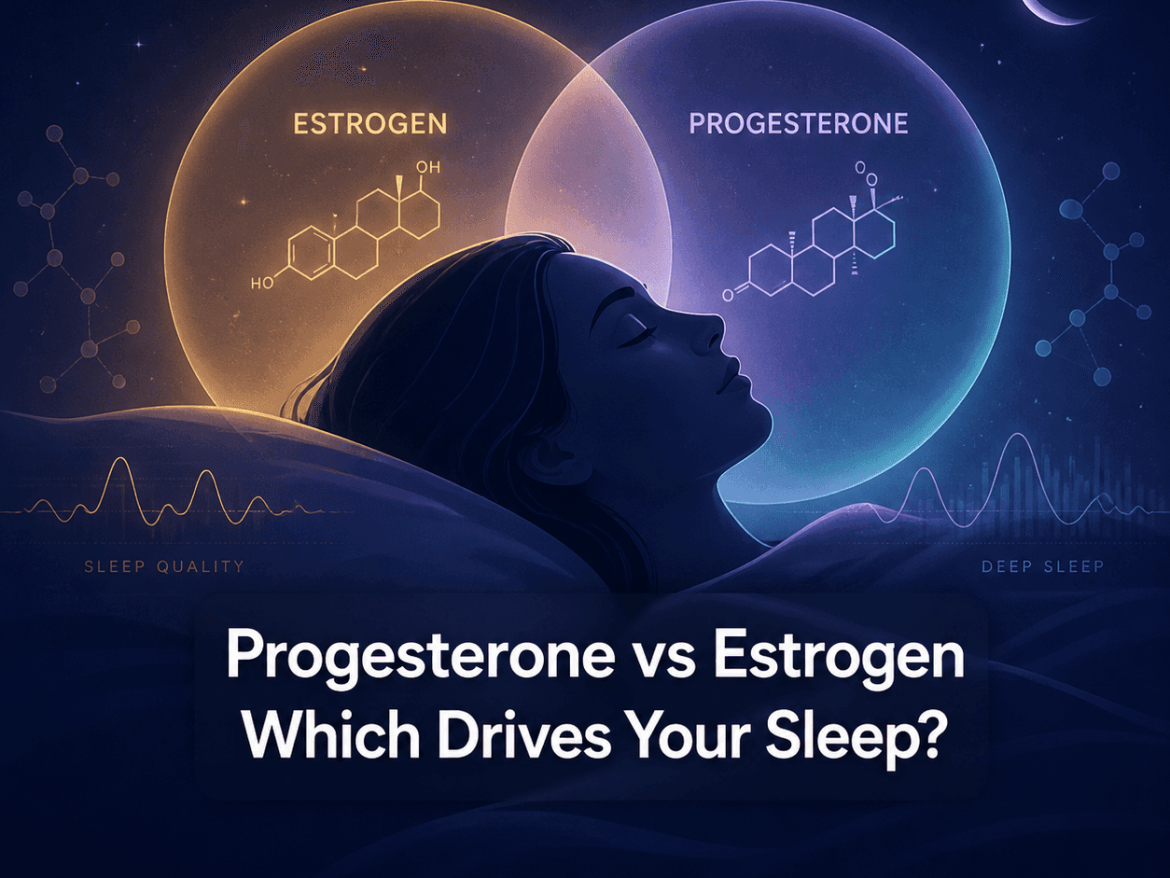
But hormones matter too. More than most people realize, especially for women in their 30s, 40s, and beyond. And the two names that keep coming up are estrogen and progesterone.
So which one is really driving your sleep?
The honest answer is… both. Just in different ways. And sometimes it is not “low hormone” but the relationship between them, the timing, the swings, the metabolism, and what your brain is doing with them.
Let’s unpack it in plain language.
The quick version (before we go deep)
If you want the headline:
- Progesterone is usually the more directly sleep supportive hormone. Think calming, sedating, anti anxiety, helps you stay asleep.
- Estrogen is more like a sleep regulator and thermostat manager. It can help sleep quality and mood, but when it dips or swings it can trigger insomnia, night sweats, and early waking.
But the real magic or chaos happens when they shift unevenly, which is basically the story of perimenopause and many PMS patterns too.
Sleep is not one thing
When someone says “I sleep terrible,” they usually mean one of these:
- Trouble falling asleep (wired but tired)
- Waking up in the middle of the night and cannot go back to sleep
- Early morning waking, like 4:30 or 5am
- Night sweats, hot flashes, heart racing
- Light sleep, vivid dreams, restless sleep
- Sleep is long enough but not refreshing
Different hormones lean into different patterns. That is why the estrogen vs progesterone question matters.
Progesterone 101 (and why everyone calls it the calming hormone)
Progesterone is often described as the “pro pregnancy” hormone, which is true in a reproductive sense, but it does a lot more than that.
For sleep, the key point is this:
Progesterone and its metabolite allopregnanolone interact with GABA receptors in the brain.
GABA is your main calming neurotransmitter. It is the “turn the volume down” signal. When GABA signaling is strong, your brain can settle. Muscles unclench. Thoughts slow down. You can drift off and stay asleep.
So when progesterone is healthy and steady, many women notice:
- Easier time falling asleep
- Less nighttime anxiety
- Better ability to stay asleep
- Fewer awakenings from small disturbances
- A more relaxed body at bedtime
This is why some women say, “I sleep amazing when I am pregnant,” especially in the second trimester when progesterone is high. Not everyone, but many.
The luteal phase effect (the progesterone window)
In a typical cycle, progesterone rises after ovulation in the luteal phase. Roughly day 14 to day 28 in a textbook cycle. Real life varies.
Some women sleep best in this window.
Others get the opposite experience because progesterone is supposed to rise, but it does not rise enough. Or it rises and then drops too fast right before the period. That drop can feel like someone pulled the plug on your calming system.
That is a common “I sleep fine most of the month but the week before my period is awful” pattern.
Low progesterone sleep symptoms often look like this
Not a diagnosis, just patterns that show up a lot:
- Trouble falling asleep, especially pre period
- Racing thoughts at night
- Feeling “tired but keyed up”
- Middle of the night waking with anxiety
- More sensitivity to stress, noise, temperature
- PMS irritability plus insomnia
- Heavier, more symptomatic periods can sometimes coexist too (not always)
And in perimenopause, progesterone is often the first hormone that becomes more erratic because ovulation becomes more inconsistent. No ovulation, no strong progesterone rise. Which means less of that GABA support.
So progesterone is usually the hormone people are thinking of when they say, “I just want something to help me sleep.”
But estrogen is not off the hook.
Estrogen 101 (sleep’s quiet influencer)
Estrogen does not “sedate” you the same way progesterone can. But it plays a massive role in the systems that set you up for sleep.
Estrogen influences:
- Serotonin production and signaling (mood, calm, sleep onset)
- Melatonin receptors and circadian rhythm signaling
- Body temperature regulation (night sweats, hot flashes)
- Cortisol rhythm (that 3am adrenaline vibe)
- Acetylcholine and REM sleep (dream intensity, sleep architecture)
- Blood sugar sensitivity (night waking from glucose dips)
When estrogen is stable, many women notice:
- Better mood
- More stable energy
- Less night sweats
- Better sleep continuity
When estrogen drops, sleep can get choppy fast.
Classic low estrogen sleep symptoms
Again, patterns, not labels:
- Waking up hot, sweaty, flushed
- Night sweats and hot flashes
- Early morning waking
- Dryness symptoms (vaginal dryness, dry eyes, dry skin) plus sleep disruption
- Mood dips, more worry, less resilience
- Palpitations at night sometimes
- More frequent waking even if you fall asleep fine
Night sweats alone can destroy sleep, even if everything else is perfect. And those are often estrogen linked, though stress, alcohol, sugar, and thyroid issues can intensify them.
The estrogen swing problem (especially in perimenopause)
Here is the twist.
In early perimenopause, estrogen is not always “low.” It can be high some days, low other days, and unpredictable. Those swings can be brutal for sleep.
So you might hear:
- “My labs are normal but I feel crazy.”
- “Some nights I sleep like a rock, then I cannot sleep for three nights.”
- “I feel overheated and anxious out of nowhere.”
That is often not a single low number. It is volatility.
So… which drives your sleep more?
If we are forced to pick one, for most women, progesterone is the more directly sleep promoting hormone because of the GABA effect.
But estrogen often drives the sleep symptoms that feel the most disruptive and dramatic. Like hot flashes, night sweats, early waking, mood shifts. And estrogen strongly shapes the context your brain and body are trying to sleep in.
So it is not either or. It is:
- Progesterone is the brake pedal.
- Estrogen is the thermostat and the rhythm section.
When both are off, sleep gets weird.
The ratio matters: “estrogen dominance” and why it can feel like insomnia
You have probably heard the phrase “estrogen dominance.” It is a messy term because it can mean different things.
Sometimes it means estrogen is high. Sometimes it means progesterone is low, so estrogen’s effects are unopposed. Sometimes it means estrogen metabolites are not being cleared well. Sometimes it is just a symptom label.
But clinically, the pattern we see a lot is this:
Progesterone drops first (less ovulation), estrogen stays the same or fluctuates, and the balance shifts.
And that can feel like:
- More PMS
- More breast tenderness
- More irritability
- Heavier periods for some
- More anxiety at night
- Worse sleep in the luteal phase
Even if estrogen is not objectively high, the body experiences less progesterone buffering. Sleep suffers.
Why you might sleep worse right before your period
The late luteal phase is basically hormone Jenga.
Progesterone peaks and then falls. Estrogen falls too. If you are sensitive to that drop, you can get:
- Anxiety spikes
- More wakeups
- Lighter sleep
- Vivid dreams
- Night sweats for some women
This is also when blood sugar can be more unstable, cravings go up, and alcohol or late desserts hit harder. Which can create that 2am wakeup with a pounding heart.
So if your insomnia is cyclical, that is a big clue. Track it. Even loosely.
Perimenopause sleep: usually progesterone first, estrogen later (with chaos in the middle)
A very common timeline looks like this:
Stage 1: progesterone starts slipping
- Cycles may shorten
- PMS worsens
- Sleep becomes lighter
- More nighttime anxiety
- You feel “wired”
Stage 2: estrogen gets unpredictable
- Random insomnia
- Night sweats appear
- Mood swings
- Periods may get heavier or erratic
Stage 3: estrogen trends lower
- Hot flashes become more consistent
- Early waking is common
- Vaginal dryness shows up more
- Sleep fragmentation becomes the norm unless addressed
Not everyone follows this exactly, but it is common enough that when someone tells me their sleep story, I can often guess where they are in the hormone transition.
How to tell if it is more progesterone or estrogen (clues, not certainty)
Here are some practical pattern clues.
It might be more progesterone related if:
- Your insomnia is worst the week before your period
- You feel anxious at bedtime
- You wake up with worry and cannot “turn off” your brain
- You have more PMS symptoms alongside sleep issues
- You feel better after your period starts (like relief)
It might be more estrogen related if:
- You wake up hot or sweating
- Sleep is disrupted by temperature swings
- You have early morning waking (3 to 5am) with a “surge”
- Your cycle is getting more irregular and sleep is unpredictable
- You notice dryness symptoms and mood changes too
And yes, you can have both. Many women do.
The cortisol connection (because hormones do not operate in isolation)
A quick but important detour.
When progesterone is low and estrogen is swinging, the body often leans harder on stress hormones to compensate. Cortisol and adrenaline start showing up at the wrong times.
That looks like:
- Second wind at night
- Waking up at 2 or 3am alert
- Heart racing
- Feeling tired but restless
- Anxiety that feels “chemical,” not situational
So sometimes the immediate sleep problem is cortisol dysregulation. But the upstream driver is the hormone shift, plus blood sugar, plus stress load, plus inflammation. It stacks.
This is where functional medicine is genuinely useful because you stop treating sleep like a standalone problem and start asking, what is pushing the system into this pattern?
Blood sugar can mimic hormone insomnia
If you wake up between 1 and 3am and feel hungry, shaky, or your heart is pounding, consider this:
A blood sugar dip can trigger adrenaline and cortisol to bring glucose back up. That wakes you up.
Perimenopause can worsen insulin sensitivity for some women. Estrogen shifts can change glucose handling. Progesterone changes can influence appetite and cravings.
So even if hormones started the domino effect, stabilizing blood sugar often helps dramatically.
Common culprits:
- Alcohol at night
- Dessert after dinner
- Skipping dinner or eating too lightly
- High carb dinner with low protein
- Overtraining plus not enough food
- Late caffeine, obviously, but people underestimate how long it hangs around
What about melatonin?
Melatonin is not a sedative. It is a darkness signal. It tells your brain what time it is.
Estrogen interacts with melatonin signaling, and aging changes melatonin output too. So melatonin can help some people, especially for sleep onset or circadian shift issues.
But if your issue is hot flashes or anxiety waking, melatonin alone often does not fix it. Sometimes it makes dreams more intense, which some people hate.
So again, it depends on the pattern.
The most common mistake: treating insomnia without asking why
A lot of women end up with a rotating stack of magnesium, melatonin, CBD, tea, antihistamines, a glass of wine, and sheer willpower.
Sometimes it works. For a bit.
But if the real issue is progesterone dropping, estrogen swinging, and cortisol misfiring at night, you may need a more targeted plan. That does not automatically mean hormones, but it does mean being thoughtful.
What actually helps (practical steps that map to hormones)
This is where I like to keep it grounded. Because advice like “reduce stress” is technically true and also completely unhelpful at 2am.
1) Track your sleep against your cycle for 2 months
Nothing fancy. Just notes in your phone:
- Day of cycle
- Bedtime, wakeups, night sweats yes or no
- Caffeine, alcohol, late sugar
- Stress level
- Exercise intensity
Patterns show up fast. And once you have the pattern, you can stop guessing.
2) Support progesterone indirectly first (often)
If you are not ready for labs, supplements, or a full hormone workup, start here:
- Get morning light within an hour of waking
- Cut caffeine after 12pm (some need after 10am)
- Eat protein at breakfast, not just coffee
- Stabilize dinner with protein, fiber, and healthy fat
- Strength training over excessive cardio if you are already depleted
- Magnesium glycinate can help some people, not all
- A consistent wind down routine that is actually boring
This supports GABA tone and cortisol rhythm, which helps when progesterone is low.
3) If night sweats are the main issue, address temperature triggers
Estrogen related sleep disruption often shows up as overheating. So reduce the stuff that fans the flames:
- Alcohol is a big one
- Spicy foods at night
- Hot showers right before bed
- Heavy blankets, overheated room
- Late intense workouts
- High sugar late in the day
Also, rule out other causes of night sweats. Thyroid issues, infections, medication side effects, blood sugar swings. It is not always estrogen, even though that is a common driver.
4) Consider testing when symptoms persist
If your sleep has been off for months, or it is affecting mood, weight, work, relationships. It is worth looking under the hood.
Depending on the person, a functional medicine approach might evaluate:
- Symptoms and cycle history (often the most revealing)
- Thyroid markers, not just TSH
- Iron and ferritin (restless sleep can be iron related)
- Vitamin D, B12
- Glucose, insulin, A1c
- Cortisol rhythm (sometimes via salivary or urinary testing)
- Sex hormones and metabolites when appropriate
The point is not to chase perfect numbers. It is to match patterns with physiology.
If you are already on Dr. Lisa Silvani’s site, this is basically the type of systems based lens she uses. Sleep is rarely just sleep. It is hormones, gut, detox capacity, nervous system, metabolism, all talking at once. You can explore more resources at https://www.lisasilvani.com, and if you want help sorting your particular pattern, you can book a free consultation through the site.
5) Hormone therapy and progesterone support (a careful note)
People ask this a lot, so let’s be real.
Some women do benefit from progesterone support, especially in perimenopause, especially when insomnia is tied to luteal phase decline or generalized nighttime anxiety.
Some women benefit from estrogen support when hot flashes and night sweats are the driver.
But the decision depends on your health history, risk factors, symptom pattern, and goals. This is medical territory. It needs an individualized conversation with a qualified clinician.
Also, delivery method matters. Dose matters. Timing matters. And “natural” does not automatically mean “safe for everyone.”
The best outcomes happen when it is not thrown at you like a generic fix, but used strategically as part of a bigger plan.
Why your friend did one thing and it worked, and you did it and it didn’t
Because her insomnia might be progesterone drop insomnia. And yours might be estrogen swing plus blood sugar plus cortisol. Or thyroid. Or iron. Or sleep apnea, which is underdiagnosed in women because it does not always look like loud snoring. It can show up as insomnia, anxiety, and unrefreshing sleep.
So yes, hormones are huge, but they are not the only lever. They are just a very common lever.
A simple framework to stop guessing
If you want a clean way to think about it, try sorting your symptoms across three questions before you ever take a supplement.
1. Is the problem heat or calm?
- Heat points more toward estrogen and autonomic activation.
- Calm points more toward progesterone, GABA, and cortisol rhythm.
2. Is it cyclical or random?
- Cyclical points toward ovarian hormone patterns.
- Random can still be hormones, but also lifestyle triggers, blood sugar, and stress load.
3. Is it sleep onset or sleep maintenance?
- Sleep onset trouble can point to stress, cortisol, low progesterone, or circadian issues.
- Sleep maintenance trouble can point to blood sugar dips, night sweats, cortisol surges, bladder issues, or inflammation.
You can get surprisingly far just by sorting your symptoms this way before you ever take a supplement.
Let’s wrap this up (without oversimplifying it)
So, progesterone vs estrogen. Which drives your sleep?
- Progesterone is usually the hormone that makes sleep feel possible. It supports calm, helps you fall asleep, helps you stay asleep. When it drops, insomnia often feels like anxiety, restlessness, and middle of the night wakeups.
- Estrogen is often the hormone that makes sleep feel stable. It supports mood, temperature regulation, and circadian signaling. When it dips or swings, insomnia often shows up as night sweats, early waking, and fragmented sleep.
And for many women, especially in perimenopause, it is not a clean deficiency. It is a moving target. The swings are the problem.
If you want a next step that is actually useful, start by tracking your sleep with your cycle and noting whether your disruption is more heat based or anxiety based. That alone can point you in the right direction.
And if you are tired of piecing it together on your own, you can explore Dr. Lisa Silvani’s resources at https://www.lisasilvani.com and book a free consultation. Sometimes the fastest path to better sleep is just having someone look at the whole picture with you.
FAQs (Frequently Asked Questions)
How do estrogen and progesterone affect sleep in women?
Estrogen and progesterone both influence sleep but in different ways. Progesterone acts as a calming, sedating hormone that supports falling asleep and staying asleep by interacting with GABA receptors in the brain. Estrogen functions more like a sleep regulator and thermostat manager, affecting mood, sleep quality, body temperature, and circadian rhythms. Imbalances or fluctuations in either hormone can disrupt sleep.
Why do some women experience trouble falling asleep or waking up at night related to hormones?
Trouble falling asleep or nighttime awakenings often relate to low or fluctuating progesterone levels, especially before periods or during perimenopause when ovulation becomes inconsistent. Progesterone’s calming effect on the brain helps reduce anxiety and promote restful sleep; when it’s low or drops quickly, it can cause racing thoughts, middle-of-the-night waking, and increased sensitivity to stress.
What are common sleep problems caused by low estrogen levels?
Low estrogen can lead to symptoms like night sweats, hot flashes, early morning waking, mood dips, palpitations at night, and frequent awakenings even if falling asleep is not an issue. These symptoms disrupt sleep continuity and quality. Estrogen also regulates serotonin, melatonin receptors, body temperature, cortisol rhythm, and blood sugar sensitivity—all important for healthy sleep.
How do hormonal changes during perimenopause affect women’s sleep?
During perimenopause, estrogen and progesterone levels become erratic with unpredictable swings—sometimes high one day and low another. This uneven shifting can cause insomnia patterns such as difficulty falling asleep, night sweats, early waking, vivid dreams, and restless sleep. Progesterone often declines first due to inconsistent ovulation causing less calming support for the brain.
Can hormonal imbalances explain why some women feel wired but tired at night?
Yes. Low or fluctuating progesterone can fail to adequately activate GABA receptors which normally calm the brain. This leads to feeling ‘tired but keyed up,’ with racing thoughts making it hard to fall asleep despite fatigue. Similarly, estrogen swings can increase cortisol and adrenaline rhythms causing a wired feeling during the night.
What role does progesterone play in improving sleep quality?
Progesterone promotes better sleep by interacting with GABA receptors in the brain—the main calming neurotransmitter system. It helps reduce anxiety, relax muscles, slow down thoughts, ease falling asleep, decrease nighttime awakenings from small disturbances, and create a more relaxed body at bedtime. Many women notice improved sleep during pregnancy when progesterone is high.
References
- Freeman, E. W., Sammel, M. D., & Liu, L. (2015). Hormones and Menopause-Related Sleep Changes: A Focus on Estrogen and Progesterone. The New England Journal of Medicine, 373(16), 1557-1566. https://doi.org/10.1056/NEJMra1505752
- Santoro, N., Epperson, C. N., & Mathews, S. B. (2015). Menopausal symptoms and their management. Endocrinology and Metabolism Clinics of North America, 44(3), 497-515. https://doi.org/10.1016/j.ecl.2015.04.002
- Baker, F.C., & Driver, H.S. (2007). Circadian rhythms, sleep, and the menstrual cycle. Sleep Medicine, 8(6), 613-622. https://doi.org/10.1016/j.sleep.2007.04.015
- Kravitz, H.M., Joffe, H., & Soares, C.N. (2014). Sleep disturbance during the menopause transition: A focus on women’s health issues in aging populations with special attention to estrogen and progesterone effects on sleep physiology and architecture. Sleep Medicine Clinics, 9(4), 435-448. https://doi.org/10.1016/j.jsmc.2014.07.001
- NHS UK – Menopause and sleep problems: https://www.nhs.uk/conditions/menopause/symptoms/
- Fitzgerald, K.T., & Hyman, M.A. (2020). Hormonal Influences on Sleep: The Role of Estrogen and Progesterone in Women’s Sleep Health in Perimenopause and Menopause. Integrative Medicine, 19(2), 30-39.
- Ruscio, M.G., & Lewyckyj, N.R.(2021). Progesterone metabolites as GABA-A receptor modulators: implications for anxiety and sleep disorders during hormonal transitions in women.Journal of Clinical Endocrinology & Metabolism, 106(12), e4687–e4698.
- Johnson, E.O., Roehrs,T., Roth,T., & Breslau,N.(2006). Epidemiology of Alcohol Use Disorders and Sleep Disturbances: Insights from the Science Direct database.*Sleep Medicine Reviews,*10(3), 197–206.
- Santoro,N., Epperson,C.N.,& Mathews,S.B.(2015). Menopausal Symptoms and Their Management.*Nature Reviews Endocrinology,*11(4),199–215.
- Williams,R.E., Kalilani,L., DiBenedetti,D.B., Zhou,X.& Fehnel,S.E.(2009). Healthcare seeking behavior related to menopausal symptoms: analysis of the BMC Women’s Health database.*BMC Women’s Health,*9(1),21–31.