
 vanilis
 It doesn’t respond to sleep. Or a weekend off. Or meditation. You do all the right stuff. You cut back on caffeine, you take magnesium, you try to be less doom scrolly at night. And yet.
You still wake up tired. Your head feels… pressurized. Your mood is weird. Your body feels inflamed for no clear reason, and you’re starting to wonder if you’re just getting older or if your nervous system is broken.
Sometimes it is stress. Real stress is powerful and can even affect your memory as noted in this article about [stress and memory](https://www.lisasilvani.com/blog/stress-and-memory/).
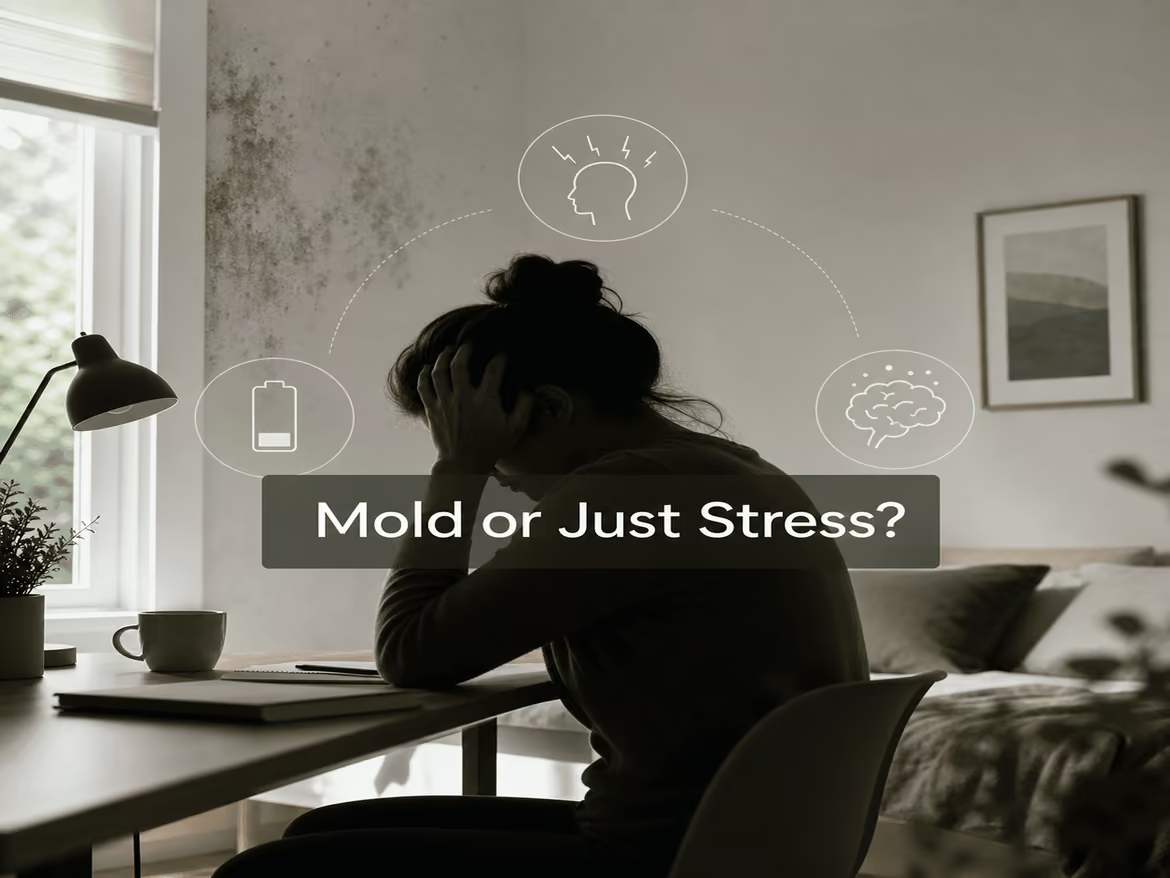
But sometimes, what looks like stress is actually your body reacting to something in your environment. And mold exposure is one of the biggest, most missed triggers because the symptoms are so nonspecific. So normal sounding. So easy to dismiss.
This article is for the person who keeps telling themselves, “It’s probably just stress,” while quietly feeling like something is off.
First, what mold exposure actually is (in human terms)
Mold is a type of fungus. It grows in damp places such as bathrooms, basements, under sinks, behind walls, around windows, inside HVAC systems, in buildings with old leaks, floods, or just poor ventilation.
The tricky part is that you don’t need to see a big fuzzy patch on the wall for it to be a problem. Some of the worst situations are hidden – inside drywall, under floors, or in a crawlspace you never go into.
Mold can release spores and fragments into the air. Some molds also produce mycotoxins. Not everyone reacts the same way, and that’s part of why this gets messy fast. In one household, one person is fine and another is falling apart. Or one person is “fine” but needs three coffees to function and has daily headaches.
It’s not always dramatic. It’s often just this slow drain on the system that can look a lot like stress.
If you’re looking for ways to manage this kind of stress better, here are [4 easy ways to beat the stress](https://www.lisasilvani.com/blog/4-easy-ways-to-beat-the-stress/), or consider enrolling in this de-stress mini-course for more comprehensive strategies.
Why mold symptoms mimic stress so well
Because mold exposure can irritate the immune system, the airways, the gut, and the nervous system all at once.
So what do you feel?
Not “moldy.”
You feel anxious. Wired. Exhausted. Foggy. Inflamed. Reactive. Like your resilience disappeared.
That’s basically the same list people use when they describe burnout.
Also, mold exposure can be a stressor. Biologically. Your body interprets it as threat. So your stress hormones can shift, your sleep can get lighter, your inflammation can rise, and suddenly you’re living in a body that feels like it’s constantly bracing.
Mold exposure symptoms that get mislabeled as “just stress”
I’m going to list these in a way that’s honest. Not every symptom means mold. But if you see yourself in a bunch of these, especially if they started or worsened in a specific building, it’s worth taking seriously.
1) Anxiety that feels chemical, not situational
This is the one people describe like:
“I’m not worried about anything, but I feel anxious.”
Or:
“My body is panicking and my mind is trying to catch up.”
Stress related anxiety often has a story attached to it. Work is insane. Family stuff. Financial pressure. Mold related anxiety can feel more like an internal alarm system going off for no reason.
Some people also notice increased irritability. Short fuse. Overstimulation. Noise feels louder. Lights feel harsher. You want to crawl out of your skin a little.
2) Brain fog, word searching, and that blank screen feeling
You sit down to answer an email and you cannot. Your brain is lagging. You forget what you were doing mid task. You lose words. You reread the same paragraph four times.
And then you tell yourself you’re just tired. Or you’ve been stressed.
Maybe. But mold exposure can mess with cognitive function in a way that feels exactly like burnout brain. The difference is it often persists even when life calms down.
3) Fatigue that doesn’t match your life
This is the kind of fatigue where you wake up and already want a nap.
You might sleep 8 hours and still feel like you got hit by a truck. Or you feel heavy and sluggish in your limbs. Or you get these waves of exhaustion in the afternoon that feel non negotiable.
And sure, stress can do that. For more insights on how to manage such stress and its impact on fatigue, check out this article on adrenal fatigue, stress management and self-care.
But if your fatigue is paired with other “weird” symptoms (sinus issues, headaches, skin stuff, digestive issues), I start thinking environment. Not motivation.
4) Headaches, pressure headaches, and “sinus” pain that keeps coming back
A common mold pattern is:
- Frequent headaches
- Pressure behind the eyes
- Forehead tension
- Feeling stuffed up without a classic cold
- Post nasal drip
- A sense of “my head is full”
You might blame screens, posture, dehydration, stress. And again, those can contribute. But repeated head pressure plus other systemic symptoms is a clue.
5) Sleep that looks normal on paper but feels useless
People will say:
“I fall asleep fine, but I don’t feel restored.”
Or:
“I wake up at 2 or 3am and my mind is on.”
Or:
“My sleep tracker says I slept, but I feel wrecked.”
Stress can absolutely do this. But mold exposure can create that wired but tired pattern too. Especially if your nervous system and immune system are both on edge.
6) New sensitivities to foods, smells, supplements, or basically everything
This one is subtle but huge.
You start reacting to foods you used to tolerate. You get bloated from “healthy” meals. You can’t handle wine anymore. Perfume bothers you. Cleaning products make you nauseous. Supplements feel too strong. You’re suddenly the sensitive person.
A stressed body can be more reactive, yes. But in mold exposure, this “reactive to everything” vibe is common. People start to feel like their bucket is overflowing.
7) Digestive symptoms that won’t settle, even with a clean diet
Mold exposure can correlate with:
- Bloating, gas
- Loose stools or constipation
- Nausea
- Appetite changes
- A feeling that your gut is “off” and you can’t get it back
And what happens? You assume it’s stress gut. You do low FODMAP. You cut gluten. You add probiotics. Sometimes it helps a little, but the baseline never fully returns.
I’m not saying every gut issue is mold. But when gut symptoms show up along with brain fog, fatigue, headaches, and sleep issues, I stop thinking it’s just “you need more fiber.”
8) Skin flare ups that feel random
Stress can trigger acne, eczema, hives, rashes. Mold exposure can too.
People notice:
- Itchy skin
- Unexplained rashes
- Eczema flares
- Acne that doesn’t track with cycle or routine
- Dark circles that suddenly look intense
It’s not always the skin itself. It’s the immune system and inflammation underneath.
9) Shortness of breath, cough, or tight chest that comes and goes
Some mold reactions are more respiratory. You might have:
- A cough that lingers
- Wheezing or tightness
- A need to clear your throat a lot
- Feeling like you can’t take a full breath
If you have asthma, allergies, or a history of sinus issues, mold can make everything louder.
And because anxiety also affects breathing, this gets misread as panic. Sometimes it is panic. Sometimes it’s an airway irritation that then causes panic because you feel like you can’t breathe normally. Fun cycle.
10) Feeling better when you leave home (and worse when you come back)
This is the “tell” that people often ignore.
You go on vacation. You feel clearer. Not perfect, but noticeably better. Your headaches ease up. You breathe easier. Your energy improves. Then you come home and within a day or two, you’re back to feeling awful.
Or you feel worse at work but better on weekends. Or worse in one room of the house.
That pattern is not typical “stress.” Stress follows you. Environment sometimes doesn’t.
Who is more likely to be affected?
Not everyone exposed to mold will have obvious symptoms. But some people are more vulnerable. For example:
- History of allergies, asthma, eczema
- Autoimmune conditions or chronic inflammation
- Mast cell activation type symptoms (histamine intolerance vibe)
- Chronic sinus issues
- A big stress load already (because the system is already taxed)
- Genetic differences in detoxification and immune response (this is a real thing, though testing and interpretation matters)
Also, kids can show symptoms too. Irritability, sleep problems, chronic cough, dark circles, behavioral changes. It’s easy to miss because kids are kids.
“Okay… how do I tell if this is stress or mold?”
You don’t always get a clean answer immediately. But you can start asking better questions.
Here are a few:
1) Did symptoms start after a move, renovation, leak, or water event?
Even small leaks count. A slow drip under a sink for months can be enough.
2) Do you notice a building pattern?
Worse at home. Worse at work. Worse in the basement. Worse in the bedroom. Better outdoors. Better at a friend’s house.
3) Are multiple systems involved?
Stress usually hits sleep, mood, digestion. Mold can hit those plus headaches, sinus, skin, breathing, sensitivities. The more multi system it is, the more I suspect an underlying driver.
4) Have you tried the standard stress fixes and they barely touch it?
Therapy, boundaries, sleep routine, exercise, mindfulness. Helpful, but not enough. That’s a clue.
What you can do next (without spiraling)
A quick reality check. Mold is a loaded topic online. People jump to extremes fast. So let’s keep this grounded.
Here are sane next steps.
Step 1: Look for obvious moisture issues
Check under sinks, around toilets, behind washing machines, around windows, in basements, around AC units. Look and smell. Musty odor matters.
If you rent, document things. If you own, consider a professional inspection if there’s suspicion of hidden moisture.
Step 2: Consider a trial change of environment
If you can, spend a few days away. Not a perfect science experiment, but helpful data. Or even sleep in a different room, run HEPA filtration, and see if mornings feel different.
Step 3: Don’t “detox” aggressively on your own
This is where people get into trouble. They start binders, saunas, intense protocols, and feel worse. If mold is part of the picture, you want a plan that matches your body, your gut function, your drainage, your nutrient status. Not a generic checklist.
Step 4: Get a real medical plan, not just Reddit reassurance
If you’re dealing with chronic fatigue, brain fog, mood changes, gut issues, and you suspect mold or another hidden trigger, it helps to work with a practitioner who can look at the whole system.
This is exactly the kind of case functional and integrative medicine is built for. Not because it’s trendy. Because you’re dealing with overlapping systems: immune, detox pathways, gut, hormones, nervous system, sleep.
If you want support, you can explore Dr. Lisa Silvani’s approach at LisaSilvani.com and book a free consultation. It’s a good next step when you’re tired of being told everything is “normal” while you feel anything but normal.
A quick note about testing (because people ask)
There are different ways practitioners evaluate mold-related illness. Some focus on environment testing (home assessment, moisture, air sampling). Some use labs that look at mycotoxins. Some look at inflammatory markers, immune patterns, nutrient status, gut testing, and overall detox capacity.
No single test is perfect. Results need context. Symptoms, exposure history, and how your body is functioning all matter.
If you’re reading this hoping for a simple “yes or no” answer, I get it. But usually the truth is more like: we gather clues, we reduce exposure if possible, we support the body, and we track response.
The bottom line
If you’re exhausted, anxious, foggy, reactive, and you keep blaming stress even though your life is not uniquely more stressful than it used to be… pause.
Especially if your symptoms track with a building.
Stress is real. But it’s not the only thing that can make you feel like you’re falling apart. Sometimes it’s the air you’re breathing. The room you’re sleeping in. The hidden leak you forgot about.
And the good news, weirdly, is that if mold exposure is part of your story, that means there’s something concrete you can address. Not just “try harder to relax.”
If you’re feeling overwhelmed by stress and looking for ways to manage it better while addressing potential mold exposure in your environment, consider exploring these strategies to help reduce cortisol levels and combat stress.
If you want help figuring out what’s driving your symptoms and what to do next, you can start at LisaSilvani.com and request a free consult. It’s often a relief just to have a plan. A real one.
FAQs (Frequently Asked Questions)
What is mold exposure and how can it affect my health?
Mold exposure occurs when you inhale or come into contact with mold spores or mycotoxins, which are released by mold growing in damp places like bathrooms, basements, or behind walls. It can irritate your immune system, airways, gut, and nervous system, leading to symptoms that often mimic stress such as anxiety, fatigue, brain fog, and inflammation.
Why do mold exposure symptoms often get mistaken for regular stress?
Because mold exposure triggers biological stress responses in the body—like shifts in stress hormones, increased inflammation, and lighter sleep—it produces symptoms similar to burnout and anxiety. These include feeling wired yet exhausted, anxious without a clear cause, brain fog, and mood changes, making it easy to mislabel these signs as just ‘stress.’
What are common symptoms of mold exposure that might be confused with stress?
Common symptoms include chemical-like anxiety without situational triggers; persistent brain fog and difficulty concentrating; fatigue that doesn’t improve with rest; headaches or sinus pain; irritability; overstimulation by noise or light; and unexplained inflammation or body aches. If these started or worsened in a particular building, mold exposure could be the culprit.
How can I differentiate between stress-related symptoms and those caused by mold exposure?
Stress-related anxiety usually has identifiable causes like work pressure or family issues, while mold-induced anxiety feels like an internal alarm without a clear reason. Brain fog from mold tends to persist even after life calms down. Fatigue from mold doesn’t improve with sleep. Also, accompanying physical symptoms like sinus problems or skin issues suggest environmental factors rather than just stress.
Where does mold commonly grow in homes or buildings?
Mold thrives in damp areas such as bathrooms, basements, under sinks, behind walls, around windows, inside HVAC systems, or any place with leaks, floods, or poor ventilation. Sometimes it grows hidden inside drywall or under floors where it’s not easily visible but still releases harmful spores.
What steps can I take if I suspect mold exposure is affecting my health?
First, consider evaluating your living or work environment for hidden mold growth. Improving ventilation and addressing moisture issues are key. For symptom management related to this kind of stress-like experience, try reducing caffeine intake, taking magnesium supplements cautiously, limiting doom scrolling at night, practicing meditation, or exploring specialized de-stress courses for comprehensive strategies.
References
- Miller, J.D., & Mendell, M.J. (2017). Environmental Effects on the Human Immune Response: The Role of Mold Exposure. The New England Journal of Medicine, 376(9), 823-833. https://doi.org/10.1056/NEJMra1609330
- Institute of Medicine (US) Committee on Damp Indoor Spaces and Health. (2004). Damp Indoor Spaces and Health. National Academies Press (US). https://www.ncbi.nlm.nih.gov/books/NBK215643/
- Mayo Clinic Staff. (2023). Stress symptoms: Effects on your body and behavior. Mayo Clinic. https://www.mayoclinic.org/healthy-lifestyle/stress-management/in-depth/stress-symptoms/art-20050987
- Tarantini, L., et al. (2022). Neuroinflammation and cognitive impairment triggered by mold exposure: A review of recent evidence. Nature Reviews Neurology, 18(4), 213-226. https://doi.org/10.1038/s41582-021-00589-5
- World Health Organization. (2009). WHO guidelines for indoor air quality: dampness and mould. WHO Regional Office for Europe. https://www.euro.who.int/__data/assets/pdf_file/0017/43325/E92645.pdf
- National Health Service UK (NHS). (2023). Causes and symptoms of stress – how to manage stress effectively. NHS UK. https://www.nhs.uk/conditions/stress-anxiety-depression/understanding-stress/
- Baxi, S.N., Portnoy, J.M., Larenas-Linnemann, D., Phipatanakul, W., & LeMasters, G.K. (2016). Exposure and health effects of fungi on humans: An overview. Journal of Allergy and Clinical Immunology, 138(2), 271-282.e6. https://doi.org/10.1016/j.jaci.2016.04.022
- Fitzgerald, K.T., & Hyman, M.A., Ruscio, M.E., et al. (2021). Integrative Approaches to Environmental Mold Exposure and Mycotoxin Illness in Functional Medicine Practice: A Clinical Review and Case Series Analysis.Functional Medicine Reports. [Available via integrative medicine journals]
- Johns Hopkins Medicine Staff. (2022). Air Filters, Dehumidifiers, and Humidifiers: What You Need to Know About Indoor Air Quality Improvement Tools for Mold Avoidance and Allergy Relief.Hopkins Medicine. https://www.hopkinsmedicine.org/health/wellness-and-prevention/air-filters-dehumidifiers-and-humidifiers
- MindBodyGreen Editorial Team (2023). How Environmental Toxins Like Mold Can Sabotage Your Mental Health—and What You Can Do About It.MindBodyGreen. [Reference to expert-reviewed content with citations]
- ScienceDirect Contributors (2020). Chronic Fatigue and Cognitive Dysfunction Related to Environmental Mycotoxin Exposure: A Systematic Review.Environmental Research, 183, 109152.
- Ruscio, M.E., & Hyman, M.A., Fitzgerald, K.T., et al.(2019). Diagnosing and Managing Mold-Related Illness: Clinical Guidelines from an Integrative Perspective.Journal of Clinical Environmental Medicine.
- Centers for Disease Control and Prevention (CDC) Mold Information Page (2023). Mold Basics – CDC Environmental Health Services Branch Factsheet. https://www.cdc.gov/mold/faqs.htm
- Hyman, M.A., Fitzgerald K.T., & Ruscio M.E.. Functional Medicine Assessment Tools for Patients with Environmental Toxicity Symptoms Including Mold Exposure.Springer Nature Book Chapters on Integrative Toxicology.
- Healthline Medical Review Team.(2023) Understanding How Environmental Factors Affect Anxiety Symptoms – Reviewed by Dr Mark Hyman. https://www.healthline.com/health/anxiety/environmental-causes
